

 InfoSearched
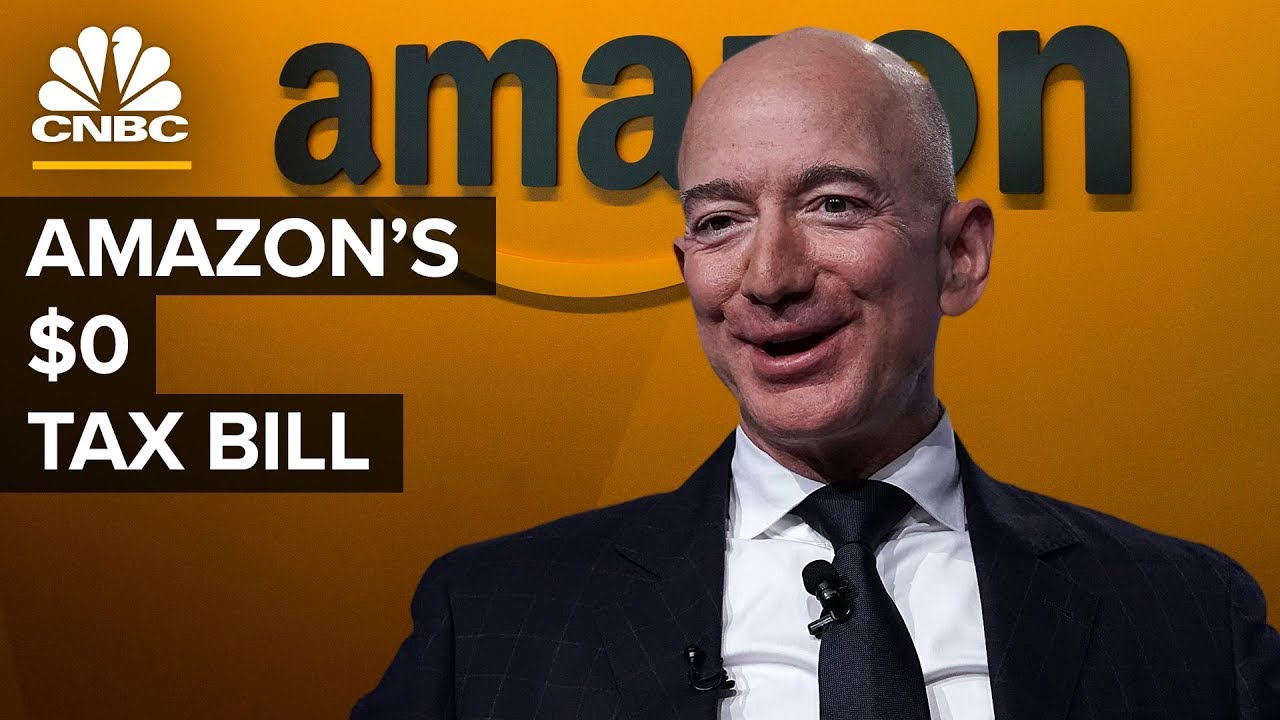
Amazon booked $232.9 billion in revenue in 2018 and still cut a $0 check to the IRS.
For the second consecutive year, the world’s largest e-commerce company paid nothing in federal income tax, and this time it did so while nearly doubling its U.S. pre-tax profit. Corporate filings show Amazon actually came out ahead, pocketing a $129 million rebate from the federal government. The numbers, first flagged by a nonpartisan tax policy group in February 2019 and dissected further by CNBC that April, reignited a familiar fight over how profitable American companies can legally zero out their tax bills.
- Amazon’s U.S. pre-tax profit nearly doubled to $11.2 billion in 2018, up from $5.6 billion in 2017, yet its effective federal tax rate came in around -1.2 percent.
- The Institute on Taxation and Economic Policy’s February 2019 analysis found this marks the second straight year Amazon has paid $0 in federal income tax while receiving a rebate — $129 million in 2018 after $137 million the prior year.
- Sen. Bernie Sanders publicly noted that a $119 Amazon Prime membership costs more per year than Amazon paid in federal taxes, with the company serving roughly 100 million Prime subscribers.
Legislative Bill Faces Final Defeat
Amazon’s math didn’t come from any single trick — it came from stacking several provisions of the 2017 Tax Cuts and Jobs Act on top of tax breaks the company had already been accumulating for years. Bonus depreciation rules let Amazon immediately write off 100 percent of the cost of capital investments and equipment, a huge benefit for a company that spent billions building fulfillment centers, data centers and delivery infrastructure in 2018. Layer on decades of banked research-and-development credits and large deductions tied to employee stock-based compensation — which grow more valuable as Amazon’s share price climbs — and the taxable income Amazon reported to the IRS shrank dramatically compared to the profit it reported to shareholders.
There was one more piece that made it possible to wipe the liability out completely: the TCJA repealed the corporate alternative minimum tax. Before that repeal, the AMT capped how far companies could reduce their bill using credits and deductions. With it gone, Amazon could deploy its full stack of accumulated credits against its 2018 income with nothing left over to tax.
The Political Reaction
The ITEP findings landed in the middle of an already heated conversation about how the 2017 tax law reshaped corporate America’s obligations, and Amazon — as the most visible beneficiary — became the target. Sanders, who has sparred with Amazon before over wages and warehouse conditions, seized on the Prime comparison to argue the company wasn’t paying its “fair share” even as it posted record profits.
An Amazon Prime membership costs $119 a year — more than the company paid in federal income tax on $11.2 billion in U.S. profit.
The criticism wasn’t limited to Amazon specifically; it fed into a broader debate about whether provisions like bonus depreciation and the AMT repeal let the biggest, most capital-intensive corporations sidestep the tax code in ways smaller businesses can’t. That debate echoes fights playing out elsewhere in corporate tax policy, including Apple’s separate battle in the EU over a $15 billion tax bill, where regulators argued a tech giant’s structure allowed it to avoid taxes it should have owed.
Amazon’s Defense
Amazon didn’t dispute the numbers — it disputed the framing. In a statement provided to CNBC Make It, the company said it “pays all the taxes we are required to pay in the U.S. and every country where we operate, including paying $2.6 billion in corporate tax and reporting $3.4 billion in tax expense over the last three years.” Amazon also pointed out in its own fourth-quarter filing that while its federal income tax bill was negative, it still expected to pay $756 million in total taxes for 2018 once state and international taxes were included.
That distinction matters to the company’s defenders: federal income tax is only one line in a much larger tax picture, and Amazon’s global tax expense over three years topped $3 billion even as its U.S. federal bill sat at zero. Critics counter that the size of that global number doesn’t change what happened domestically — a company with $232.9 billion in worldwide revenue and a near-doubling of U.S. profit still owed the IRS nothing, for the second year running.
Whether Congress revisits bonus depreciation or the AMT repeal remains an open question heading into the next tax-writing fight, but for now the mechanics that got Amazon to $0 in 2018 are locked into law through the rest of the TCJA’s provisions, and the company has already signaled through its own filings that similar credits — R&D banked over decades, stock-based comp tied to its share price — aren’t going away anytime soon.







Coronavirus: Hate crimes against Chinese people in the UK on the rise
Pope calls for healing over Canada school discovery
Ghislaine Maxwell behind bars as new details emerge
New Warning Of Rare Coronavirus Complication In Children
Children among 16 dead, 47 wounded in Chicago weekend shootings