

 InfoSearched
A top BNP Paribas strategist says the world economy is splitting into two very different speeds — and the Fed is about to acknowledge it.
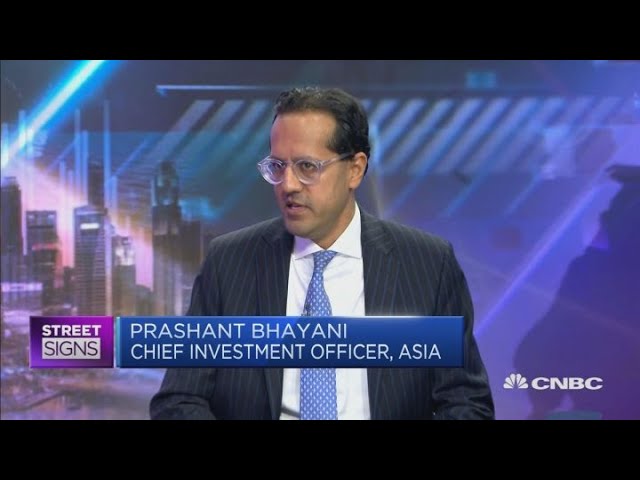
Days before the Federal Reserve’s July FOMC meeting, Prashant Bhayani, Chief Investment Officer for Asia at BNP Paribas Wealth Management, sat down with CNBC’s Street Signs Asia to lay out why he sees a “two-tier global economy” taking shape. His read: services and consumers are holding up fine almost everywhere, while manufacturing and trade are stuck in a slump — and that split is exactly what’s pushing Jerome Powell toward cutting rates.
- Bhayani describes a “two-tier global economy,” splitting resilient services and consumer spending from a persistently weak global manufacturing and trade sector.
- He expects Fed Chair Jerome Powell to cut rates at the FOMC meeting later that week, calling it an “insurance cut” rather than a recession signal.
- Bhayani says Powell is “obviously” trying to extend both the economic expansion and the financial market cycle by easing policy.
The Two-Speed Global Economy
Bhayani’s framing cuts through the usual macro noise: this isn’t a uniform slowdown, it’s a split. Service-driven sectors and domestic consumers, he argues, remain stable across most major economies, propped up by tight labor markets and steady spending. Manufacturing and global trade tell a different story — squeezed by tariff disputes and cooling demand, that side of the ledger has been soft for months heading into the July 29 FOMC week.
That divergence, in Bhayani’s view, is exactly the kind of environment that forces a central bank’s hand without forcing a full-blown emergency response. The broader economic data feeding into the Fed’s decision reflects that same tension — strong enough headline numbers to avoid panic, weak enough trade and factory readings to justify caution.
Powell Supports Defensive Interest Rate Cut
Bhayani was direct about the Fed’s motive heading into its meeting: Powell is “obviously” interested in extending both the economic expansion and the financial market cycle by lowering interest rates. He was careful to separate that from any recession call — this, he said, is an “insurance cut,” designed to keep the business cycle running rather than to firefight a downturn already underway.
Fed Chair Jerome Powell is “obviously” interested in extending both the economic and financial market cycle by lowering interest rates.
The rationale, per Bhayani, rests on three crosscurrents converging at once: ongoing global trade tensions, slower growth internationally, and inflation still running below the Fed’s target. None of those alone screams recession, but together they give the FOMC enough cover to ease preemptively rather than wait for the data to force its hand.
Implications for Strategic Risk Positioning
For investors, Bhayani’s takeaway is about navigating valuations in a late-cycle, bifurcated world rather than picking a single winning region. Accommodation from the Fed and other major central banks generally supports risk assets — equities, credit, the usual beneficiaries of cheaper money — but he stressed that doesn’t mean every corner of the market benefits equally. The same two-tier split showing up in the real economy shows up in cross-asset valuations too, with sectors tied to trade and manufacturing lagging those tied to services and consumption.
It’s a dynamic that echoes debates playing out across fiscal policy circles as well, where questions about how much support the economy still needs remain unresolved even in policy discussions well beyond the Fed.
Bhayani’s bottom line going into the FOMC decision was simple: don’t read a rate cut as a warning siren. Read it as Powell trying to buy the expansion more runway while the trade war and soft global growth keep leaning on one half of a very unevenly split economy.




Iran launches missiles into US military base in Iraq
More schools are shutting down due to coronavirus
Starvation Is Coming – Rancher Explains
52 percent of voters approve of Trump’s economy: poll
Fed cuts rates, signaling what’s going on in the global economy