

 InfoSearched
The Fed just cut rates for the first time in 11 years — and a former Fed president says it didn’t need to.
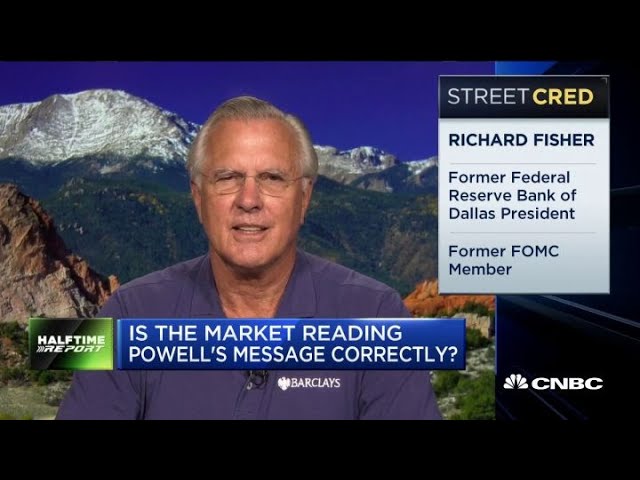
Richard Fisher spent a decade running the Federal Reserve Bank of Dallas, and he’s never been shy about pushing back on his old colleagues in Washington. On August 1, 2019, he sat down with CNBC’s “Fast Money Halftime Report” one day after the Federal Open Market Committee delivered its first rate cut since the financial crisis, and his message was blunt: the U.S. economy doesn’t look broken to him.
- The Fed cut its benchmark rate by 25 basis points on July 31, 2019 — its first reduction in 11 years.
- Fed Chair Jerome Powell framed the move as an “insurance” cut and a “mid-cycle adjustment” tied to global slowdown and trade uncertainty, not a domestic downturn.
- Fisher pointed to resilient consumer spending, strong underlying fundamentals, and low unemployment as reasons the cut wasn’t urgently necessary.
Fisher’s Case Against Aggressive Easing
Fisher served as Dallas Fed president from 2005 to 2015 and has kept his hawkish reputation intact ever since, now working as a senior adviser at Jefferies. On the “Fast Money” set, he argued that the case for easing hinges almost entirely on global headwinds — trade tensions and a slowing world economy — rather than anything showing up in American households’ spending or paychecks.
His argument leaned on the numbers that matter most to a central banker: unemployment stayed low, consumers kept spending, and the domestic engine of the economy hadn’t stalled the way it had heading into past cuts. Fisher’s framing wasn’t that the Fed was wrong to act, but that the urgency didn’t match what the data was showing at home.
The domestic economy, in Fisher’s view, was simply “doing fine” — no downturn, no distress, no reason to panic into a prolonged easing cycle.
Powell’s Insurance Cut and the Market’s Reaction
Powell’s July 31 press conference set off exactly the kind of volatility Fisher was reacting to. Markets had been pricing in the possibility of a longer, more aggressive easing path, and when Powell described the cut as a one-off “mid-cycle adjustment” rather than the start of a sustained cutting cycle, stocks swung sharply. The distinction Powell drew — insurance against global risk rather than a response to a weakening U.S. economy — became the central question traders and analysts were parsing in the cut’s immediate aftermath.
That distinction also put the Fed in the crosshairs of President Donald Trump, who made clear he wanted a more forceful, extended easing campaign and was vocally unhappy that Powell hadn’t signaled one. The tension between the White House’s preference for deeper cuts and the Fed’s more cautious “insurance” language framed much of the market commentary in the days following the decision, feeding into broader coverage of consumer costs and household budgets, including reporting on rising prices at the grocery store that policymakers were watching alongside the rate decision.
Reading the Fundamentals
Fisher’s skepticism wasn’t about denying that trade uncertainty and a global slowdown were real risks — he acknowledged those pressures were legitimate inputs for the FOMC. His point was narrower: the U.S. consumer, unemployment figures, and broader domestic fundamentals hadn’t deteriorated to the point that would typically justify a cut of this kind, let alone repeated ones. It’s the same lens through which the Fed’s decisions get filtered in coverage across economics reporting whenever a policy move outruns the underlying data.
That gap between global risk-management and domestic reality is exactly what markets were trying to price in the day Fisher went on air — and it’s the gap that would define how closely traders watched every word out of the Fed for the rest of 2019.


Stimulus Check 2: When will the Next Stimulus Pass?
CNN reporter and crew hit by tear gas in Hong Kong
White House directs staff to wear masks after officials contract coronavirus
Video surfaces of Biden accuser’s mom allegedly calling into Larry King’s show
Attorney speaks out after FBI arrests longtime Jeffrey Epstein associate