

 InfoSearched
Fifty officers walked off a voluntary assignment in a single day, and Portland has no replacement squad lined up.
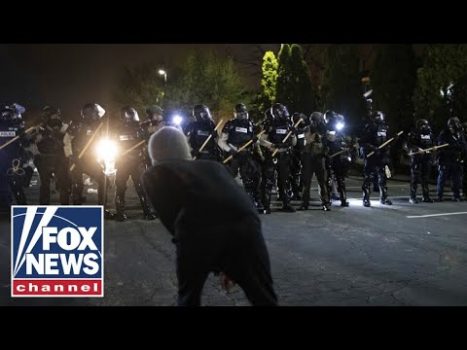
The Portland Police Bureau’s Rapid Response Team — the specialized crowd-control unit that has policed the city’s protests since 2020 — dissolved itself on June 16, 2021, when all roughly 50 members voted to quit the assignment. The trigger was a Multnomah County grand jury indictment of RRT Officer Corey Budworth on a misdemeanor fourth-degree assault charge, tied to a baton strike caught on camera during a demonstration outside the Multnomah Building nearly a year earlier. Every officer involved remains employed by the bureau in regular patrol or administrative roles; they simply refused to keep serving on the voluntary unit.
- All approximately 50 RRT members — officers, sergeants, and detectives — resigned from the voluntary unit effective immediately on June 16, 2021, while keeping their regular bureau jobs.
- Officer Corey Budworth was indicted on a misdemeanor fourth-degree assault charge for striking photographer Teri Jacobs with a baton during an August 18, 2020, demonstration; the city had already settled a related civil suit with Jacobs for $50,000 earlier in 2021.
- District Attorney Mike Schmidt called the strike excessive force with no legal justification — the first time a Portland officer has faced criminal charges over force used during the 2020 protests.
The Incident Behind the Indictment
The case against Budworth traces back to an August 18, 2020, racial justice demonstration outside the Multnomah Building, where video captured him striking independent photographer Teri Jacobs from behind and in the face with his baton. The city settled a civil lawsuit Jacobs filed over the strike for $50,000 in early 2021, months before the criminal case moved forward. Multnomah County District Attorney Mike Schmidt’s office presented the matter to a grand jury, which returned the misdemeanor indictment on June 16, 2021 — the first criminal charge brought against a Portland officer for force used during the entire wave of 2020 unrest.
Schmidt was blunt about his office’s reasoning, describing the baton strike as excessive force that carried no legal justification. Budworth wasn’t the only RRT member under scrutiny at the time; Detective Erik Kammerer, another member of the unit, was already facing a state Department of Justice criminal review and a separate assault lawsuit connected to his own conduct during the protests.
The Mass Walkout
Within hours of the indictment, all roughly 50 members of the Rapid Response Team voted to resign from the assignment. Because RRT service is voluntary rather than a formal job title, none of the officers lost their positions with the bureau — they simply pulled out of crowd-control duty and returned to their standard patrol and administrative work. The scale of the walkout was unprecedented for the bureau, effectively leaving Portland without its dedicated unit for large-scale demonstrations overnight.
The Portland Police Association condemned the prosecution as politically driven, arguing that Budworth had been caught in the crossfire of agenda-driven officials and that the strike itself was accidental. Acting Police Chief Chris Davis framed the resignations as the breaking point after a long grind, pointing to more than 150 nights of continuous unrest that had worn down morale among officers who felt they lacked support from city leadership.
Mike Schmidt called Budworth’s baton strike excessive force with no legal justification — the first time a Portland officer has been criminally charged over force used during the 2020 protests.
City Hall’s Divided Reaction
The walkout split city leadership. Acting Chief Davis characterized it as the natural result of exhausted personnel who felt abandoned after more than five months of nightly demonstrations, rather than a coordinated protest against accountability. City Commissioner Jo Ann Hardesty took the opposite view, accusing the departing officers of behaving like an unaccountable paramilitary organization attempting to dodge scrutiny rather than answer for their conduct on the street.
That split mirrors tensions that have played out in other cities where rank-and-file officers have pushed back against city officials over policing policy and support, including in New York, where a precinct commander quit in protest over a lack of support from officials. Portland’s version played out at unit scale rather than through a single resignation, but the underlying grievance — officers saying they’ve been left exposed by the people who are supposed to back them — is the same complaint running through both cases.
Future Trends in Crowd Control
With the Rapid Response Team gone, the bureau has no standing volunteer unit trained specifically for large protests, at a moment when demonstrations tied to police accountability have remained a recurring feature of life in the city — a dynamic that echoed the standoffs seen in other Pacific Northwest hot spots like Seattle’s CHAZ/CHOP occupation the previous summer. Budworth’s misdemeanor charge and Kammerer’s pending DOJ review remain open, and how those cases resolve will likely shape whether any officers are willing to step back into a crowd-control assignment that just cost fifty of their colleagues their willingness to serve.

Brilliant ways people have responded to the coronavirus outbreak
British PM Johnson says it was still too risky to relax coronavirus lockdown yet
National Guard delivers coronavirus test kits to cruise ship
This Is a Small Step Between U.S. and China, Says Eurasia Group’s Broderick
Investors Split on the State of the U.S. Economy