

 InfoSearched
A new study puts a six-figure price tag on AOC’s climate plan, and Art Laffer isn’t buying the rest of the pitch either.
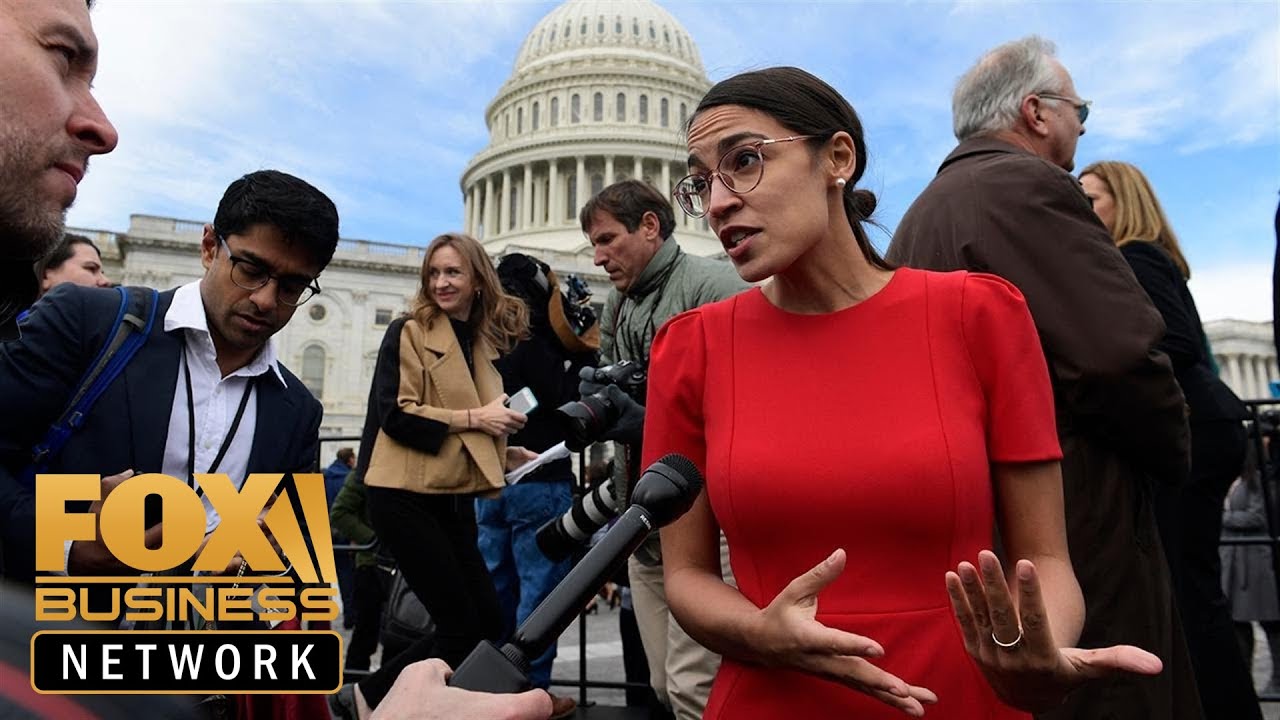
The Green New Deal debate got a fresh jolt of hard numbers in late July 2019, and Art Laffer wasted no time weighing in on Fox Business. The former Reagan economic adviser and architect of supply-side theory used a newly released cost analysis to argue that Rep. Alexandria Ocasio-Cortez’s signature climate resolution wouldn’t just strain federal budgets — it would gut the broader economy from the middle class up. His take landed just as 2020 Democratic hopefuls were gathering in Detroit, with climate policy squarely on the debate stage.
- A study published July 30, 2019, by the Competitive Enterprise Institute and Power the Future found the Green New Deal would cost average households in Florida, New Hampshire, New Mexico and Pennsylvania more than $70,000 in the first year alone, with Alaska households facing over $100,000.
- The same report projected ongoing annual costs of roughly $45,000 per household in years two through five of implementation.
- Laffer tied those figures to an earlier American Action Forum estimate pegging the total cost of the plan at up to $93 trillion over ten years.
The CEI Numbers Behind the Segment
The Competitive Enterprise Institute, a libertarian think tank, teamed up with Power the Future to model what the Green New Deal — the resolution co-sponsored by Ocasio-Cortez and Sen. Ed Markey (D-Mass.) — would actually mean for household budgets in five representative states. Their conclusion: first-year costs blowing past $70,000 in Florida, New Hampshire, New Mexico and Pennsylvania, and topping $100,000 in Alaska. The report didn’t stop at year one, either, estimating that families in those states would keep absorbing roughly $45,000 in additional costs annually through year five.
Those figures gave Laffer’s Fox Business appearance its spine. Rather than treating the Green New Deal as an abstract policy debate, he framed it as a direct hit to household checkbooks — the kind of number that resonates far beyond Capitol Hill.
Laffer’s Supply-Side Case Against the Plan
Laffer’s core argument leaned on the same supply-side logic that shaped his advisory role under President Reagan: pile on aggressive regulations and sweeping federal mandates, and production suffers, capital gets misallocated, and middle-class households absorb the damage. He argued that financing a transition of this scale — with the American Action Forum’s $93 trillion decade-long estimate looming in the background — would require tax increases so large they’d siphon money away from private investment and productivity gains.
The report’s own math put ongoing household costs at roughly $45,000 a year through year five — not a one-time hit, but a recurring bill.
For Laffer, that recurring bill was the whole problem. A multi-trillion-dollar mandate financed through higher taxes doesn’t just cost money once — it keeps extracting resources from the private sector year after year, which is precisely the dynamic his supply-side framework treats as economically corrosive.
The Detroit Backdrop
The timing wasn’t incidental. The segment aired as 2020 Democratic presidential candidates convened in Detroit, where climate policy was a recurring flashpoint on stage. Progressive candidates and Green New Deal backers cast the resolution as necessary mobilization toward net-zero emissions and a wave of clean-energy jobs, arguing the scale of the climate threat justified the scale of the spending.
Conservative analysts and business advocates, pointing to the CEI figures, countered that the plan leans on technology that doesn’t yet exist at the scale required and asks American families to shoulder costs most couldn’t sustain. That split — mobilization versus affordability — is the same fault line that ran through the Detroit debates, and it’s the one Laffer planted his flag on.
Energy Policy as the Flashpoint
Beyond the tax argument, Laffer took aim at the plan’s energy assumptions directly. He argued that pivoting the country away from natural gas and oil before renewable technology can reliably power the grid would disrupt supply chains, cost jobs and slow productivity — and that the U.S. would end up trading energy independence for dependence on foreign sources. His preferred alternative: market-based incentives for renewable investment rather than mandates and penalties layered onto existing energy production.
Laffer didn’t get into what a market-based counterproposal would actually look like in legislative form, and that’s the gap Green New Deal supporters will keep hammering as the 2020 primary calendar grinds on — cost estimates from CEI and the American Action Forum on one side, promises of clean-energy jobs on the other, with household budgets caught in between.







Fed’s Rosengren on Economy, Fiscal Policy, Negative Rates
President Trump proposes economic changes over coronavirus
CDC Pulls Down Guidance On Airborne Covid Spread
California Town Pushes Back Against Planned Coronavirus Quarantine Center
Why are Federal Reserve members split on raising rates? I FT