

 InfoSearched
A coronavirus diagnosis inside a U.S. military family in South Korea just forced the Pentagon’s hand.
United States Forces Korea confirmed on February 24, 2020, that a 61-year-old widow of a retired U.S. soldier living in Daegu had tested positive for COVID-19 — the first case tied to the American military community on the peninsula. CBS correspondent Ramy Inocencio reported from the base area as USFK scrambled to raise its peninsula-wide alert level to “high” and roll out aggressive containment measures. The diagnosis landed in the middle of South Korea’s worst outbreak outside mainland China, with the country’s case count surging past 830 and President Moon Jae-in elevating the national epidemic alert to “Red.”
- USFK confirmed its first coronavirus case connected to the military — a 61-year-old widow of a retired soldier residing in Daegu, not an active-duty troop.
- The patient had visited the post exchange at Camp Walker near Daegu on both February 12 and February 15, triggering urgent contact tracing by military health officials and the Korea Centers for Disease Control and Prevention.
- Base schools were shut through at least February 28, non-essential travel was curtailed, and personnel faced mandatory temperature checks as South Korea’s national case total topped 830 and Moon Jae-in raised the alert to “Red.”
The Diagnosis and the Response
Army Gen. Robert Abrams, the USFK commander, moved quickly to clarify exactly who had been infected, since early confusion suggested an active-duty service member. Abrams stated plainly that the patient was a retired soldier’s dependent widow, not a troop in uniform, and added, “We pray for her recovery.” That distinction mattered — with roughly 28,500 American troops stationed across South Korea, any hint of the virus reaching the ranks would have carried far heavier operational weight than a single dependent’s diagnosis.
Still, USFK treated the case as serious enough to raise its alert level peninsula-wide to “high,” a status that triggers tighter screening and movement restrictions across every installation, not just the one nearest the patient. Health teams moved fast because Daegu itself had become the epicenter of South Korea’s outbreak, driven largely by a cluster tied to a local church, and the dependent’s exposure history put her squarely inside that hot zone.
Tracing the Contact Points
Investigators focused immediately on the post exchange store at Camp Walker, the U.S. installation near Daegu, after learning the woman had shopped there on February 12 and again on February 15. That gave contact tracers a specific window and a specific location to work from, and it explains why the base moved to restrict access rather than simply monitor the situation from a distance.
“We pray for her recovery.” — Gen. Robert Abrams, USFK commander
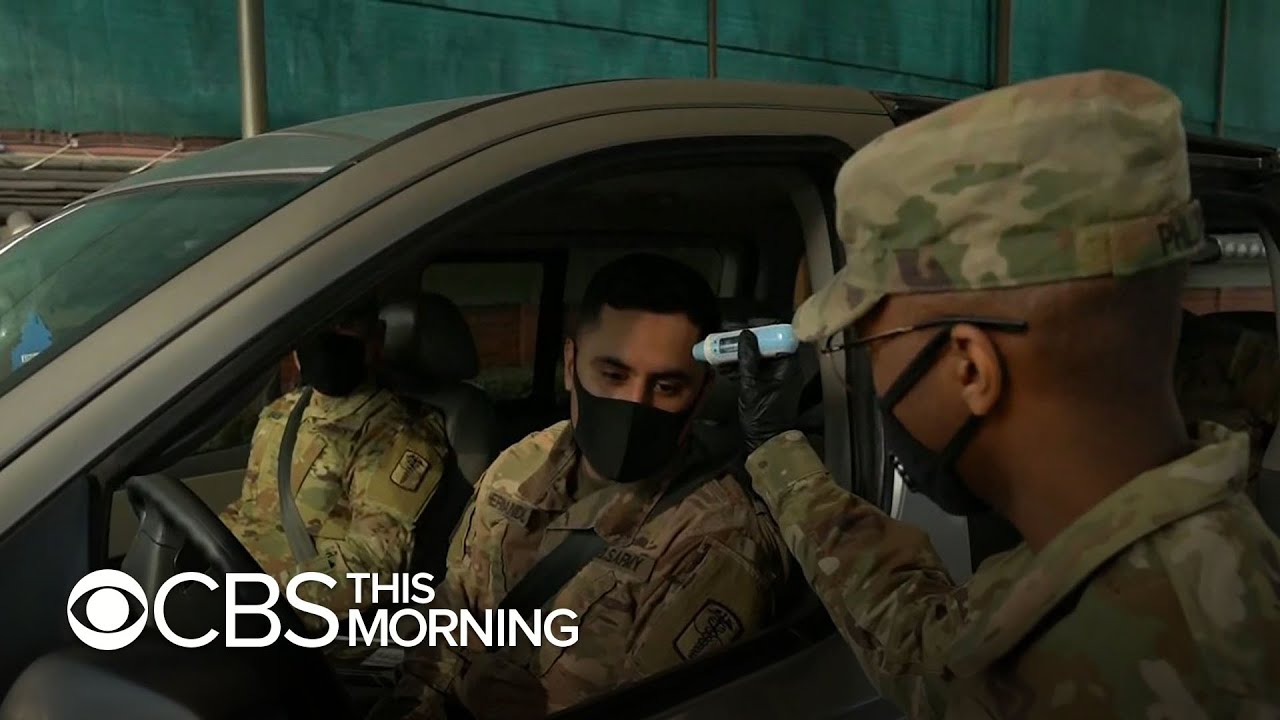
Base schools were closed through at least February 28, non-essential travel off base was curtailed, and every service member and dependent faced mandatory temperature screenings along with strict hygiene protocols. The measures mirrored steps taken elsewhere as the virus spread, echoing the kind of lockdown posture seen in reports on states imposing stricter coronavirus restrictions as case counts climbed.
South Korea’s Broader Surge
The dependent’s case landed against a backdrop of rapidly worsening numbers nationwide. South Korea’s confirmed infections passed 830 by February 24, with Daegu’s church-linked cluster driving much of the spread, prompting Moon Jae-in to move the country’s epidemic alert to its highest level, “Red.” That surge made South Korea, at the time, the site of the largest coronavirus outbreak anywhere outside mainland China — a comparison that drew scrutiny similar to coverage of Russia’s rising case total as the virus pushed into new countries throughout February 2020.
For USFK, the timing sharpened the stakes. With tens of thousands of American personnel and their families embedded in Korean communities near Daegu and elsewhere, any lag in screening or containment risked turning a single dependent’s diagnosis into a foothold for wider spread inside the force.
The next test for USFK came fast: officials were already watching for any sign the virus had reached an active-duty service member, a threshold that would carry far greater operational consequences than a single dependent’s case in Daegu.
Did the US reopen faster than other countries?
California May Start School Year in Summer, Governor Newsom Says
Tucker: What holiday should be canceled next?
New Yorkers Sing Together Out Windows during Coronavirus pandemic
Highlights from Night 1 of the Democratic debate in Detroit