

 InfoSearched
The Fed’s rate-cutting is done for now, and Boston’s Eric Rosengren wants Washington to pick up the slack.
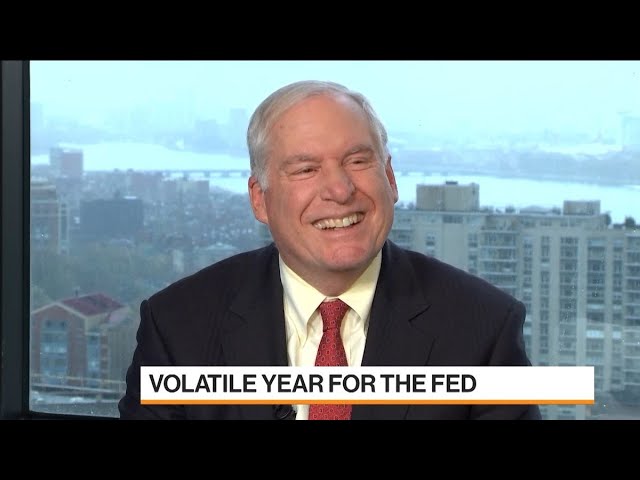
Federal Reserve Bank of Boston President Eric Rosengren sat down with Bloomberg’s Michael McKee on November 18, 2019, for a wide-ranging conversation on “Bloomberg Markets: The Close.” Rosengren, one of the more hawkish voices on the FOMC this year, used the interview to lay out a blunt case: with rates already scraping historic lows, the central bank simply doesn’t have the firepower it once had, and it’s time for fiscal policy to start carrying more of the load.
- Rosengren dissented against the FOMC’s 2019 rate cuts, arguing the domestic economy remained fundamentally sound.
- He warned the Fed has limited ammunition left to fight a future downturn given benchmark rates near historic lows, and said active fiscal policy needs to fill that gap.
- He voiced skepticism toward negative interest rates, pointing to Europe and Japan as evidence of distortions with little payoff for the U.S. financial system.
A Dissenter’s View on the Economy
Rosengren has been a known dissenter on the FOMC throughout 2019, repeatedly voting against rate cuts he believed the economy didn’t need. In the McKee interview, he stuck to that line, telling Bloomberg the underlying U.S. economy was holding up well enough that the Fed didn’t need to keep easing. That view has put him at odds with colleagues more worried about slowing global growth and trade uncertainty weighing on business investment.
Running Low on Rate Ammo
The central thrust of Rosengren’s message was about capacity, not just current conditions. With the federal funds rate already parked near historically low levels after three cuts in 2019, he argued the Fed’s traditional tool — trimming rates further in a downturn — has far less room to work with than in past recessions. That, he said, is exactly why fiscal policy has to be ready to do more of the heavy lifting the next time the economy stumbles, rather than leaving the Fed to backstop the whole thing on its own. It’s a debate that echoes wider arguments in Washington over how aggressively the government should lean on stimulus, discussions readers can track further in coverage of stimulus policy debates.
With rates already near historic lows, the Fed has limited ammunition to respond to a future economic downturn.
Skeptical of Negative Rates
Asked about negative interest rates — a tool deployed by central banks in Europe and Japan — Rosengren didn’t hedge. He told McKee the approach carries real distortions and offers limited benefit if imported into the U.S. financial system, making clear he sees it as a poor fit for American markets even in a stress scenario. That skepticism lines up with broader economics commentary questioning whether sub-zero rates actually stimulate lending or just squeeze bank margins.
Banks Need Bigger Buffers
Rosengren also pushed macroprudential policy as a complement to rate decisions, specifically urging banks to build higher countercyclical capital buffers while the expansion continues. His logic: banks that stockpile capital during good times can absorb losses in a downturn without slamming the brakes on lending, which is exactly the kind of credit crunch that turns a slowdown into something worse.
Rosengren’s comments landed at a moment when the FOMC had just paused its 2019 cutting cycle, leaving markets to wonder whether December’s meeting would bring a fourth reduction or a hold. His answer, delivered straight to Bloomberg’s cameras, was that the ball belongs in Congress’s court now — not the Eccles Building’s.




Legendary TV host Regis Philbin dies at 88
Coronavirus: Italy extends emergency measures nationwide
Tucker torches California for providing free alcohol, nicotine to homeless
New York Doctor On Front Lines Of Coronavirus Pandemic Dies By Suicide
The Race To Develop A Coronavirus Vaccine