

 InfoSearched
Under lockdown, Italy turned its balconies into a nightly concert hall.
By mid-March 2020, Italy had become the epicenter of Europe’s coronavirus crisis, with more than 21,000 confirmed cases and 1,440 deaths recorded by March 15. Instead of retreating into silence behind shuttered storefronts and locked apartment doors, millions of Italians stepped onto their balconies each evening to sing, bang pots, and applaud the doctors and nurses fighting the outbreak on the front lines.
- Italy’s case count topped 21,000 with 1,440 deaths by March 15, prompting nationwide quarantine measures that closed schools and non-essential businesses.
- Residents in Rome, Milan, Naples, and Siena organized nightly balcony “flash mobs” through WhatsApp and social media, singing songs like Adriano Celentano’s “Azzurro” in synchronized neighborhood concerts.
- Handpainted banners reading “Andrà tutto bene” (“Everything will be alright”) and “Io resto a casa” (“I stay home”) appeared on railings and windows across the country.
A Nation Confined, But Not Silent
The Italian government’s sweeping quarantine order shut down non-essential commerce and schooling, confining tens of millions of people to their homes almost overnight. With physical gatherings banned, citizens found a workaround that didn’t require leaving their apartments at all: the balcony. Word spread through group chats and social feeds about a set time each evening when everyone would step outside their windows at once, turning isolated buildings into one shared, open-air performance.
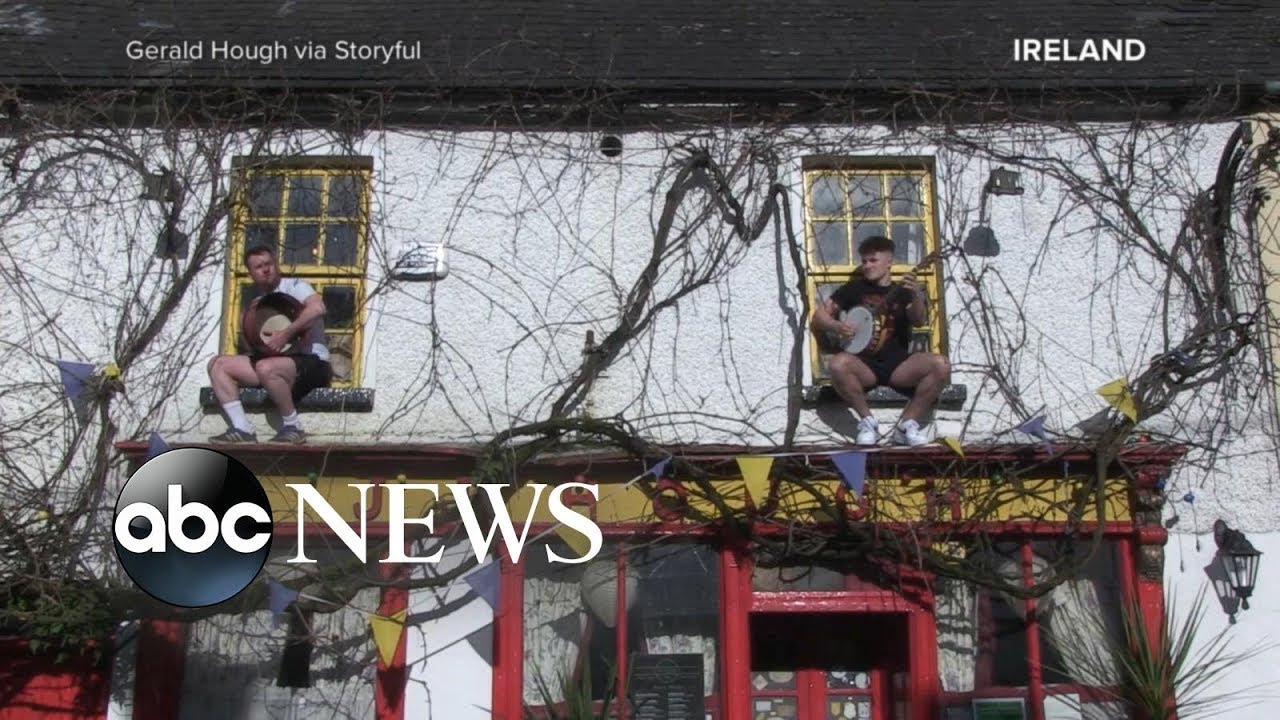
The ritual wasn’t confined to one city. Reuters reported synchronized sing-alongs breaking out in Rome, Milan, Naples, and Siena, with residents playing instruments, banging pots and pans, and belting out both the national anthem and pop staples in unison. It became a nightly fixture of the lockdown, the same way midday applause for medical workers became its own recurring ritual across the country.
Andrà tutto bene — everything will be alright.
Applause for the Doctors on the Front Lines
Alongside the music, Italians organized coordinated rounds of applause specifically aimed at healthcare workers, who were already stretched thin treating a caseload that had climbed past 21,000 in a matter of weeks. Midday and evening clapping sessions became a way to publicly thank hospital staff without violating quarantine rules, a gesture that spread well beyond Italy’s borders as other countries began adopting the same nightly tribute for their own doctors and nurses.
Those gestures ran parallel to the grimmer numbers driving the lockdown in the first place — case counts and death tolls that continued climbing week over week, similar to the trajectory later tracked in projections warning of a jump in the national death toll. The balcony rituals didn’t slow the virus, but they gave overwhelmed hospital staff something rare in those weeks: visible, audible proof that their neighbors noticed.
Neighbors Filling the Gaps
Beyond the music and applause, ordinary Italians built informal support networks for the people most at risk. Neighbors organized grocery runs for elderly residents who couldn’t safely leave their homes, while fitness instructors led impromptu workout sessions from rooftops to keep people moving during confinement. None of it required government coordination — it ran on WhatsApp threads and word of mouth, the same channels that spread the balcony sing-alongs in the first place.
The scenes echoed a broader pattern taking shape as the outbreak, which had started with the strange, eerily quiet streets described early on when Beijing itself resembled a ghost town, moved from China into Europe and forced entire populations indoors. Where Wuhan’s lockdown had been enforced largely through state control, Italy’s balcony movement showed a country finding its own bottom-up way to cope with the same isolation.
A Gesture That Traveled
Within days, versions of the balcony concerts and coordinated applause were popping up outside Italy as other hard-hit countries entered their own lockdowns. The specific songs and banners were Italian, but the underlying idea — that isolated people could still make noise together, at the same time, for the same reason — proved simple enough to copy anywhere quarantine orders took hold.
Nobody in Rome or Siena was under any illusion that singing “Azzurro” from a balcony was going to bend the curve. But for a country locked down with 1,440 dead and climbing, it was the one thing every household on a street could still do together at 6 p.m. sharp — no permit, no gathering, just open a window and make some noise.




Negative Oil Prices Explained.
IMF Sees `Heavy Cloud of Uncertainty’ Hanging Over Global Economy
U.S. first lady Melania Trump statue set on fire in Slovenia
Breaking: Boris Johnson tests positive for COVID-19
EU court backs Apple in fight over $15 billion tax bill