

 InfoSearched
A city drowns in gunfire over a single weekend, and the youngest pay the highest price.
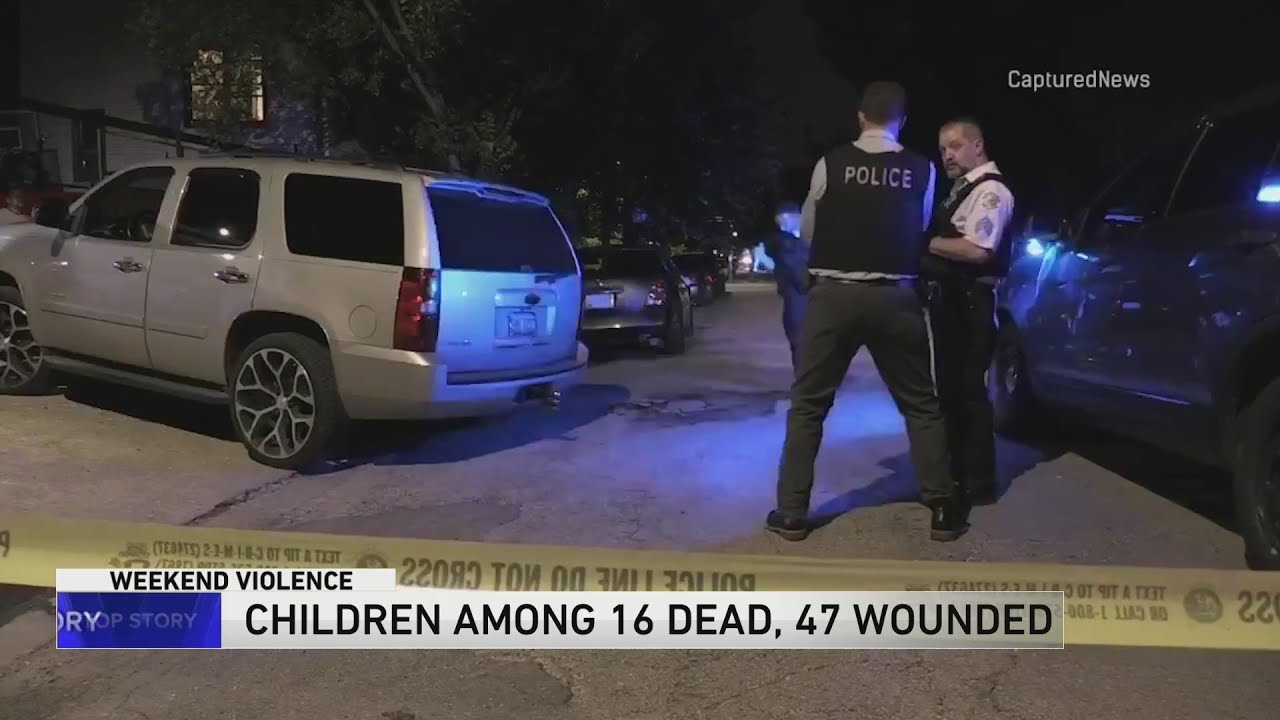
Chicago closed out June 2020 with one of the bloodiest stretches in its recent history. Between Friday and Sunday, at least 16 to 18 people were killed and 47 more wounded in shootings scattered across the city, a toll that included multiple children shot in circumstances that had nothing to do with them.
- 1-year-old Sincere Gaston was shot in the chest around 2 p.m. Saturday near 60th and Halsted in Englewood while riding in a car with his 22-year-old mother, who was grazed in the head; she drove him to St. Bernard Hospital, where he died.
- 10-year-old Lena Nunez was killed around 9:40 p.m. Saturday in Logan Square when a stray bullet from a street gunfight tore through an apartment window in the 3500 block of West Dickens Avenue and struck her in the head.
- The weekend’s toll pushed Chicago past 300 homicides for 2020 far earlier in the year than in 2019, blowing through the sub-300 annual benchmark Police Superintendent David Brown had set in April.
Saturday’s Deadliest Hours
The bloodshed accelerated fast once Saturday afternoon hit. Sincere Gaston was killed as his mother drove him home from a laundromat in Englewood — a routine errand ended by gunfire near 60th and Halsted that also left her with a graze wound to the head. Hours later, on the other side of the city in Logan Square, Lena Nunez was inside an apartment on West Dickens Avenue when an exchange of gunfire between groups on the street sent a bullet through the window and into her head.
Earlier that same day, a 17-year-old boy was shot dead in Humboldt Park in the 900 block of North Central Park Avenue. The killings weren’t confined to one part of town — Englewood, Logan Square and Humboldt Park sit in different corners of Chicago, underscoring how widely the violence spread rather than clustering in a single neighborhood.
A 1-year-old shot dead running errands with his mother, and a 10-year-old killed by a bullet through her own apartment window — on the same Saturday.
The Adult Victims
The weekend’s homicides weren’t limited to children, even if the youngest victims drew the most attention. Rayshaon Williams, 23, was killed in Garfield Park. Terron S. Tate, 24, died in West Pullman. David Santoyo, 31, was shot dead in Brighton Park. Together with the child victims and the 17-year-old killed in Humboldt Park, the names span nearly every stretch of the city’s West and South Sides.
The pattern has become familiar to city officials tracking Chicago’s crime numbers through 2020, and it echoes concerns raised elsewhere as departments nationwide grapple with rising violent crime; New York’s own reckoning with the trend played out as Mayor de Blasio moved to slash $1 billion from the NYPD’s budget even as shootings climbed.
A Benchmark Broken Months Early
Superintendent David Brown had set a goal in April of keeping Chicago’s 2020 homicide count under 300 for the year. By the last weekend of June, the city had already blown past that number, a pace that far outstripped where 2019 stood at the same point. The 47 wounded over three days alone represents a single-weekend toll that would qualify as a bad month in most American cities.
The surge arrived amid a broader national debate over policing and public safety, one that put pressure on local officials in multiple cities to respond to rising violence. That pressure was visible in Washington too, where White House press secretary Kayleigh McEnany called on Democratic leaders to take action against rising violence in cities like Chicago.
Limitations of Quantitative Data
Statistics like “16 dead, 47 wounded” flatten a weekend into a headline. Behind it were a mother driving her bleeding 1-year-old to St. Bernard Hospital, a 10-year-old killed inside what should have been the safest room in her home, and families in Garfield Park, West Pullman and Brighton Park burying adults barely into their 20s and 30s. Five separate neighborhoods produced homicides in roughly 48 hours, with no single flashpoint tying them together beyond the sheer volume of guns on Chicago’s streets that weekend.
Chicago Police haven’t announced a single strategy that reversed a weekend like this one, and by late June the 300-homicide mark for the year was already in the rearview mirror months ahead of schedule. The next test comes fast — the Fourth of July weekend was just days away, historically one of the deadliest stretches on the city’s calendar.
Swarm Of Locusts Threaten Livelihood Of Millions In African, Asian And Middle Eastern Countries
Jonathan Turley: ‘This is wrong,’ being mad is no basis for impeachment
What the MSM Was Afraid to Tell You
Iran launches missiles into US military base in Iraq