

 InfoSearched
Washington and Ottawa are working the phones to get Europe on board against Maduro.
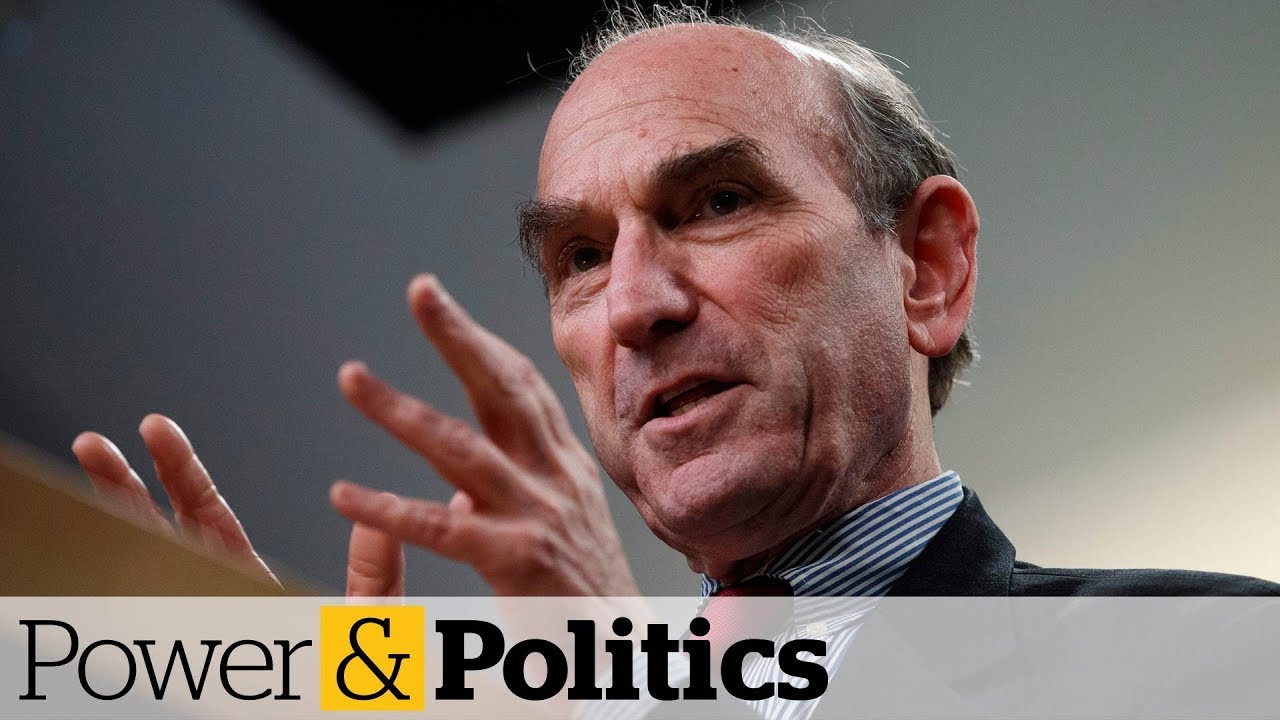
Elliott Abrams, the Trump administration’s special representative for Venezuela, sat down with CBC’s Power & Politics ahead of an international summit in Lima, Peru, to lay out where the diplomatic pressure campaign against Nicolás Maduro stands. His message was blunt: the U.S. and Canada are coordinating closely to push the European Union toward targeted, individual sanctions on regime officials, not just broad economic measures.
The interview landed as Venezuela’s economy continued to unravel under hyperinflation, food and medicine shortages, and a refugee exodus that has sent millions fleeing across South America. The U.S., Canada and dozens of other governments have already recognized National Assembly leader Juan Guaidó as interim president, and Abrams used the Lima meeting to argue that isolating Maduro’s inner circle financially is the fastest route to a transitional government and free elections.
- Abrams confirmed the U.S. and Canada are actively lobbying the European Union to adopt targeted individual sanctions against members of Maduro’s regime.
- The interview came ahead of an international summit in Lima, Peru, focused on coordinating the response to Venezuela’s crisis.
- Abrams framed the goal as pressuring Maduro toward a transitional government and free democratic elections, while the U.S., Canada and dozens of allies already recognize Juan Guaidó as interim president.
Abrams’ Pitch on Sanctions
Abrams told Power & Politics that individual sanctions — asset freezes and travel bans aimed at specific Maduro loyalists rather than blanket measures that hit the broader economy — are the tool Washington wants Brussels to adopt. The argument is straightforward: hit the officials propping up the regime in their bank accounts and travel privileges, rather than punishing the country as a whole, which risks deepening the humanitarian toll on ordinary Venezuelans.
Abrams described the U.S. and Canada as working in lockstep to convince the EU to move beyond statements of concern and into targeted sanctions on Maduro’s inner circle.
Europe’s Strategic Global Importance
Washington’s own sanctions regime on Venezuela has been in place for years, but Abrams made clear that unilateral U.S. pressure has limits. Getting the EU to impose its own targeted sanctions would widen the financial squeeze on regime figures who bank, travel and shop across European jurisdictions the U.S. can’t reach on its own. That multilateral piece is why Abrams treated the Canadian relationship, and the Lima summit itself, as more than a photo opportunity.
The Humanitarian Backdrop
None of this diplomacy is happening in a vacuum. Venezuela’s collapse has produced one of the largest displacement crises in the hemisphere, with millions crossing into Colombia, Brazil and beyond as hyperinflation wipes out savings and basic goods disappear from shelves. Abrams acknowledged the balancing act: tightening the financial noose on regime officials while trying not to worsen conditions for civilians already living through shortages of food and medicine.
That tension has shaped how the U.S. and its allies frame the Guaidó recognition strategy — as a push for a negotiated exit for Maduro rather than a purely punitive economic campaign. It’s the same calculation that’s played out in other standoffs where Washington has leaned on allies to coordinate sanctions rather than go it alone, a dynamic not unlike the pressure campaigns discussed around Russia’s confrontation with the West over Ukraine.
Expected Outcomes of Lima Summit
The Lima summit gave Abrams and his counterparts a venue to press that case directly to the countries whose backing gives the sanctions campaign its weight. With dozens of governments already aligned behind Guaidó, the remaining question was whether Europe would move from recognition to real financial pressure — the exact ask Abrams laid out on Canadian television before the delegations even sat down.
Whether Brussels actually signs off on individual sanctions is the next thing to watch — Abrams made clear on CBC that Washington and Ottawa see it as the missing piece, not a formality, and it’s the item they were pushing hardest as delegates gathered in Lima.




Italy coronavirus deaths rise by record 475 in a day
BLM Protesters SHOOT An 8-Year-Old Girl in Atlanta!
Watch Live: Former Trump adviser testifies in impeachment hearings Day 5
Tank launched into air by chemical factory blast – BBC News
Pope calls for healing over Canada school discovery