

 InfoSearched
Brazil’s president is telling the world the pandemic is a “gripezinha” while his own health system buckles under the weight of it.
As of May 5-6, 2020, Brazil had logged more than 114,000 confirmed COVID-19 cases and was closing in on 8,000 deaths, numbers that made it South America’s hardest-hit country by a wide margin. President Jair Bolsonaro has spent the outbreak calling it a “little flu,” skipping masks at rallies, and pushing back against the very quarantine orders his own state governors are trying to enforce. BBC News captured the disconnect on the ground: cemeteries backing up in Manaus, hospitals straining in Rio de Janeiro and São Paulo, and a president still insisting none of it amounts to a serious problem.
- Brazil had surpassed 114,000 confirmed cases and nearly 8,000 deaths by early May 2020, the worst toll in South America.
- Bolsonaro fired Health Minister Luiz Henrique Mandetta in mid-April after Mandetta backed quarantine measures and scientific guidance, replacing him with Nelson Teich.
- Justice Minister Sérgio Moro resigned in late April, accusing Bolsonaro of trying to improperly interfere with the Federal Police to protect his family — deepening the political turmoil around the pandemic response.
A President Who Won’t Call It a Crisis
Bolsonaro has been consistent on one point since the virus arrived in Brazil: he doesn’t buy the severity of it. He’s dismissed COVID-19 as a “gripezinha,” argued that the economic damage from lockdowns is a bigger threat to Brazilians than the disease itself, and has publicly championed hydroxychloroquine, the anti-malarial drug with no proven benefit against the virus. He’s shown up to rallies without a mask and openly clashed with the state governors — in São Paulo, Rio de Janeiro, and elsewhere — who’ve tried to impose the kind of social distancing rules the World Health Organization was recommending.
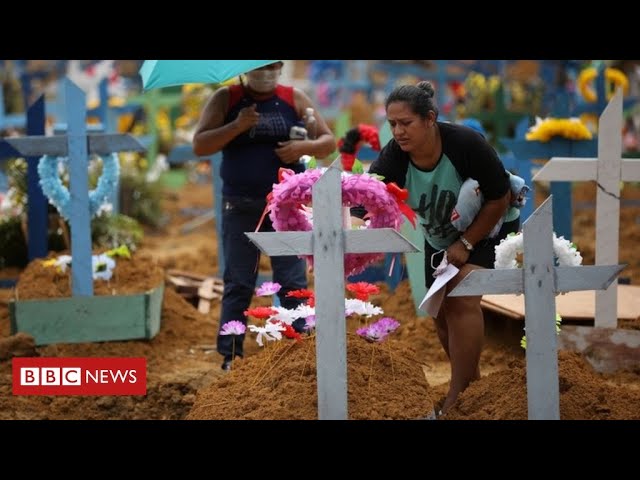
Cemeteries in Manaus were already backing up bodies as the president dismissed the outbreak as a “little flu.”
The Health Ministry in Chaos
The clearest sign of how fractured Brazil’s federal response had become came in mid-April, when Bolsonaro fired Health Minister Luiz Henrique Mandetta. Mandetta had pushed for quarantine measures and stuck close to scientific guidance — exactly the approach Bolsonaro was undermining in public. His replacement, Nelson Teich, stepped into a job where the tension over lockdown exemptions and federal-versus-state authority hadn’t gone away; it had simply changed which minister had to manage it.
Political Fallout Beyond Health Policy
The pandemic response wasn’t the only fire Bolsonaro was fighting. Justice Minister Sérgio Moro, the anti-corruption figure who’d built his career prosecuting the Operation Car Wash cases, resigned in late April and accused the president of trying to improperly influence the Federal Police to shield his family from investigation. That resignation landed in the middle of the health crisis, adding a political scandal on top of a public-health one and giving Bolsonaro’s critics — inside Brazil and abroad — more ammunition against an administration already accused of mismanaging the outbreak.
A Healthcare System Under Strain
On the ground, the numbers were outpacing the infrastructure. Hospitals in São Paulo and Rio de Janeiro were filling up, and Manaus, the Amazon’s largest city, was seeing a cemetery backlog as burials couldn’t keep pace with deaths. Medical professionals inside Brazil were warning the country was on track to become one of the world’s pandemic epicenters — a trajectory playing out elsewhere in Latin America and India, where infection rates were climbing through the same period. Brazil’s death toll was still well behind the figures being reported in Russia, but the trend lines and the strain on hospitals told a similar story of a system losing ground.
Bolsonaro’s approach has also fed unrest well beyond Brazil’s borders, echoing the kind of backlash seen in Serbia, where anger at the government’s coronavirus response turned violent that same spring. In Brazil, the anger hasn’t reached the streets in the same way, but the governors defying Bolsonaro’s push to reopen — and the health minister he fired for agreeing with them — tell you where the fault line actually sits: not between Brazilians and the virus, but between the president and everyone in his own government trying to fight it.

COVID-19 – An Easy Way to Know You DON’T HAVE IT!
BREAKING: Boris Johnson leaves hospital as coronavirus recovery continues
Tank launched into air by chemical factory blast – BBC News
Students are fighting climate change, one TikTok video at a time | ABC News
‘COVID On My Face,’ Colleagues Fall Ill: NYC Doctors, Nurses Plead For Help