

 InfoSearched
China’s coronavirus playbook wasn’t just masks and lockdowns — it was a nationwide surveillance grid that other countries are now quietly copying.
BBC cyber reporter Joe Tidy’s report breaks down exactly how Beijing turned its existing data infrastructure into an outbreak-control machine, and why China’s official daily case count fell from thousands to near zero. It also traces how governments from Seoul to Tehran have begun borrowing pieces of the same toolkit — and what civil liberties groups say that trade-off actually costs.
- China’s national ID system underpins the entire tracking apparatus — buying a phone, booking a train ticket, or downloading an app all require it, producing a single digital trail tied to each person.
- A color-coded health QR code — green, orange, or red — determines whether a citizen can move freely, faces restrictions, or is sent into mandatory quarantine.
- Adam Schwartz of the Electronic Frontier Foundation warns of “mission creep,” arguing that emergency surveillance powers governments take in a crisis tend to outlast the crisis itself.
The National ID as the Anchor
Everything China’s system does traces back to one requirement: a national ID. Tidy’s report explains that the ID is needed to buy a phone, purchase train tickets, or download the apps citizens now rely on daily, which means every transaction generates a digital trail that’s already linked directly to a person’s identity. There’s no anonymous SIM card or cash-only workaround baked into the system the way there might be elsewhere.
That single point of identity is what makes everything downstream — geolocation pulls, health codes, contact tracing — instantly actionable rather than theoretical.
Geolocation and Contact Tracing in Practice
Telecom geolocation data does the heavy lifting on enforcement. According to the report, authorities use it to confirm people under quarantine orders are actually staying home, with automated alerts triggered the moment a quarantined phone moves outside its designated address. When someone tests positive, the same data is used to reconstruct their movements over the prior 14 days.
Algorithms then cross-reference that movement history against transport records — train passenger manifests, for instance — to identify who else was nearby, and automatically fire off SMS warnings to those potential contacts. It’s contact tracing done at a speed and scale no team of human investigators could match.
Green, Orange, Red: The Health Code System
The most visible piece of the system for ordinary citizens is the health code app. Depending on a person’s recent location history and test results, the app assigns one of three colors: green means unrestricted movement, orange flags someone who’s recently visited an infection hotspot and faces restrictions, and red — for confirmed or contagious cases — triggers mandatory quarantine.
“There is a great concern that when government gets new powers in a crisis, government never gives those powers away even when the crisis ends.”
That warning from Adam Schwartz, senior lawyer at the Electronic Frontier Foundation, is the central tension the report lands on. Schwartz argues that before deploying mass surveillance tools, governments need to prove they’re strictly necessary and actually effective — not just convenient.
Boots on the Ground, Not Just Code
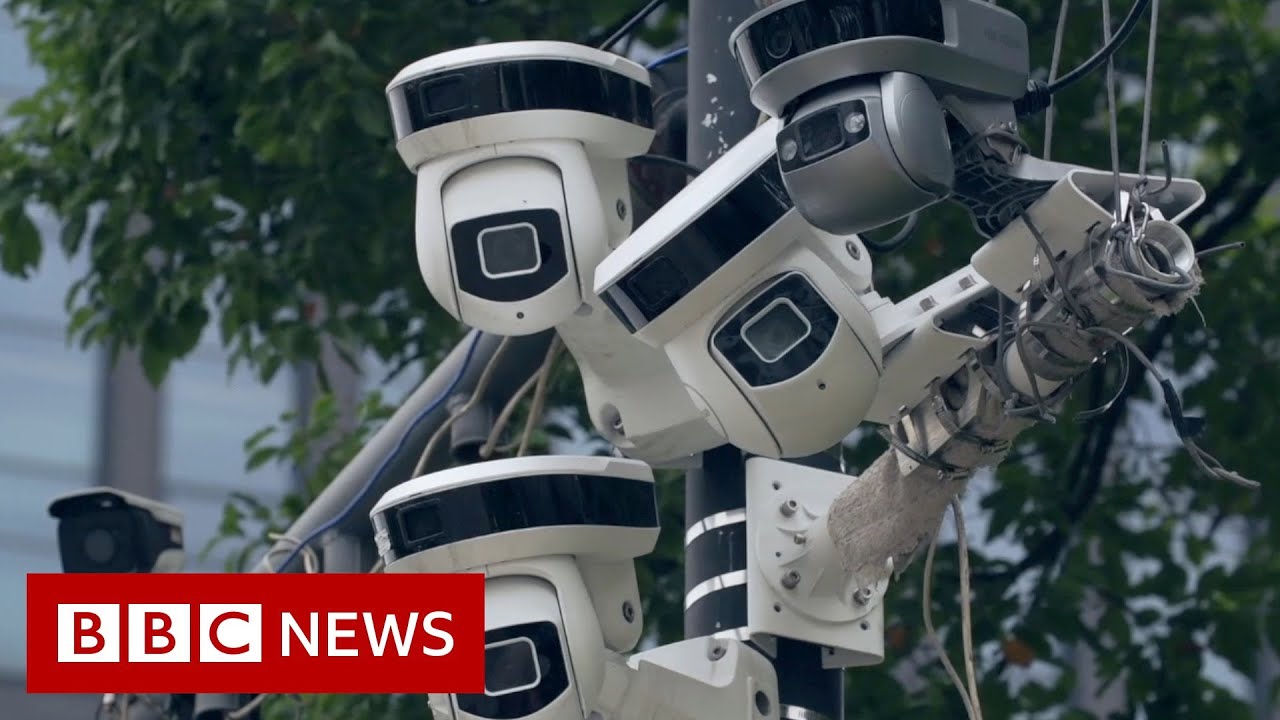
None of this runs on software alone. The report shows neighborhood volunteers, security guards, and police physically stationed at apartment gates and transit checkpoints, backing up the digital red-orange-green system with old-fashioned human enforcement. Layered on top of that are the more headline-friendly gadgets — thermal facial-recognition cameras, food delivery robots inside hospitals, and drones on patrol — but Tidy’s reporting makes clear the mundane data-matching between IDs, phones, and transport logs is doing far more of the actual work than the flashy hardware.
The System Goes Global
As China’s official case numbers dropped, other governments started borrowing pieces of the model. South Korea began sending emergency location alerts to residents’ phones. Taiwan, Singapore, Israel, Iran, and Russia each rolled out their own versions of mobile or digital tracking, at varying levels of intrusiveness. It’s a sharp contrast to the earlier chaos captured in reports of Beijing turning into a ghost town in the outbreak’s early weeks — this is the more organized, data-driven phase that followed.
Schwartz’s line about governments never willingly giving powers back is the one worth sitting with here, because the report doesn’t offer a counterexample — no country featured has rolled back what it built. The question Tidy leaves open isn’t whether the tracking worked in China’s outbreak; it’s whether Seoul, Tel Aviv, and Moscow’s health ministries switch these systems off once their own case curves flatten, or just keep the infrastructure running quietly in the background.









India’s campaigning Miss World – BBC News
3 New York Children Die Of Mystery Illness Believed To be Linked To COVID19
The future of the American mall
China Sends Warning Sign With Taiwan Travel Ban
Several states imposing stricter coronavirus restrictions as infections continue to spike