

President Trump Says He Did Not Discuss Election Interference With Putin | Velshi & Ruhle | MSNBC
 InfoSearched
Trump says election meddling never came up with Putin — again.
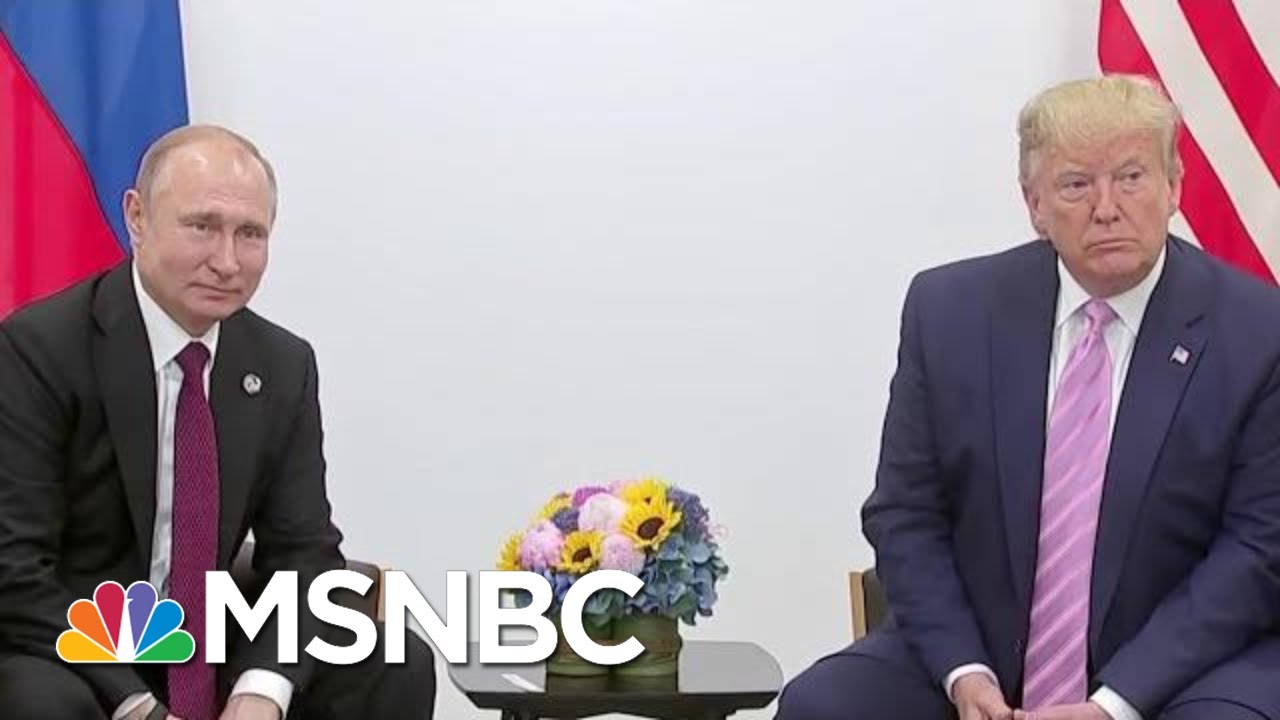
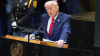
President Trump held a phone call with Russian President Vladimir Putin on July 31, 2019, and when reporters asked afterward whether he’d pressed Putin on election interference, his answer was blunt: “We didn’t talk about that.” MSNBC’s Ali Velshi and Stephanie Ruhle picked the moment apart on Velshi & Ruhle, framing it as the latest entry in a pattern rather than an isolated slip.
- Trump told reporters “We didn’t talk about that” regarding election interference during his July 31 call with Putin, which he otherwise called “very productive.”
- The White House and the Kremlin said the conversation actually centered on bilateral trade and the wildfires raging across Siberia, with Trump offering U.S. firefighting assistance.
- Velshi and Ruhle tied the call to Trump’s May 3, 2019 conversation with Putin — where meddling was similarly skipped despite the Mueller report — and to his finger-wagging “Don’t meddle in the election” joke at the June 2019 G20 in Osaka.
Summary of Official Discussions
According to the White House and Kremlin readouts of the July 31 call, the agenda was trade and wildfires — not the security of the next American election. Siberia was in the middle of some of its worst fires in years, and Trump told reporters he’d offered to send U.S. firefighting resources to help. Election interference, by his own account, simply wasn’t part of the conversation.
That’s notable given the moment: this call came roughly a year after Trump’s widely criticized Helsinki summit with Putin and just months after Special Counsel Robert Mueller’s report detailed Russia’s 2016 operation in granular detail. Velshi and Ruhle used the segment to note that U.S. intelligence agencies were actively warning that Russia intended to target 2020, making the omission harder to write off as routine diplomatic small talk.
A Pattern Going Back to May
The July 31 call wasn’t the first time Trump skipped the subject with Putin directly. On May 3, 2019, the two leaders spoke by phone in the immediate aftermath of the Mueller report’s release — a document that laid out, in detail, how Russian intelligence and troll farms worked to influence the 2016 race. Even then, by Trump’s own account, election meddling didn’t come up.
Velshi and Ruhle walked through that call alongside the July 31 one to argue this wasn’t a one-off oversight but a consistent choice. The segment’s framing was less about any single phone call and more about a president who, call after call, hasn’t used his direct line to Putin to confront him on the issue U.S. intelligence considers a live threat.
The Osaka Finger-Wag
The clearest visual of that pattern came a month earlier, at the June 2019 G20 summit in Osaka, Japan. Sitting beside Putin in front of cameras, Trump smiled, wagged his finger and joked, “Don’t meddle in the election.” It got a laugh in the room. It also became a flashpoint for critics who argued the moment trivialized an issue the intelligence community was treating with real alarm.
“We didn’t talk about that.”
That contrast — a joking aside at Osaka, a subject-not-raised at two separate phone calls — is what Velshi & Ruhle zeroed in on. National security officials had been warning publicly that Moscow intended to target the 2020 race the same way it targeted 2016, a concern that came up repeatedly in coverage of other unresolved questions about Trump’s dealings with Russia. Against that backdrop, the segment argued, a wagged finger and a shrugged-off phone call don’t add up to the kind of direct confrontation intelligence officials were asking for.
Significance of Kremlin Narratives
Both governments’ accounts lined up on substance — trade, Siberia’s fires, Trump’s offer of U.S. help — which left little ambiguity about what was actually said on July 31. There was no dispute to adjudicate about whether meddling came up; both sides agreed it simply didn’t. That’s part of what gave the MSNBC segment its edge: this wasn’t a case of conflicting readouts, it was a case of an agreed-upon omission, on a subject where similar U.S.-Russia friction has repeatedly resurfaced in later high-stakes moments between Washington and Moscow.
Trump’s next scheduled call with Putin wasn’t announced as of August 2, and the White House gave no indication election security would be added to any future agenda. For now, the record stands at three separate opportunities — Helsinki’s aftermath, the May 3 call, and July 31 — where the topic simply didn’t come up on the record.

Top headlines from the political world
I’m 16 and went to the hospital twice for COVID-19. This is what it’s like l GMA Digital
Schools Face Tough Choices About Reopening As Parents, Teachers Weigh Risks
U.S. Reopens Travel For The Vaccinated As COVID-19 Cases Surge Across Europe
Where Is Kim Jong-un? How Experts Track North Korea’s Leader