

 InfoSearched
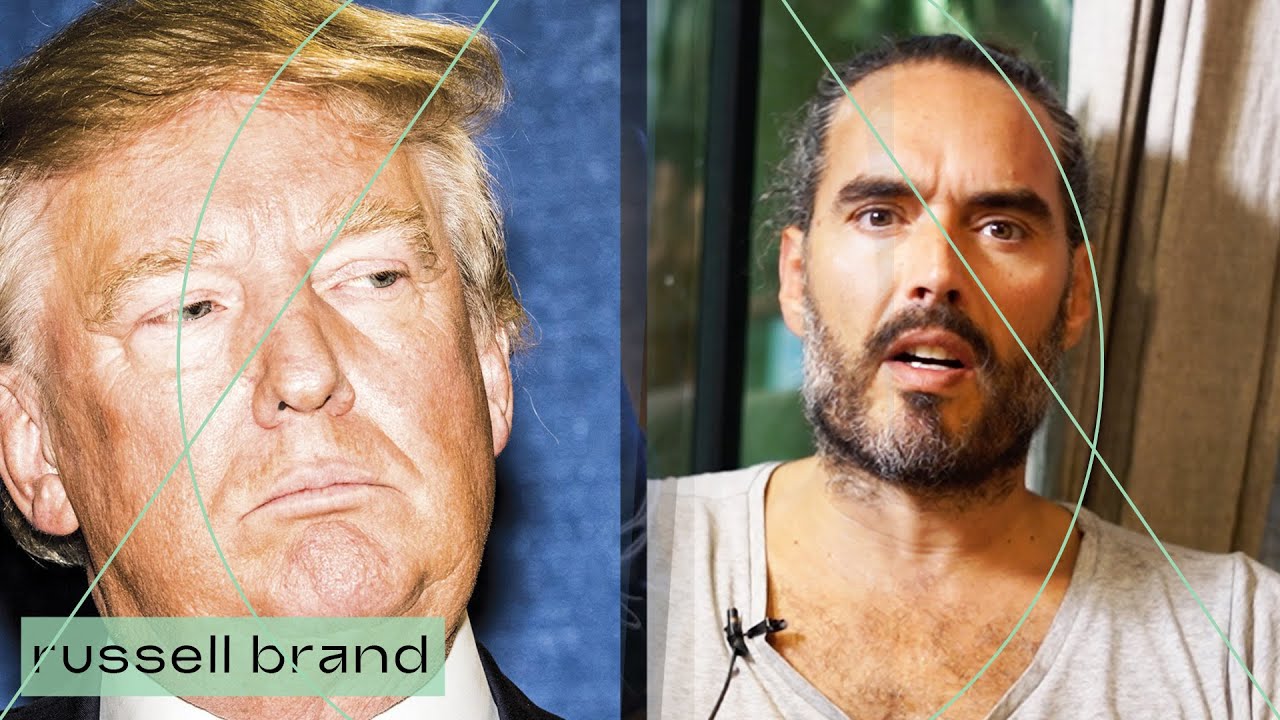
Russell Brand thinks the left keeps losing to Donald Trump for the same reason every time — they won’t stop looking down on the people who vote for him.
In “Why The Left Can’t Handle Donald Trump,” Russell Brand turns his commentary away from the usual pile-on and asks a different question: why does moral outrage keep failing as a strategy against Trump? The comedian-turned-political-commentator isn’t defending Trump’s nationalism, which he repeatedly calls jingoistic. He’s arguing that the reaction to it — the sneering, the moral one-upmanship, the refusal to take Trump’s base seriously — is exactly what keeps handing him the advantage.
- Brand argues the left’s dominant weapon against Trump is moral superiority, not policy engagement, and that this approach backfires with working-class voters.
- He contrasts Trump’s raw disruption of politics with what he calls the “sanitized illusions” of traditional bipartisan politics.
- Brand contends establishment Democrats and liberal commentators alienate ordinary voters by mocking Trump instead of addressing the material failures of the neoliberal status quo that created his opening.
The Case Against Moral Superiority
Brand’s central claim is that liberal opposition to Trump has become a performance of virtue rather than a political argument. Instead of engaging with why millions of Americans voted for him, he says, much of the media and political class simply expresses disbelief that they did — treating Trump voters as a problem to be diagnosed rather than a constituency to be persuaded. That instinct, Brand argues, is precisely what makes the opposition ineffective: you can’t out-argue a movement you refuse to understand.
He’s careful to say this isn’t an endorsement of Trump’s politics. Brand repeatedly flags Trump’s nationalism as jingoistic and, in his view, ultimately unhelpful to the people who back it. But he separates critiquing the message from critiquing the messenger’s supporters, arguing the left routinely blurs the two — and pays for it at the ballot box.
Anti-Establishment Grievance as the Real Story
For Brand, Trump’s appeal was never really about Trump. It was about a vacuum left by decades of bipartisan neoliberal consensus that, in his telling, failed ordinary workers on both sides of the aisle. He points to the coverage of Trump’s rise as evidence: reporters and commentators fixated on his rhetoric and behavior while largely skipping past the economic and cultural grievances driving people toward him in the first place.
Scoffing at Trump voters isn’t a counterargument — it’s a confirmation of everything they already believe about the people scoffing.
That framing runs through the whole video. Brand isn’t asking viewers to excuse Trump’s record; he’s asking why the left’s chosen weapon — contempt — keeps failing to dent his support, election after election, controversy after controversy.
Bipartisan Politics as Illusion
Brand’s sharpest line of argument targets the establishment itself, Democratic and Republican alike. He describes conventional two-party politics as a kind of managed spectacle — a “sanitized illusion” that gave the appearance of choice while delivering the same neoliberal outcomes regardless of who won. Trump, in this reading, wasn’t an aberration that broke a healthy system; he was a symptom of a system that had already stopped serving the people it claimed to represent, exploited by someone willing to say so out loud, however cynically.
That’s part of why Brand thinks conventional attacks bounce off Trump. Voters who feel unheard by both parties aren’t moved by pundits explaining, again, why Trump is unfit — they’ve usually already priced that argument in. Media outlets covering the fallout from Trump’s most controversial moments, from his defense of the St. Louis couple who pointed firearms at protesters to his handling of unrest across American cities, kept running the same moral-outrage playbook Brand says doesn’t work.
Defining Effective Political Opposition Strategies
Brand’s implicit prescription is straightforward: stop performing disgust and start addressing the material conditions — stagnant wages, hollowed-out towns, a political class seen as self-serving — that made Trump’s message land. He points to figures across the Democratic establishment who’ve leaned into warnings about the party’s direction, arguing that even Barack Obama’s own warnings to Democrats during a joint fundraiser with Joe Biden reflect an awareness inside the party that scolding alone isn’t a strategy.
He extends the same critique to cable news commentary, where the format itself often rewards outrage over understanding. It’s the kind of dynamic on display whenever hosts frame Trump coverage as a morality play rather than a policy debate — the same instinct Brand says shows up whenever cable hosts trade substance for outrage instead of explaining what’s actually driving voters toward populist figures in the first place.
Brand doesn’t offer a tidy policy platform to replace the moral outrage — that’s not really his brief. His point is narrower and, he’d argue, more useful: as long as opposing Trump means feeling superior to the people who voted for him, the opposition will keep losing the argument it thinks it’s winning.





What It’s Like to Be Stung by a Murder Hornet
President Trump: ‘We have to get back to work’
World leaders meet in Vienna to salvage Iran nuclear deal
Trump’s Baltimore battle threatens to overshadow strong economy
Cuomo announces mobile coronavirus testing facility in New Rochelle, New York