

 InfoSearched
Small business owners just found out the rescue plan might sink them faster than the virus did.
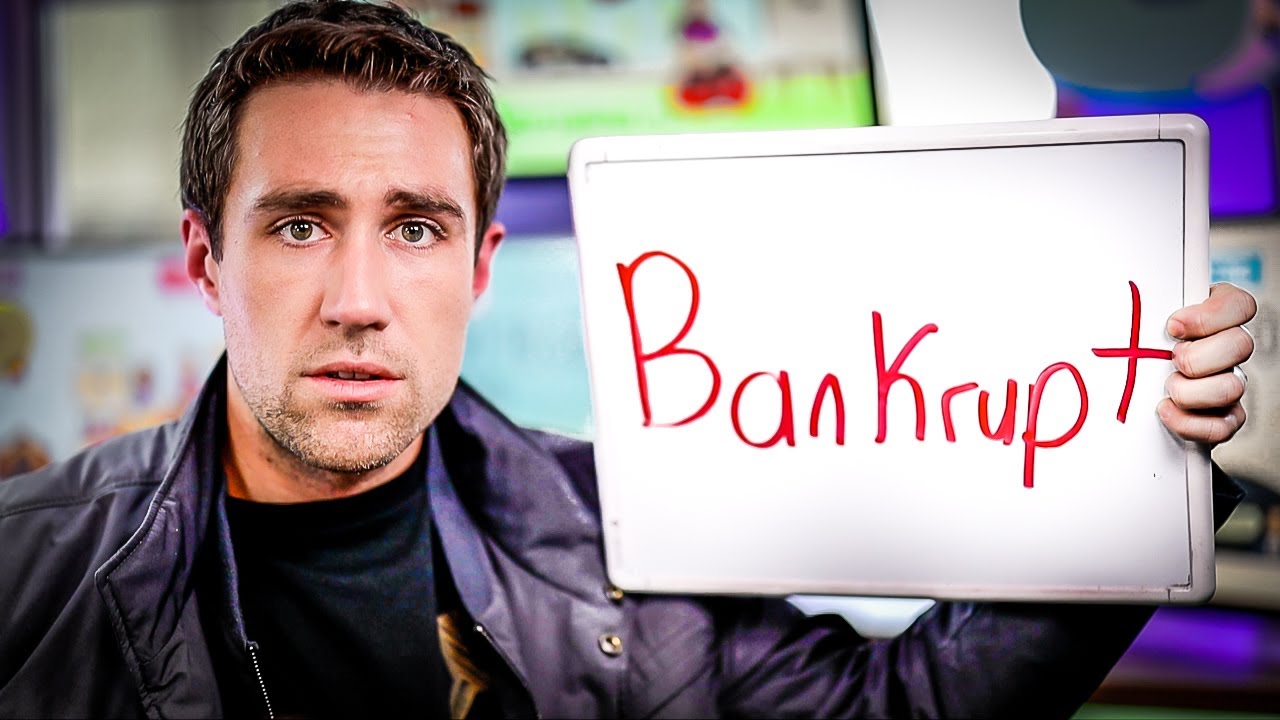
Financial analyst and YouTuber Meet Kevin used his April 2020 breakdown to warn that the federal government’s flagship coronavirus relief tool for small business, the Paycheck Protection Program, carries a hidden trapdoor. The mechanics that were supposed to keep workers on payroll during the shutdown could instead saddle employers with fast-maturing debt right as revenue has collapsed. His argument centered on one uncomfortable mismatch: the incentives built into the CARES Act’s unemployment expansion directly undercut the incentives built into the PPP.
The tension is simple to state and brutal to live through. Workers collecting the CARES Act’s Federal Pandemic Unemployment Compensation get an extra $600 a week stacked on top of their state benefit, meaning plenty of laid-off employees can out-earn their old paycheck by staying home. Employers who took a PPP loan expecting to rehire that same staff now risk missing the loan’s strict conditions, turning what was pitched as free money into a two-year loan they have to pay back at the worst possible time.
- The CARES Act’s $600-per-week FPUC supplement means many furloughed workers can collect more in unemployment than they’d earn returning to their old job, giving them little reason to answer an employer’s recall.
- Under PPP rules, employers who fail to spend at least 75% of the loan on payroll and maintain full headcount during the eight-week covered period see the money convert from a forgivable grant into a loan maturing in just two years at 1% interest.
- Kevin extended the critique to the Federal Reserve’s newly announced Main Street Lending Program and the corporate airline bailouts, warning that heavy strings attached to all three could tip the economy into a W-shaped double-dip rather than the V- or U-shaped recovery officials were forecasting.
The Forgiveness Math That Doesn’t Add Up
The PPP was sold as a grant disguised as a loan: businesses get cash to cover payroll, rent and utilities, and the balance gets forgiven if they keep employees on the books. But forgiveness only applies if at least 75% of the proceeds go to payroll and staffing stays intact through the eight-week covered period that starts the moment the funds land. Miss either threshold and the entire unforgiven balance flips into a two-year note at 1% interest — a compressed repayment window for a business that may still be sitting on zero revenue.
If employers fail to spend at least 75% of the loan on payroll and maintain full headcount during the eight-week covered period, the money stops being a grant and becomes debt due in two years at 1% interest.
Unemployment That Pays Better Than the Job
Here’s where the trap tightens. A business owner draws a PPP loan specifically to rehire staff, but the same CARES Act that funded the PPP also funded the $600-per-week FPUC boost on top of regular state unemployment. For a huge share of hourly and lower-wage workers, that combination beats their old paycheck outright. Kevin’s point was that a rational employee in that position has every reason to ignore a recall notice — which then blows up the employer’s headcount requirement and pushes the loan toward the debt-conversion cliff described above.
Main Street Lending and the Airline Bailouts
Kevin argued the PPP isn’t an isolated design flaw — it’s a pattern. The Federal Reserve’s freshly unveiled Main Street Lending Program was shaping up with similarly heavy conditions attached, and the corporate airline bailouts were already drawing warnings from carriers themselves about the strings tied to that money. Layer enough of these conditional rescue packages on top of each other, he warned, and the recovery curve everyone was betting on — a quick V, or at worst a slower U — starts to look more like a W, with a second dip triggered by the bailouts themselves rather than the virus.
Looking to Germany and Switzerland
The contrast Kevin drew was with European short-time work schemes, particularly Germany’s Kurzarbeit model and Switzerland’s equivalent. Instead of routing money through employers with forgiveness conditions attached, those governments subsidize wages directly and keep employees formally attached to their existing employer during the downturn. No headcount test, no eight-week clock, no debt-conversion cliff — just a direct wage subsidy that keeps the employer-employee relationship intact without punishing the business for the workforce dynamics unemployment benefits created.
For businesses that had already drawn PPP funds by mid-April, the eight-week payroll clock was already running, which meant the $600 unemployment mismatch wasn’t a future risk — it was live math every employer had to solve in real time while trying to get furloughed staff back on the schedule. Anyone tracking whether Washington would fix the incentive problem before that clock ran out had reason to keep an eye on the next stimulus package moving through Congress, much like the debate detailed in Stimulus Check 2: When will the Next Stimulus Pass?, even as state-level shutdowns covered in California under lockdown as surge of coronavirus cases explodes nationwide kept revenue at zero for the very businesses the PPP was supposed to save.





The ‘unknown’ Covid deaths in rural India
Coronavirus Second Wave Is Coming – Understand what it’s about and prepare
Coronavirus: Italy extends emergency measures nationwide
EU court backs Apple in fight over $15 billion tax bill
SPECIAL REPORT: China’s deadly coronavirus cover-up