

 InfoSearched
Four constitutional scholars just told Congress whether Trump’s Ukraine dealings meet the bar for impeachment.
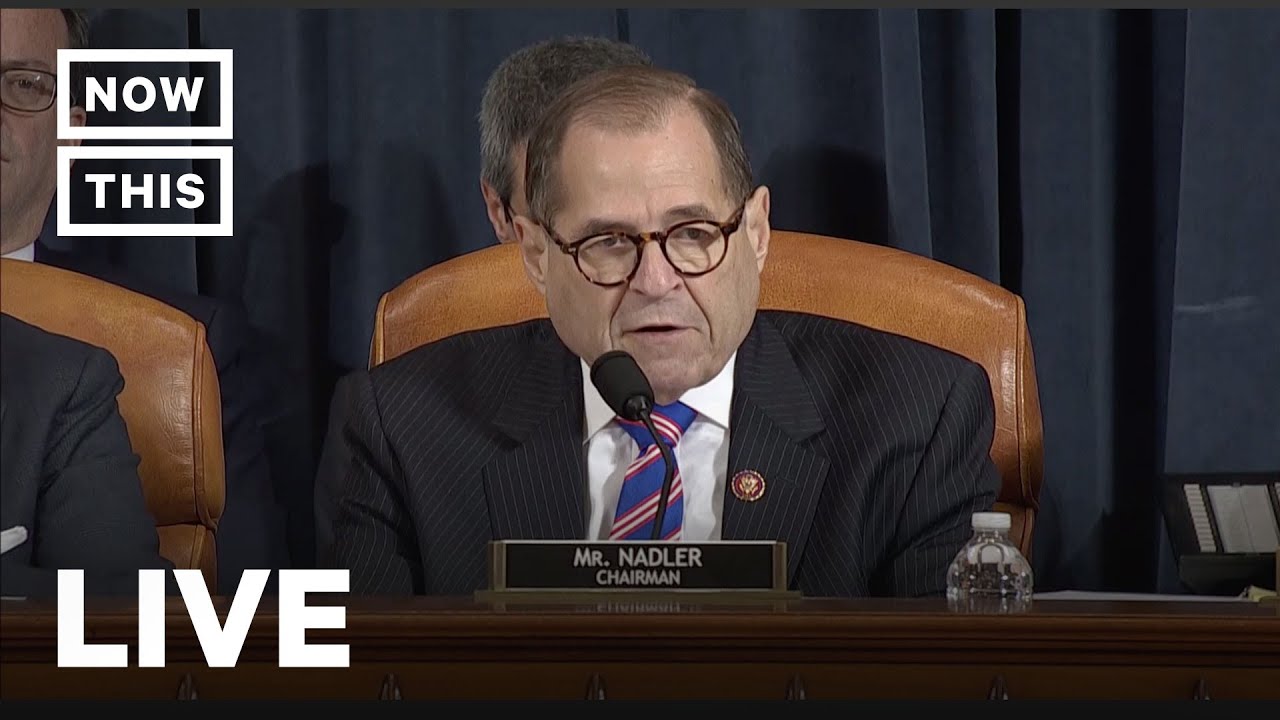
The House Judiciary Committee opened its first public impeachment hearing on the morning of December 4, 2019, and the question on the table wasn’t what happened in Ukraine — it was whether it rises to “Treason, Bribery, or other high Crimes and Misdemeanors.” Chairman Jerrold Nadler (D-NY) brought in four constitutional law scholars to answer that question directly, three called by Democrats and one by Republicans, and they landed in almost entirely opposite places.
The hearing followed the release of a 300-page report from the House Intelligence Committee accusing Trump of soliciting foreign interference from Ukraine for his own political benefit ahead of the 2020 election. That report set the factual table; Wednesday’s hearing was about whether those facts, if true, actually clear the constitutional threshold for removing a president.
- Harvard’s Noah Feldman testified that trading White House meetings and military aid for a domestic political favor fits the framers’ own definition of abuse of power.
- Stanford’s Pamela Karlan pointed to Ambassador Gordon Sondland’s testimony that Trump wanted only a public announcement of an investigation into Joe Biden, not an actual probe.
- George Washington University’s Jonathan Turley, the sole Republican witness, argued the record is incomplete and doesn’t show direct evidence of bribery or a high crime.
Three Scholars, One Verdict
Noah Feldman, Pamela Karlan and Michael Gerhardt — the three witnesses Democrats selected — all told the committee that Trump’s conduct clearly meets the impeachable-offense standard. Feldman framed it around leverage: withholding a White House meeting and military assistance in exchange for investigations that would help him politically is exactly the kind of self-serving abuse of office the framers built impeachment to check.
Gerhardt, from the University of North Carolina School of Law, went further, warning that letting this conduct slide would gut the whole point of the impeachment clause. His argument was blunt: if Congress won’t act here, the safeguard against a president behaving like a king stops meaning anything.
Karlan’s testimony leaned on Sondland, the U.S. ambassador to the European Union, whose closed-door and public testimony indicated Trump wasn’t interested in Ukraine actually investigating anything — he wanted the announcement of an investigation into Biden, publicly, because the political damage came from the headline, not the substance.
The Lone Dissent
Jonathan Turley was the only witness called by Republicans, and he used his testimony to argue against impeachment on the record as it stood that day. His case wasn’t that Trump did nothing questionable — it was that Democrats were moving too fast, on an investigation he called incomplete, without direct evidence of bribery or a high crime that could survive scrutiny.
Turley warned that impeaching on this record would set a dangerous precedent for every president who follows.
Republican Ranking Member Doug Collins (R-GA) took a similar line from the dais, dismissing the entire hearing as a partisan “railroad job” — a phrase that captured the GOP’s core objection: that the process, not just the conclusion, was rigged from the start.
The Legal Sparring
Majority counsel Norm Eisen spent much of the session pressing the three Democratic-called scholars on legal precedent, trying to nail down whether soliciting foreign interference for personal political gain has historically counted as an impeachable abuse of official power. Feldman, Karlan and Gerhardt each answered yes, tying their reasoning back to founding-era debates over foreign influence corrupting the presidency — the same fear, they argued, that Sondland’s account of the Ukraine pressure campaign brought back to life.
The hearing ran the length of a full academic seminar and produced almost no daylight between the two sides on the facts — the dispute was entirely about what those facts add up to constitutionally, which is exactly where this fight was always going to live once it reached the Judiciary Committee.
Future Strategic Outlook
With the constitutional framing now on the record, the Judiciary Committee’s next move is drafting actual articles of impeachment — the step that turns Feldman’s, Karlan’s and Gerhardt’s testimony into specific charges the full House will eventually vote on. Collins and Turley’s objections aren’t going away either; expect Republicans to keep hammering the “incomplete investigation” argument all the way to the floor vote, especially given how much of Wednesday’s hearing turned on Sondland’s account rather than a document or a recording.


Countries across the world take precautions as coronavirus spreads
Children among 16 dead, 47 wounded in Chicago weekend shootings
Jeff Zucker resigns from CNN in stunning announcement
House Dems announce articles of impeachment
President Trump Says He Did Not Discuss Election Interference With Putin | Velshi & Ruhle | MSNBC