

 InfoSearched
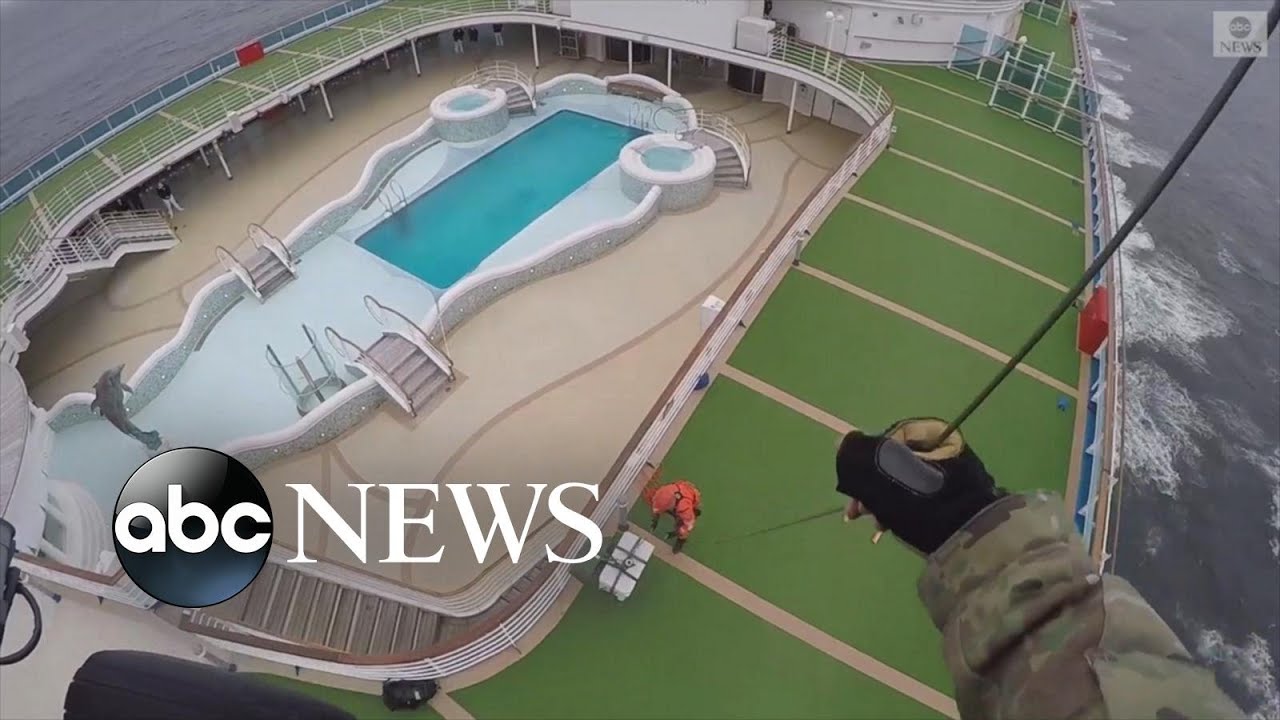
A National Guard helicopter hovers over the Grand Princess and lowers the tests that will decide 3,500 lives at sea.
On March 5, 2020, the California Air National Guard’s 129th Rescue Wing flew a mission most Americans had never imagined: dropping coronavirus test kits onto the deck of a cruise ship stuck offshore. The Grand Princess, carrying more than 3,500 passengers and crew, had been held in limbo off the California coast after a former passenger from an earlier voyage died of COVID-19. What happened next was captured on video released by the state National Guard.
- A helicopter from the 129th Rescue Wing launched out of Moffett Air National Guard Base to deliver diagnostic test kits directly onto the Grand Princess’s upper deck.
- The mission followed the death of a 71-year-old former passenger who contracted the virus during an earlier voyage on the same ship to Mexico, prompting California officials to halt the ship’s return to San Francisco.
- Pararescue personnel hoisted and lowered containers of test kits to the vessel, providing enough supplies to test dozens of symptomatic guests and crew along with select passengers who had sailed on both the earlier and current legs.
The Ship Stuck Offshore
The Grand Princess had just completed a round trip to Hawaii when word came back that the virus tied to its prior Mexico voyage had already killed a passenger onshore. That single death forced California officials to stop the ship before it could dock in San Francisco, leaving thousands of passengers and crew anchored off the coast with no clear timeline for getting home. Testing everyone on board became the only way to figure out how many people were actually infected and how the ship could be safely unloaded.
That kind of large-scale, offshore public-health response echoed the broader scramble unfolding across the country, as detailed in coverage of states imposing stricter coronavirus restrictions as case counts climbed that same week.
Mechanics of the Airlift Operation
Getting test kits onto a moving ship without letting anyone off it required an aerial approach. The 129th Rescue Wing sent a helicopter out of Moffett Air National Guard Base, and pararescue specialists — the PJs typically tasked with combat search-and-rescue — hoisted containers of diagnostic kits and lowered them onto the Grand Princess’s open upper deck while the aircraft hovered above.
More than 3,500 passengers and crew stayed sealed off the California coast while a hovering helicopter became their only supply line to state and federal health authorities.
The kits were meant to reach the people at highest risk of exposure first: guests and crew already showing symptoms, plus passengers who had been aboard for both the earlier Mexico voyage and the subsequent Hawaii trip, since they represented the clearest possible link to the confirmed infection onshore.
Getting the Swabs Back to the Lab
Once the swabs were collected, the same aircraft carried the completed samples back to shore for rapid analysis at state and federal laboratories in California. The results would determine whether the ship could dock, where it would go, and how officials would manage a quarantine for thousands of people who had nowhere else to go in the meantime — a logistical puzzle that mirrored the kind of statewide strain later described in reporting on California’s broader lockdown measures as the outbreak spread.
With the Grand Princess still holding position off the coast and the first batch of swabs already airborne, the next question was simple: how many of the people trapped on that deck would test positive, and where the ship would actually be allowed to dock once California had an answer.







China Sends Warning Sign With Taiwan Travel Ban
White House directs staff to wear masks after officials contract coronavirus
Hong Kong LegCo Member Ho: There’s No Attempt by China to Heal the Rift
Georgia governor plans to reopen the state’s economy despite controversy
Entire Portland riot squad resigns after officer’s indictment