

 InfoSearched
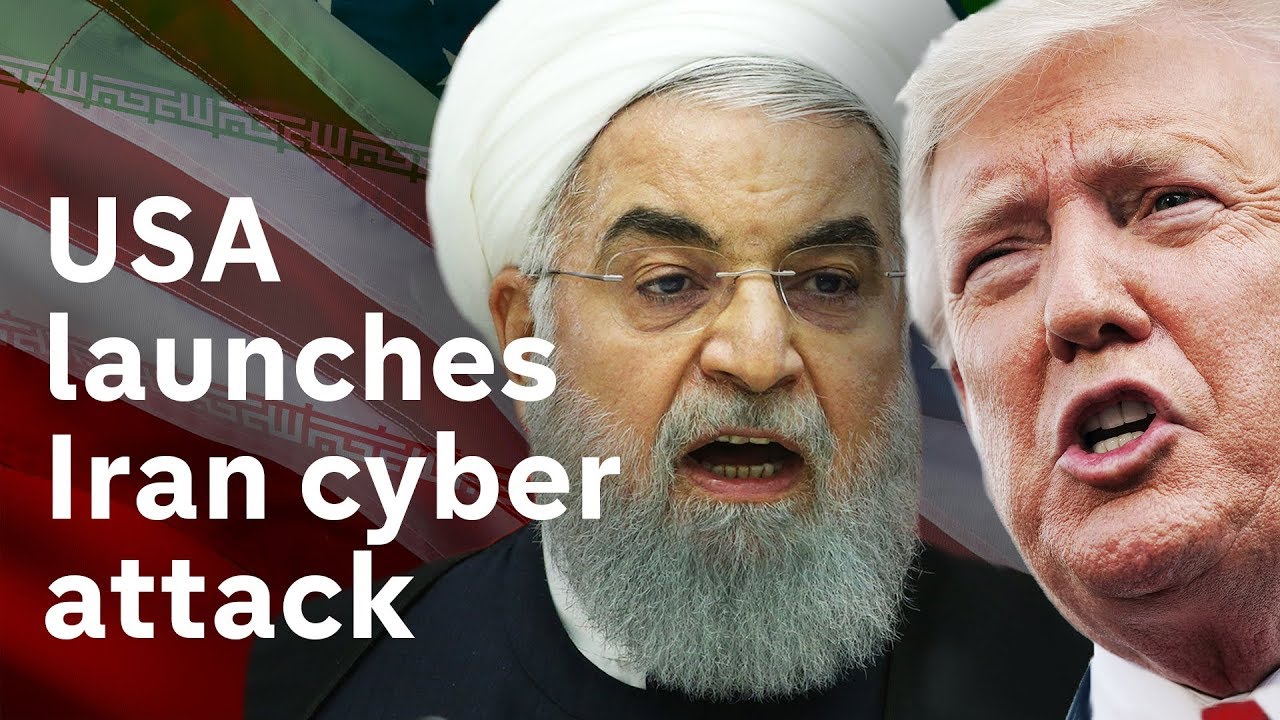
The United States answered Iran’s drone attack not with missiles, but with malware.
Hours after President Donald Trump pulled back from a conventional strike on Iranian targets, U.S. Cyber Command executed a covert digital offensive against the systems Tehran’s Islamic Revolutionary Guard Corps relies on to fire rockets and missiles. The retaliation, confirmed by U.S. officials on June 23, followed Iran’s June 20 shoot-down of an American RQ-4 Global Hawk drone over the Strait of Hormuz and marked the most consequential use of American cyber weapons since the command’s elevation to full combatant status.
- Trump called off airstrikes minutes before launch over estimates of 150 Iranian casualties, but let the Cyber Command operation proceed Thursday night, June 20.
- The strikes targeted IRGC computer systems controlling rocket and missile launch batteries, along with databases tied to naval mine and tanker operations in the Gulf of Oman.
- Officials said the operation caused no reported casualties while disabling key launch systems, and Trump confirmed additional “major” sanctions on Iran were coming.
A Strike Without a Body Count
The calculus that led Trump to scrub the airstrikes never applied to the cyber option. According to reporting on the operation, the President weighed a conventional response against Iran after the RQ-4 Global Hawk was shot down, then reversed course minutes before execution once the Pentagon’s casualty estimate — roughly 150 dead — landed on his desk. The digital strike carried no such price tag. U.S. officials described it as highly effective and free of reported casualties, even as it disabled the launch infrastructure the airstrikes would have gone after directly.
That distinction is why the operation went ahead at all. Cyber Command’s planning reportedly stretched back weeks or months before the drone incident, meaning the capability was sitting ready when Tehran gave Washington a trigger. The June 20 downing became the occasion, not the origin, of the retaliation.
Impacted Systems and Areas
The targets were narrow and specific: computer systems and networks the IRGC uses to control rocket and missile launch batteries, plus digital infrastructure and databases connected to naval mine-laying and tanker operations in the Gulf of Oman. Those are the same capabilities Washington had accused Iran of using against commercial shipping in the weeks before the drone shoot-down, and disabling them was framed by officials as a direct answer to that campaign rather than a broad, indiscriminate hack.
“We never comment on covert operations.”
That line, from Vice President Mike Pence in a June 23 CBS interview, was as close as the administration came to an on-record acknowledgment. Pence declined to confirm details of the operation directly, while Trump himself spoke publicly only about the sanctions track, saying he had authorized what he called “major additional sanctions” against Tehran.
Cyber Command’s Coming-Out Strike
The operation carried institutional weight beyond Iran. It was the first major offensive show of force from U.S. Cyber Command since the Pentagon elevated it to a full combatant command in May 2018, putting it on the same organizational footing as commands like CENTCOM, with which it coordinated on this strike. For a command built specifically to project American power in cyberspace, hitting an adversary’s missile-launch infrastructure without firing a shot was as close to a proof-of-concept as it gets.
The episode also sits alongside a string of stories this year about how vulnerable digital infrastructure has become on all sides — a theme that ran through coverage of prominent U.S. Twitter accounts being hacked and, later, the ransom fight over the Colonial Pipeline hack. Iran’s own cyber capabilities, which U.S. officials have flagged for years, were the backdrop against which the Department of Homeland Security moved to warn American energy and critical-infrastructure operators of possible retaliatory hacking.
Sanctions, Warnings and What Comes Next
Washington didn’t stop at the keyboard. The Department of Homeland Security issued alerts to domestic energy and critical infrastructure sectors flagging the risk of Iranian cyber retaliation, an acknowledgment that the exchange could run in both directions. Trump’s promised “major additional sanctions” were still to be detailed as of June 23, but they were pitched as running parallel to the military and cyber tracks rather than replacing them — consistent with the broader pressure campaign the administration has run against Tehran’s economy over the past year, a strategy Trump has framed in similar terms to other flashpoints his administration has had to manage with rival powers.
Iran, for its part, has denied direct responsibility for the tanker attacks that preceded the drone incident, even as it openly claimed the shoot-down itself. Whether Tehran responds to the cyber strike with retaliation of its own — against U.S. networks, energy infrastructure, or shipping lanes again — is the next thing to watch, and it’s exactly what DHS’s warning to American operators was written for.








President Trump proposes economic changes over coronavirus
U.S. pays Pfizer, BioNTech $2 bln for vaccines
Disney shares drop as company delays reopening of California Disneyland
Israel, US Test Long-Range Missile Interceptor in Alaska
Judge orders release of documents in Ghislaine Maxwell case