

 InfoSearched
A press secretary hits back at the briefing room the morning after a president walked away from it.
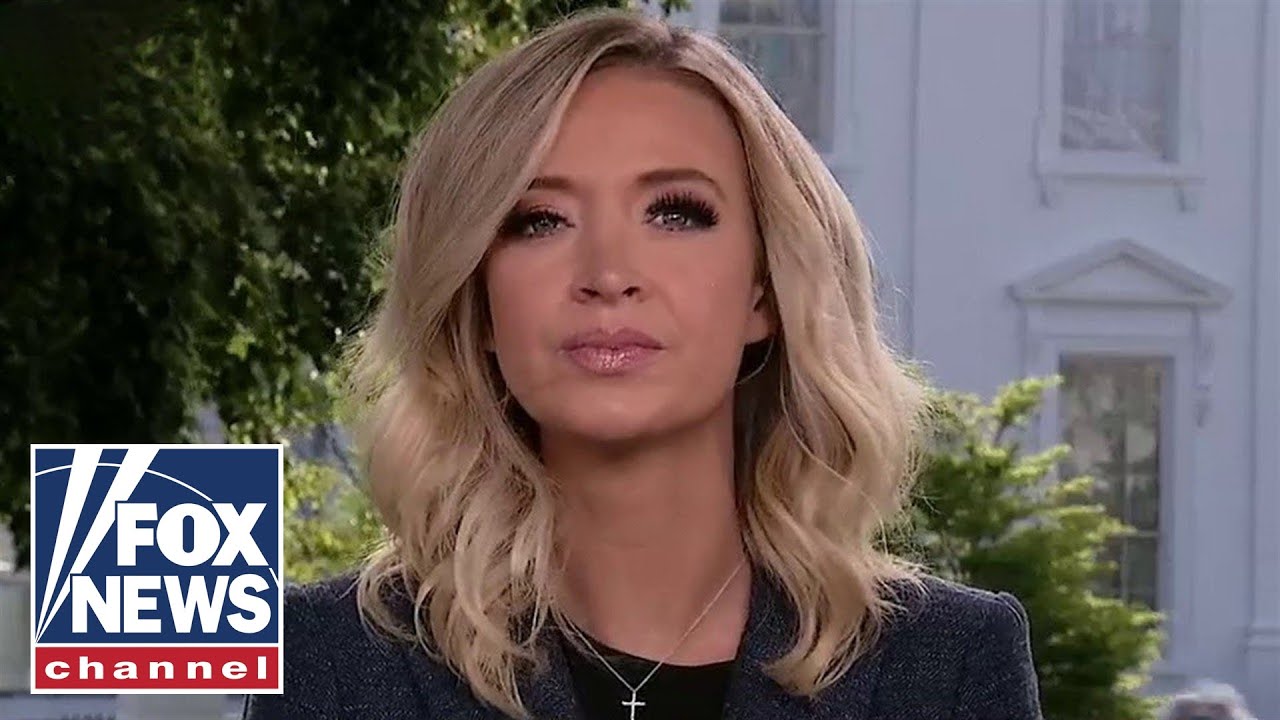
Kayleigh McEnany sat down with “Fox & Friends” on the morning of May 12, 2020, less than a day after President Trump cut short his own Rose Garden coronavirus briefing amid a shouting match with two reporters. McEnany used the appearance to defend the president’s abrupt exit, arguing the White House press corps had turned the daily pandemic updates into a stage for self-promotion instead of a forum for public health information. It was a pointed follow-up to one of the tensest exchanges of the pandemic briefings to date.
- The interview came one day after Trump ended his May 11 Rose Garden briefing following heated exchanges with CBS News’ Weijia Jiang and CNN’s Kaitlan Collins.
- Trump had told Jiang to “ask China” in response to a question about testing, which triggered an argument over who would get the next question before he walked off.
- McEnany told “Fox & Friends” that reporters were making the pandemic “about themselves” rather than focusing on testing data and public health updates.
Causes of the Rose Garden Conflict
The May 11 briefing had been billed as an update on America’s testing capacity, but it derailed once Weijia Jiang pressed the president on why he kept touting U.S. testing numbers as the best in the world when the country was still lagging in per-capita testing compared to other nations. Trump’s “ask China” response drew immediate pushback, and when Kaitlan Collins tried to follow up on Jiang’s question, Trump waved her off, insisted it wasn’t her turn, and left the lectern before the briefing had run its normal course.
That walkout became the backdrop for McEnany’s Fox News appearance the next morning, where she was asked directly why the president had cut the session short.
McEnany’s Defense on Fox & Friends
McEnany framed the abrupt ending not as an attempt to dodge scrutiny but as a response to what she described as reporters chasing viral confrontation moments instead of asking substantive questions about testing, treatment, or reopening plans. She argued the briefings had increasingly become opportunities for individual journalists to build their own profiles rather than inform the public during a national health emergency.
Reporters were making the pandemic about themselves rather than the public health information Americans actually needed.
Her comments landed just as the daily briefings themselves were becoming rarer, with the administration increasingly relying on task force updates and written guidance rather than the marathon Rose Garden sessions that had defined March and April. For more on how the administration’s messaging apparatus operated during this stretch, see the earlier piece on Kayleigh McEnany’s combative approach to the press corps.
The Broader Fight Over Coverage
The dispute wasn’t isolated to a single briefing. Throughout the spring, the White House and its press secretary repeatedly clashed with reporters over tone, framing, and what officials considered “gotcha” questioning during a crisis that, by mid-May 2020, had already reshaped daily American life. McEnany’s critique echoed complaints she and other administration officials had raised in prior appearances, including her separate remarks pushing back on media narratives about the White House’s internal handling of the outbreak, detailed in the report on the White House’s decision to require masks after staff members tested positive.
Reporters and their outlets saw it differently, arguing that pressing Trump on testing shortfalls and inconsistent messaging was simply their job during a public health emergency that had already killed tens of thousands of Americans. The disagreement over who was “making it about themselves” — the press corps or the president himself — was never resolved on air; it simply moved to the next briefing.
McEnany didn’t back off the argument in the days that followed, and the format of the briefings kept shrinking anyway — fewer marathon Rose Garden sessions, more targeted task force updates, and a press secretary who made clear on Fox News that she’d rather spar with anchors sympathetic to the administration’s message than field another round of shouted questions from the podium.
Is the U.S. ready for a severe coronavirus outbreak?
Attorney speaks out after FBI arrests longtime Jeffrey Epstein associate
Coronavirus: Italy extends emergency measures nationwide
New York City Mayor Bill De Blasio Gives A Coronavirus Update (Live Stream Recording)
Flights for illegal immigrants cost taxpayers $340 million