

 InfoSearched
A South Korean doctor who helped beat back MERS just gave the world a real-time playbook for COVID-19.
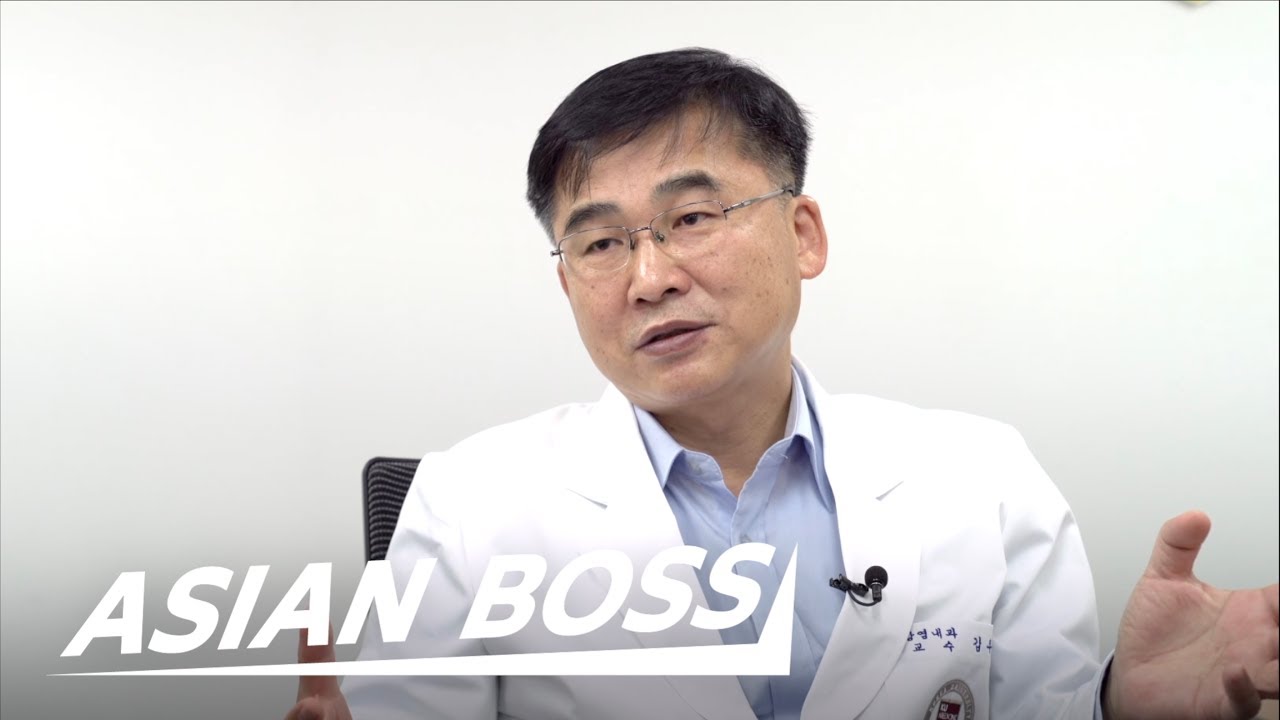
As coronavirus case counts climbed across Europe and North America in March 2020, the digital outlet Asian Boss sat down with Dr. Kim Woo-joo, an infectious disease specialist and professor of internal medicine at Korea University Guro Hospital, for the fifteenth episode of its “Stay Curious” series. Kim had already spent years advising South Korean health authorities, including during the 2015 MERS outbreak, and in this interview he walked through exactly how the country flattened its infection curve without a hard nationwide lockdown. The conversation, titled “You Need To Listen To This Leading COVID-19 Expert From South Korea,” quickly became one of the most widely shared expert briefings of the pandemic’s early weeks.
- Dr. Kim Woo-joo, a Korea University Guro Hospital professor who guided South Korea’s response to the 2015 MERS outbreak, breaks down the science of SARS-CoV-2 for a global audience.
- He credits South Korea’s sharp drop in cases to rapid diagnostic-kit development, mass testing through drive-through centers, and epidemiological tracing that pulled from CCTV footage, credit card records, and mobile GPS data.
- Kim pushes back on early Western public health messaging by advocating universal mask-wearing, alongside hand hygiene, social distancing, and transparent government-to-citizen communication.
Asian Boss Seeks Dr. Kim
Asian Boss built its “Stay Curious” series around explaining East Asian responses to global audiences confused by wildly different national strategies, and Dr. Kim was an obvious choice for episode fifteen. He wasn’t a bureaucrat reciting talking points — he was the clinician South Korea had already leaned on once before, during the 2015 MERS crisis, and his credibility as a career infectious disease specialist gave the interview weight that a press briefing couldn’t match. The timing mattered too: by late March 2020, Italy and Spain were reporting daily death tolls in the hundreds, and viewers wanted to know why South Korea’s numbers looked so different.
The Testing-and-Tracing Blueprint
Dr. Kim laid out the mechanics behind South Korea’s curve-flattening in concrete terms. Diagnostic kits went from concept to mass production within weeks of the outbreak reaching Korean soil, letting labs process enormous volumes of samples. Drive-through testing centers — a model that drew international attention — let people get swabbed without leaving their cars, cutting exposure risk and speeding throughput. Behind the scenes, epidemiological teams reconstructed the movements of confirmed cases using CCTV footage, credit card transaction records, and mobile phone GPS data, allowing officials to notify anyone who’d crossed paths with an infected person.
That combination — test aggressively, trace exhaustively — is the same approach later referenced when outlets asked whether other nations, including the United States, could reopen as quickly as countries that had leaned on it. Kim’s point in the interview wasn’t that lockdowns don’t work; it was that South Korea never needed the blunt version because its surveillance systems caught chains of transmission early.
Masks, Hygiene, and a Direct Message to the West
Where the interview carried the most friction was on masks. At a moment when Western health agencies were still debating whether the general public should wear them, Dr. Kim was unambiguous: universal mask-wearing curbs aerosol and droplet spread, full stop. He paired that guidance with rigorous hand hygiene and social distancing, framing all three as the low-cost, high-yield behaviors any country could adopt immediately, regardless of testing capacity.
Universal public mask-wearing, Dr. Kim argued, was essential to curbing transmission — a stance that directly contradicted the conflicting guidance coming out of Western health agencies at the time.
He also stressed something less technical but just as central to Korea’s response: officials communicated with the public transparently, publishing case data and travel histories in ways that built trust rather than eroding it. That transparency theme echoed elsewhere in the pandemic’s early messaging fights, including debates over what agencies chose to disclose or later revise, similar to the scrutiny that followed the White House’s own delayed shift toward mask guidance after staff contracted the virus.
A Blueprint Other Governments Watched Closely
By the time this interview circulated, South Korea’s model was already being cited by foreign outlets as a possible template for countries facing runaway outbreaks. Kim’s appearance gave that model a human face and a scientific explanation, rather than just a chart of falling case numbers. For viewers trying to make sense of why some countries were flattening curves while others braced for exponential growth, hearing the actual epidemiology — kits, tracing, masks, transparency — mattered more than another government press conference.
The interview didn’t offer a prediction for how long the pandemic would last, and Dr. Kim was careful not to promise Korea’s playbook would translate perfectly everywhere. What he did offer was a working system, already running for weeks by late March 2020, at a time when most of the world was still arguing about whether testing kits or masks were even necessary.


What could a second wave of coronavirus look like?
SPECIAL REPORT: China’s deadly coronavirus cover-up
CNN reporter and crew hit by tear gas in Hong Kong
Trump ENDS Late Night Hosts With This TWEET!
U.S. first lady Melania Trump statue set on fire in Slovenia