

 InfoSearched
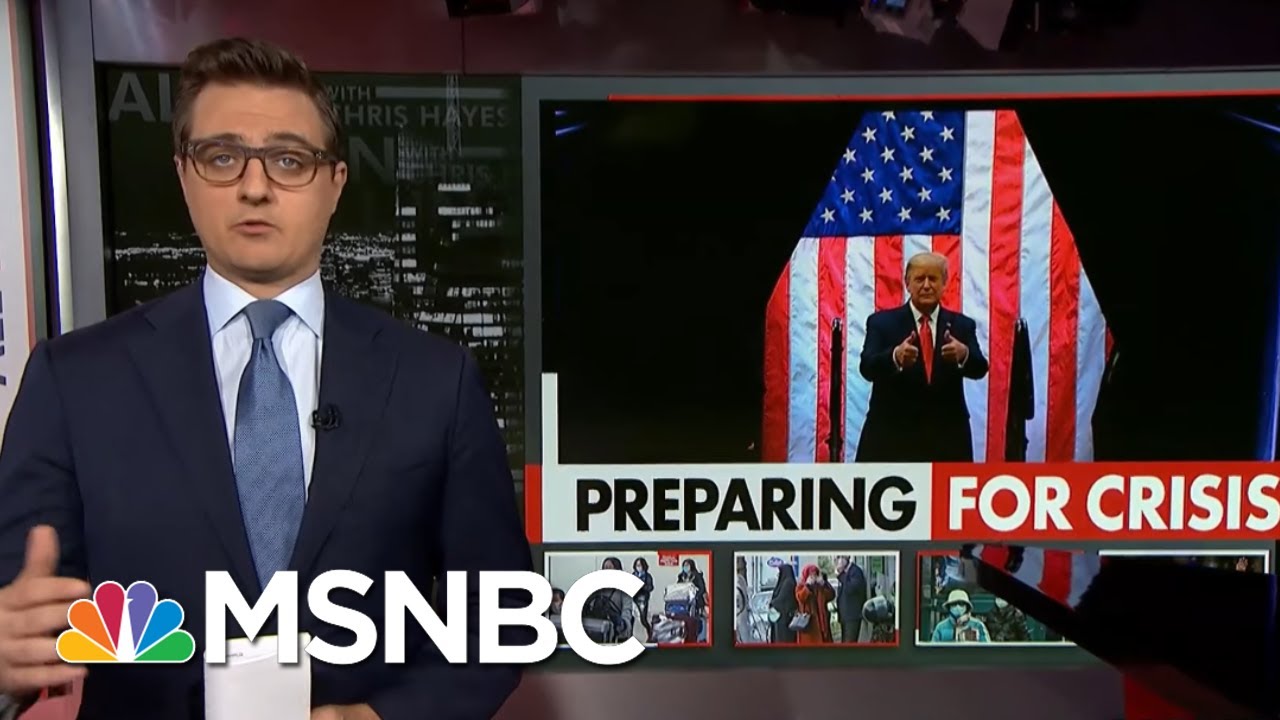
Chris Hayes says the president is treating a public health emergency like a re-election problem.
On the February 25, 2020 broadcast of MSNBC’s All In, host Chris Hayes laid out a simple argument: President Trump is less worried about stopping the coronavirus than about stopping it from wrecking his campaign pitch. With Wall Street reeling from a brutal week and Trump publicly insisting the virus is “under control,” Hayes walked through why the White House’s instinct has been to manage the headlines rather than the outbreak itself.
- Wall Street suffered sharp declines that week on fears of viral spread, even as Trump kept telling the public the virus was contained and would dissipate quickly.
- Hayes cited reporting showing Trump’s chief focus was media perception and containing bad economic headlines, not proactive public health preparation.
- As of February 25, 2020, the U.S. had confirmed only a handful of travel-associated and repatriated coronavirus cases, which Trump pointed to as proof his administration had the situation handled.
The Market Selloff Trump Can’t Talk His Way Out Of
Trump’s re-election message has run almost entirely on the stock market and jobs numbers, so a market that suddenly tanks on outbreak fears hits him where his campaign is weakest to defend. Hayes framed the week’s selloff as the first real crack in that narrative — not a policy failure Trump could spin with a rally chant, but a set of falling numbers investors were reacting to in real time.
That’s the tension Hayes zeroed in on: Trump has spent three years pointing at the Dow as evidence of his own success, and now the same market is sending the opposite signal, driven by a virus his administration can’t yet quantify or contain.
Downplaying as Strategy, Not Optimism
Hayes argued Trump’s repeated assurances that the virus was “under control” and would soon disappear weren’t just misplaced optimism — they were a deliberate strategy to keep the story small. According to Hayes’s reporting, the president’s team treated warnings from health officials less as scientific guidance and more as threats to his political standing.
Trump’s response has been aimed at containing bad headlines, not the virus itself.
That framing lines up with how Trump treated the confirmed case count itself. With only a small number of travel-associated and repatriated cases on the books nationally at the time, he pointed to those low domestic numbers as vindication — proof, in his telling, that his administration’s approach was already working.
CDC Warnings Read as Personal Attacks
Hayes’s sharpest point was about how Trump processed institutional warnings. When the CDC raised concerns about the virus’s trajectory, Hayes said the president reacted less like a commander-in-chief absorbing a briefing and more like a candidate hearing an attack ad — treating the agency’s public health guidance as something to be managed and discredited rather than acted on. For more on how the outbreak was already reshaping daily life inside China at that point, see Unusual animal behavior in China; Beijing like ‘ghost town’ amid coronavirus; Massive floods, and for the research debate surrounding the virus’s origins, see Fauci funded ‘bat-human interface’ research in China to avoid an outbreak in the US.
Hayes’s segment landed the same week markets tumbled and the case count, small as it was, started climbing — the exact combination Trump’s re-election argument was least built to survive.





California reports first coronavirus death
President Trump extends coronavirus guidelines until April 30th
2 dead after ‘disgruntled employee’ opens fire at Walmart in Mississippi: Police
President Trump addressed the nation after Iran strikes at U.S. troops in Iraq
Deadliest Day In New York But Curve Is Flattening