

 InfoSearched
Pope Francis breaks his silence on the Kamloops discovery — but not with an apology.
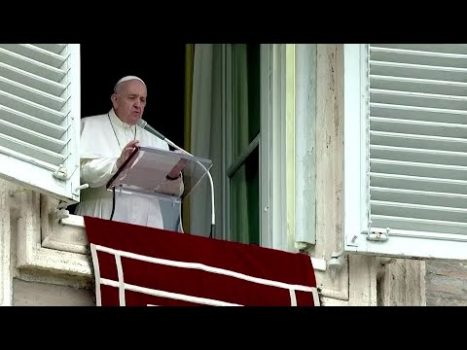
Pope Francis stood before pilgrims in St. Peter’s Square on Sunday, June 6, and addressed a discovery that had already shaken Canada to its core: the remains of 215 Indigenous children found buried in unmarked graves at a former residential school in British Columbia. He spoke of shock and sorrow. He called for prayer, dialogue, and reconciliation. What he did not do, despite mounting pressure from Canadian officials, Indigenous leaders, and survivors, was apologize.
- The Tk’emlúps te Secwépemc First Nation announced in late May 2021 that ground-penetrating radar had detected the remains of 215 children in unmarked graves at the former Kamloops Indian Residential School.
- Pope Francis addressed the discovery during his weekly Angelus prayer in St. Peter’s Square, saying the news “increases our awareness of the pain and sufferings of the past” and calling for a “path of reconciliation and healing.”
- The Kamloops school operated under Catholic administration from 1890 to 1969 before control passed to the state, as part of a national system that forcibly separated roughly 150,000 Indigenous children from their families.
Evidence Discovered at Kamloops Site
The Kamloops Indian Residential School was one of the largest institutions in Canada’s residential school system, a network built to forcibly assimilate Indigenous children by stripping them from their families and communities. When the Tk’emlúps te Secwépemc First Nation used ground-penetrating radar to survey the grounds in late May 2021, the results confirmed 215 sets of remains buried without markers or records. The finding reignited scrutiny of the Truth and Reconciliation Commission’s earlier findings on abuse within the system and put fresh pressure on the institutions that ran it, chiefly the Catholic Church.
Francis’s Angelus Appeal
Speaking to the crowd gathered in St. Peter’s Square following his Sunday Angelus, Pope Francis described the discovery as a source of profound pain before turning to what he framed as a necessary path forward. He urged Canadian political and religious authorities to work together to uncover the full truth of what happened at Kamloops and to commit to genuine reconciliation.
“This sad discovery increases our awareness of the pain and sufferings of the past.”
Francis went further than simply lamenting the news. He framed it as, in effect, a rebuke of colonial-era thinking, calling the moment a summons to reject “colonial models” and “ideological colonization” in favor of dialogue conducted side-by-side and with mutual respect. He closed his remarks with prayers for the deceased children and for the families and communities still grieving them.
The Apology That Didn’t Come
For all the language of sorrow and reconciliation, Francis stopped short of the one thing many in Canada wanted to hear: a direct, formal apology from the Roman Catholic Church for its administrative role at Kamloops between 1890 and 1969. According to The Guardian, that omission landed hard, given that Canadian officials, Indigenous leaders, and survivors had been pressing publicly for exactly that acknowledgment in the days following the discovery. The Vatican’s own account of the Angelus address confirms Francis’s language centered on collaboration and healing rather than institutional culpability.
The absence of an apology sits against a specific backdrop: Canada’s Truth and Reconciliation Commission had already documented systemic abuses across the residential school system that operated for more than a century, forcibly separating roughly 150,000 Indigenous children from their families in the name of assimilation. Readers following other flashpoints in Ottawa and Washington this same week can find continuing coverage in our World News section, while broader reaction from U.S. politics circles is tracked under News & Politics.
Francis’s remarks left the central demand from Kamloops unresolved. He offered sorrow, prayer, and a call to walk toward reconciliation — but the formal apology that the Truth and Reconciliation Commission had sought for years from the Catholic Church still had not been issued as of that Sunday in St. Peter’s Square.



US sees 40,000 new COVID-19 cases in 1 day
Elizabeth Warren: We won’t win this moment with spinelessness
12-Year-Old Boy and 14-Year-Old Girl Have Shootout With Cops
Out of Stock! Fragile Distribution in the US
Ghislaine Maxwell reportedly ready to name names