

 InfoSearched
Beijing’s district elections this week put China’s one-party democracy on display — and independent candidates say it was rigged before a single ballot was cast.
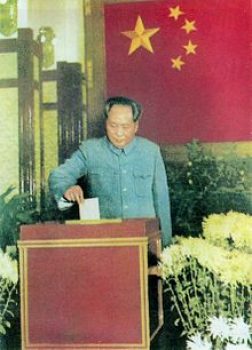
On November 15, voters across Beijing’s municipal districts went to the polls in one of the few exercises China’s Communist Party allows to be called an “election.” On paper, any citizen 18 or older can run for a local People’s Congress seat, and independents need only ten registered voters to back their nomination. In practice, a coalition of 58 independent candidates who tried to run in this cycle found themselves surveilled, harassed, confined to their homes, or detained before they ever got near a ballot.
- 58 independent candidates attempted to run for local People’s Congress seats in Beijing’s November 2016 cycle, but authorities blocked them from meeting voters or appearing on the final ballots.
- China’s election committees use a vetting process called “san shang san xia” — three ups and three downs — to screen out candidates the Party hasn’t approved.
- Winning candidates need an absolute majority of valid votes, or 33% in a run-off, but final authority still rests with local party secretaries rather than elected delegates.
Mechanics of the San Shang Screen
China’s electoral law does technically permit direct voting — but only at the bottom rung of government, for district and county-level congresses and village committees. Everything above that, including provincial congresses and the National People’s Congress itself, is filled through indirect elections dominated by CCP-vetted slates. Even at the local level, election committees appointed by regional standing committees control who reaches a ballot through the “three ups and three downs” procedure, a multi-stage nomination review that routinely filters out anyone not cleared by the Party in advance.
That screen is where most of the 58 independents in Beijing’s 2016 cycle were stopped. Rather than losing at the ballot box, candidates described being shut out long before votes were counted — through home confinement, monitoring, and in some cases outright detention that kept them from campaigning or even speaking to voters in their own districts.
Candidates Call It a “Fake Election”
The independents who tried to run weren’t shy about naming what they saw happening to them. Multiple candidates in Beijing publicly denounced the process, describing the entire exercise as theater dressed up as democracy.
Independent hopefuls in Beijing explicitly labeled the balloting a “fake election.”
That framing tracks with how China has long managed political dissent at every level of government — a pattern anyone who’s watched Beijing’s approach to Hong Kong’s autonomy or its handling of Taiwan will recognize. For more on how the Party projects control over territory and politics it doesn’t fully own, see our coverage of China’s stepped-up military drills near Taiwan.
Votes Without Power
Even candidates who clear the “san shang san xia” gauntlet and land on a final ballot are competing for seats with limited teeth. Winning requires an absolute majority of valid votes, or a 33% threshold in a run-off — numbers that sound like any competitive democracy on paper. But the research on China’s local congresses is consistent: local party secretaries, not the delegates voters actually elect, hold final authority over decisions in these districts. The vote determines a title more than it determines power.
That gap between voting and governing is a theme that keeps surfacing in accounts from people who’ve lived under the system and left it. Our earlier report, Why I left China for Good!, covers similar ground on how tightly the Party controls day-to-day life well beyond the ballot box.
The Outcome of Beijing’s Ballot
By the time polls closed on November 15, none of the 58 independent candidates who tried to run in Beijing had made it onto a final ballot. The district and county-level congresses being filled that day will, in turn, feed into the indirect elections that select delegates to provincial congresses and eventually the National People’s Congress — a chain of votes where CCP-vetted slates control every link above the bottom rung. For the independents who spent the run-up to November 15 confined to their apartments instead of knocking on doors, the outcome was decided long before anyone reached for a ballot.








Fed’s Rosengren on Economy, Fiscal Policy, Negative Rates
President Trump Says He Did Not Discuss Election Interference With Putin | Velshi & Ruhle | MSNBC
18 People Contract COVID-19 After 30th Birthday Party
President Trump says reopening the country will be the “biggest decision” he’s ever made
Entire Portland riot squad resigns after officer’s indictment