

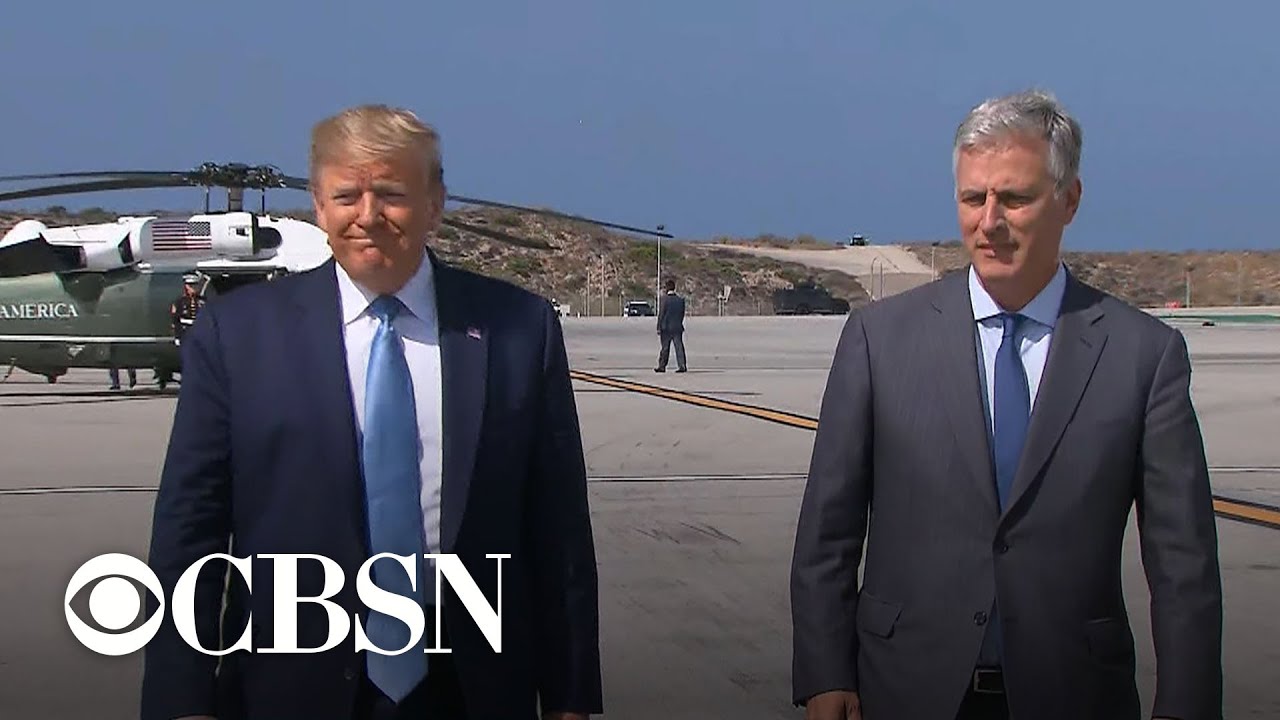
U.S. official tells CBS News attack on Saudi oil facility was approved by Iran’s supreme leader
 InfoSearched
A U.S. official just confirmed the strike on Saudi Arabia’s oil heartland went all the way to the top in Tehran.
CBS News national security correspondent David Martin reported on September 18 that a senior U.S. official has directly tied Iran’s Supreme Leader, Ayatollah Ali Khamenei, to the September 14 strikes on Saudi Arabia’s Abqaiq processing facility and the Khurais oil field. The official said Khamenei signed off on the operation on one specific condition: that it be executed in a way that let Iran keep plausible deniability. Hours earlier, Saudi defense officials had stood in front of drone wreckage and missile fragments in Riyadh, telling reporters the debris proved the attack was “unquestionably sponsored by Iran.”
- U.S. intelligence traced the cruise missiles and drones to Ahvaz Air Base in southwestern Iran, tracking a flight path through Kuwaiti airspace to targets roughly 400 miles away.
- Saudi officials displayed physical wreckage — drone parts and missile remnants — at a Riyadh press conference on September 18 as evidence of Iranian sponsorship.
- President Trump directed the Treasury Department to “substantially increase” sanctions on Iran, while Secretary of State Mike Pompeo traveled to Saudi Arabia to coordinate a response.
The Intelligence Behind the Accusation
According to Martin’s reporting, U.S. intelligence agencies determined the weapons used against Abqaiq and Khurais didn’t come from Yemen, where the Houthi rebels claimed responsibility. Instead, the flight vectors point to Ahvaz Air Base in Iran, with the cruise missiles and drones crossing Kuwaiti territory before hitting their targets roughly 400 miles away. That distance and trajectory, U.S. and Saudi officials say, simply don’t line up with anything the Houthis could have launched from inside Yemen.
Iran’s Defense Minister, Brig. Gen. Amir Hatami, has flatly denied any Iranian role in the strikes. But the account relayed to CBS News describes something more specific than blanket denial — a leader-level decision, with Khamenei’s blessing contingent on maintaining cover through the Houthi claim of responsibility.
Khamenei approved the attack on the condition that it be carried out in a way that would allow Iran to maintain deniability.
Riyadh Puts the Evidence on the Table
Saudi defense officials didn’t wait for Washington to make their case. Earlier the same day, at a press conference in Riyadh, they laid out physical wreckage — drone components and missile debris recovered from the strike sites — arguing the hardware itself settled the question of who was behind it. The message was blunt: whatever the Houthis said publicly, the equipment on the table told a different story.
The dispute over authorship matters well beyond the diplomatic back-and-forth. The strikes hit the beating heart of Saudi Arabia’s oil infrastructure, and the question of whether Yemeni rebels or Iranian forces pulled it off determines how Washington and Riyadh calibrate their next move.
Washington’s Response
President Trump announced on September 18 that he had directed the Treasury Department to substantially ramp up sanctions on Tehran, continuing a pressure campaign that has defined his Iran policy since withdrawing from the 2015 nuclear deal. The move echoes the administration’s broader pattern of leaning on economic leverage rather than immediate military retaliation, a pattern also visible in how the White House handled other foreign-policy flashpoints, including its stance on Palestinian statehood at the United Nations.
Secretary of State Mike Pompeo flew to Saudi Arabia to coordinate directly with Saudi officials on next steps, a trip that underscored how closely Washington and Riyadh are now aligning their response. The administration’s willingness to reach for sanctions as a first tool has been a consistent thread this year, similar to how it moved quickly to strip Hong Kong of preferential treatment after Beijing’s crackdown there.
Iran Issues Official State Response
Tehran’s public position hasn’t shifted. Brig. Gen. Hatami has repeatedly denied Iranian involvement, and the Houthi claim of responsibility gives Iran a ready-made cover story — exactly the kind of deniability the U.S. official says Khamenei demanded before authorizing the operation. But the flight data U.S. and Saudi officials have pointed to, tracing the weapons back to Ahvaz rather than Yemen, leaves that denial on shakier ground than Tehran would like.
The gap between Iran’s public denial and the intelligence assessment relayed to CBS News is now the central fault line in the story — and it’s the fault line that will decide whether Washington’s sanctions escalation is the end of the response or just the opening move.

Biden and Sanders face off in first one-on-one debate
Tracing The Origin Of The Coronavirus
Coronavirus: When your child’s in intensive care with Covid-19
Mia Khalifa: Why I’m speaking out about the porn industry – BBC News
Investigation into death of Ahmaud Arbery heats up