

 InfoSearched
Wall Street just logged its worst week since the 2008 crash.
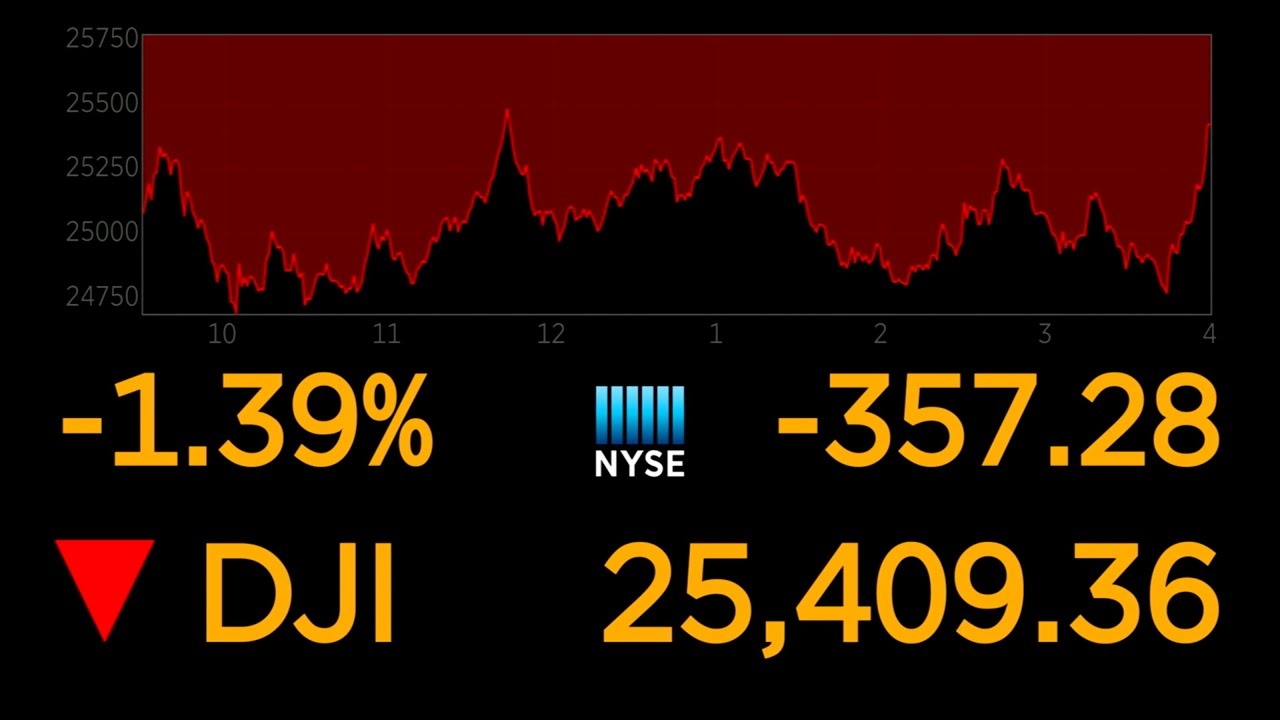
The Dow Jones Industrial Average closed out February 2020 in freefall, wiping out more than 10% of its value in five trading sessions as fears over the coronavirus outbreak spread faster than public health officials could contain the virus itself. What started as a jittery Monday sell-off turned into a full-blown rout by Thursday, and traders spent Friday, February 28, bracing for more. An ABC News Special Report broke down the scale of the damage and what it could mean for investors trying to ride out the volatility.
- The Dow dropped more than 1,000 points on Monday, February 24, after confirmed coronavirus cases spiked suddenly in Italy, South Korea, and Iran.
- On Thursday, February 27, the Dow suffered its largest single-day point drop on record — nearly 1,200 points — pushing the index into official correction territory, a 10% decline from its recent peak.
- The Cboe Volatility Index, known on trading floors as the VIX, surged past 40 for the first time in more than four years as investors scrambled for cash.
A Week That Erased the Gains
Five straight days of losses stripped more than 10% off major U.S. benchmarks, the kind of week that hadn’t been seen since the depths of the 2008 financial crisis. The sell-off wasn’t confined to any one sector — travel and airline stocks got hit as itineraries were canceled, industrial names slid on fears of disrupted supply chains out of Asia, and even defensive plays offered little shelter once panic selling set in.
The trigger was simple: case counts were no longer just rising in China. Italy, South Korea, and Iran all reported sudden clusters over the weekend before markets opened Monday, and that was enough to convince traders that containment had failed. Public health officials began warning openly that community spread inside the U.S. was now a matter of when, not if.
Thursday’s Record Plunge
Thursday, February 27, was the low point of the week in raw numbers. The Dow’s nearly 1,200-point drop stood as the largest single-day point decline the index had ever recorded, and it dragged the benchmark firmly into correction territory. Trading desks described the mood as a rush for liquidity — sell first, sort out the fundamentals later.
The VIX cleared 40 for the first time in over four years — the market’s own fear gauge screaming louder than it had since the last real crisis.
That spike in the VIX mattered as much as the point drops themselves. A reading above 40 signals the kind of expected price swings usually reserved for genuine financial shocks, not routine pullbacks, and it told traders that hedging costs were about to get a lot more expensive heading into March.
Key Factors Influencing Investor Decisions
The report walked through the calculus facing anyone with money in the market that week: disrupted supply chains out of manufacturing hubs in China, the sudden halt in global travel demand, and the risk that consumer spending would seize up if the outbreak reached American cities. Several companies had already begun warning that earnings guidance built before the outbreak was no longer reliable.
None of this arrived in a vacuum. The U.S. economy had already been navigating tariff-driven friction with China before the outbreak hit, and reports of shuttered factories and eerily empty streets in China only reinforced how fragile the supply chain had become. Concerns about grocery prices and everyday consumer costs were already simmering before the sell-off accelerated fears of a broader slowdown.
Riding Out the Volatility
Financial analysts featured in the special report stressed the same basic playbook: resist panic selling, keep enough cash on hand, and remember that U.S. markets have historically clawed back from sharp corrections once the underlying crisis clarifies. The bigger risk, they warned, was making irreversible decisions based on a single terrifying week rather than what earnings and case data would show in the months ahead.
Friday’s close locked in the damage — a week that ranked alongside 2008 for sheer speed of the decline, with the VIX still elevated and no clear signal yet on whether Monday would bring stabilization or another leg down.






Trump’s Baltimore battle threatens to overshadow strong economy
Did the US reopen faster than other countries?
US signs immigration agreement with Guatemala
U.S. envoy talks Venezuela crisis ahead of international meeting
Up to 150 migrants die in shipwreck off the coast of Libya