

 InfoSearched
Trump draws a hard line on monument vandalism after protesters storm Lafayette Square.
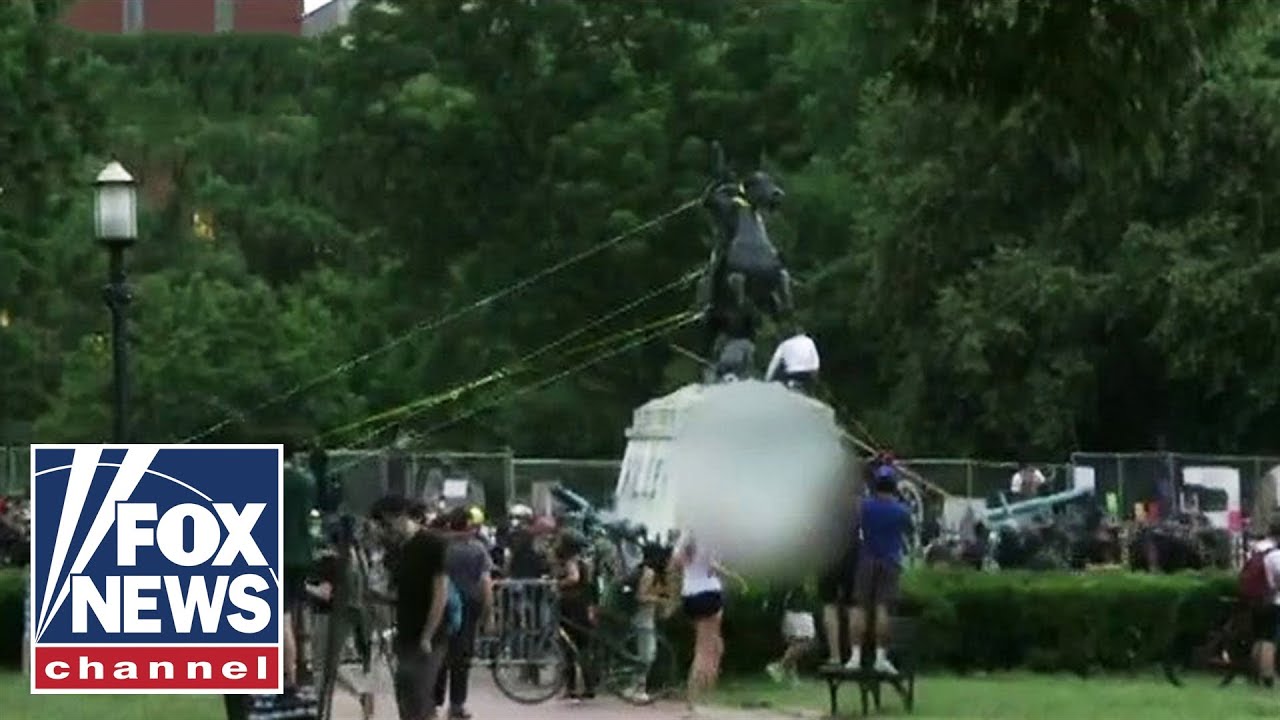
President Trump used Twitter on the morning of June 23, 2020, to announce that he had authorized the federal government to arrest anyone caught vandalizing or tearing down monuments, statues or other federal property nationwide. The declaration came less than 24 hours after demonstrators tried to pull down the bronze equestrian statue of Andrew Jackson in Lafayette Square, just outside the White House gates. Fox News contributor Katie Pavlich broke down the escalation on air, framing it as the administration’s most direct response yet to weeks of unrest.
- Trump cited the Veterans’ Memorial Preservation Act and related federal statutes, warning that vandals face up to 10 years in prison, with the order applying immediately, retroactively, and with “no exceptions.”
- The announcement followed Monday night’s clash at Lafayette Square, where protesters climbed the Andrew Jackson statue, tied ropes around it and covered it in graffiti before U.S. Park Police and federal officers drove them back with pepper spray.
- Interior Secretary David Bernhardt visited the scene and declared authorities “will not bow to anarchists,” insisting that “law and order will prevail.”
The Jackson Statue Standoff
The Jackson monument, which has stood in Lafayette Square since 1853, remained on its pedestal Monday night despite the ropes and graffiti — a contrast to what happened the weekend before, when protesters in downtown Washington successfully toppled and set fire to a statue of Confederate General Albert Pike. That earlier incident drew sharp criticism from Trump, who blasted the local police response for failing to stop it. The Jackson confrontation, by comparison, saw federal law enforcement move in quickly, and officials treated the near-miss as the breaking point that justified Tuesday’s announcement.
Scope of Trump Executive Order
Trump’s Twitter statement leaned on existing federal law rather than a new statute, invoking the Veterans’ Memorial Preservation Act to argue that damaging protected memorials already carries criminal penalties of up to a decade behind bars. By declaring the enforcement retroactive and applicable “with no exceptions,” the president signaled that anyone involved in earlier incidents — including the Pike statue burning — could still face charges. It was a message aimed squarely at organizers and participants who had assumed the summer’s wave of monument removals would go unpunished.
“We will not bow to anarchists… law and order will prevail,” Interior Secretary David Bernhardt said after touring the damaged Jackson statue site.
Reaction on Fox News
Katie Pavlich’s segment tied the announcement directly to the images from Lafayette Square, noting the speed with which the administration pivoted from the Pike statue’s destruction to drawing a firm line at the White House’s front door. Her analysis framed Trump’s move as less about a single statue and more about setting a marker before the next attempted toppling, whether in Washington or another city dealing with similar standoffs — a theme that echoed coverage elsewhere of officials calling on Democratic leaders to take action against rising violence during the same stretch of unrest.
Part of a Broader Pattern
The Jackson and Pike incidents were the latest in a string of confrontations over monuments and property that had already put Trump at odds with local officials in multiple cities. Just weeks earlier, the president had defended a St. Louis couple who pointed firearms at protesters passing their home, another flashpoint in the administration’s broader posture that private property and federal monuments alike needed protecting from what Trump repeatedly called “anarchists” — a term Bernhardt echoed at the Jackson statue that same night. The pattern also showed up outside Washington, including a similar clash over a mural outside Trump Tower that same week.
With the Jackson statue still standing but scarred by graffiti, and federal prosecutors now armed with a retroactive mandate, the next test comes whenever protesters target another monument — and whether U.S. Marshals or Park Police move to make an arrest stick under the very statute Trump name-checked Tuesday morning.

18 People Contract COVID-19 After 30th Birthday Party
Georgia governor plans to reopen the state’s economy despite controversy
Ghislaine Maxwell behind bars as new details emerge
Georgia reopens businesses despite Trump’s opposition
Cuomo announces mobile coronavirus testing facility in New Rochelle, New York