

 InfoSearched
Smoke has turned West Coast skies the color of a Martian sunset, and the death toll keeps climbing.
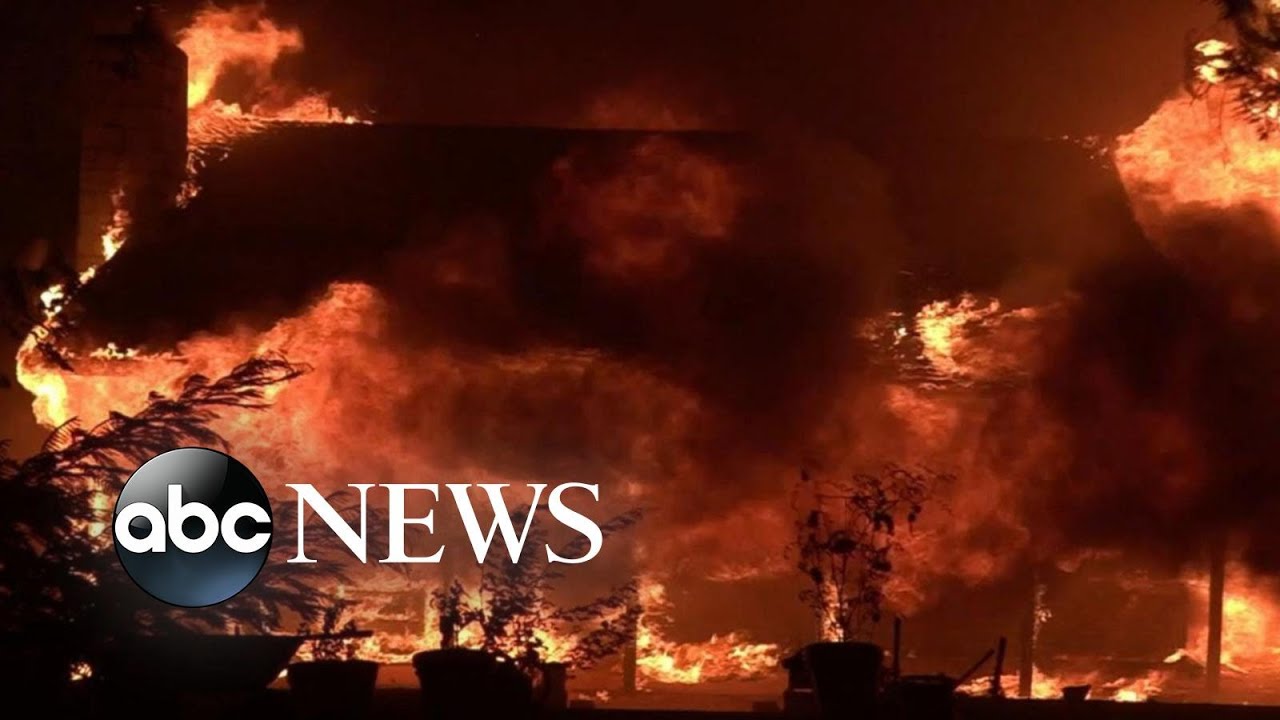
By the second week of September 2020, an unprecedented late-summer wildfire siege was tearing through California, Oregon and Washington, fed by historic dry winds, deep drought and record heat. ABC News’ “Nightline” sent crews into the burn zones to document what residents and firefighters were actually facing — walls of flame, towns reduced to ash, and skies so thick with smoke that daylight barely broke through.
- At least 27 people across California, Oregon and Washington had died as of mid-September, with officials warning the toll would keep rising as search-and-rescue teams worked through incinerated neighborhoods.
- California alone had burned more than 3.3 million acres in 2020, an all-time record for the state, while roughly 80 major fires were burning simultaneously across Oregon and Washington, consuming over 900,000 acres.
- The Santiam and Beachie Creek fires tore through Oregon, and the Babb-Malden fire in eastern Washington leveled nearly the entire town of Malden.
A Fire Season Unlike Any Other
The scale of destruction documented by “Nightline” reflected conditions fire officials had rarely, if ever, seen stacked together at once: a bone-dry landscape after years of drought, unusually strong offshore wind events over Labor Day weekend, and temperatures that shattered records across the region. The National Interagency Fire Center tracked roughly 80 major fires burning at the same time across Oregon and Washington, an extraordinary concentration of active incidents for those two states alone.
In California, the cumulative 3.3 million acres burned by September 15 pushed the state past any prior fire season on record — not for a single blaze, but for the total footprint of flame across the state in one year. Firefighting agencies that normally rotate crews and aircraft between regional incidents found themselves stretched across three states at once, with air support grounded for stretches because the smoke was too thick to fly through.
Towns Erased, Families Racing Flames
“Nightline” correspondents spoke with residents who described outrunning fire fronts that moved faster than they could process, leaving behind homes that were simply gone — foundations, chimneys, and white ash where neighborhoods used to stand. In eastern Washington, the Babb-Malden fire didn’t just damage the town of Malden; it destroyed nearly all of it, a scale of loss that stunned even veteran emergency responders.
Entire neighborhoods were reduced to white ash, with cadaver dogs sent into mobile home parks and rural townships to search for residents who never made it out.
In Oregon, the Santiam and Beachie Creek fires exploded in size over the Labor Day weekend, driving mandatory evacuations that displaced tens of thousands of people across the state. Search teams deployed cadaver dogs into the hardest-hit mobile home parks and rural communities, a grim signal of how many people officials feared were still unaccounted for as the death toll climbed past 30 in the days after this reporting.
Air Quality Reaches Historic Lows
The smoke itself became its own emergency. Seattle, Portland and the San Francisco Bay Area were blanketed in an apocalyptic orange haze that turned midday into dusk, and monitoring stations recorded some of the worst air quality index readings in recorded world history for the Pacific Northwest. That smoke didn’t just choke residents indoors — it grounded the aerial firefighting missions crews desperately needed to slow the fires’ advance, compounding an already severe resource strain on the ground.
The drought conditions that primed this landscape for disaster weren’t confined to the fire zones — reservoirs across the West had already been sinking to alarming lows, a slow-moving crisis documented separately at Hoover Dam, where water levels hit record lows amid the same regional dry spell. Evacuees fleeing the fires were also navigating a state, in California’s case, still managing an active pandemic response, as covered in reporting on California’s coronavirus surge — meaning shelters had to balance crowding limits against a wave of displaced residents with nowhere else to go.
Resources Stretched to the Breaking Point
Firefighters interviewed for the segment described a strain unlike anything from recent seasons: crews normally deployed to a single major complex were instead being split across dozens of concurrent incidents, mutual aid agreements were tapped out, and mandatory evacuation orders kept multiplying faster than shelters could absorb the displaced. Officials warned publicly that the crisis was far from over, with fire behavior remaining volatile as long as the wind and heat held.
Search-and-rescue crews continued working through the wreckage in Oregon and Washington in the days after this “Nightline” report aired, with the confirmed death toll expected to keep climbing as more sites were cleared. For towns like Malden, the fight ahead wasn’t about containment lines anymore — it was about what, if anything, could be rebuilt from the ash.





Mia Khalifa: Why I’m speaking out about the porn industry – BBC News
A Man Drank 1 Bottle Rubbing Alcohol For COVID-19. This Is What Happened To His Brain.
Trump reveals he has been tested for COVID-19
The Boy Scouts of America files for bankruptcy amidst sexual harassment allegations
Trump Impeachment Hearing With House Judiciary Committee | Live!!