

 InfoSearched
A single positive test on a cruise ship no country wanted turned into a worldwide manhunt.
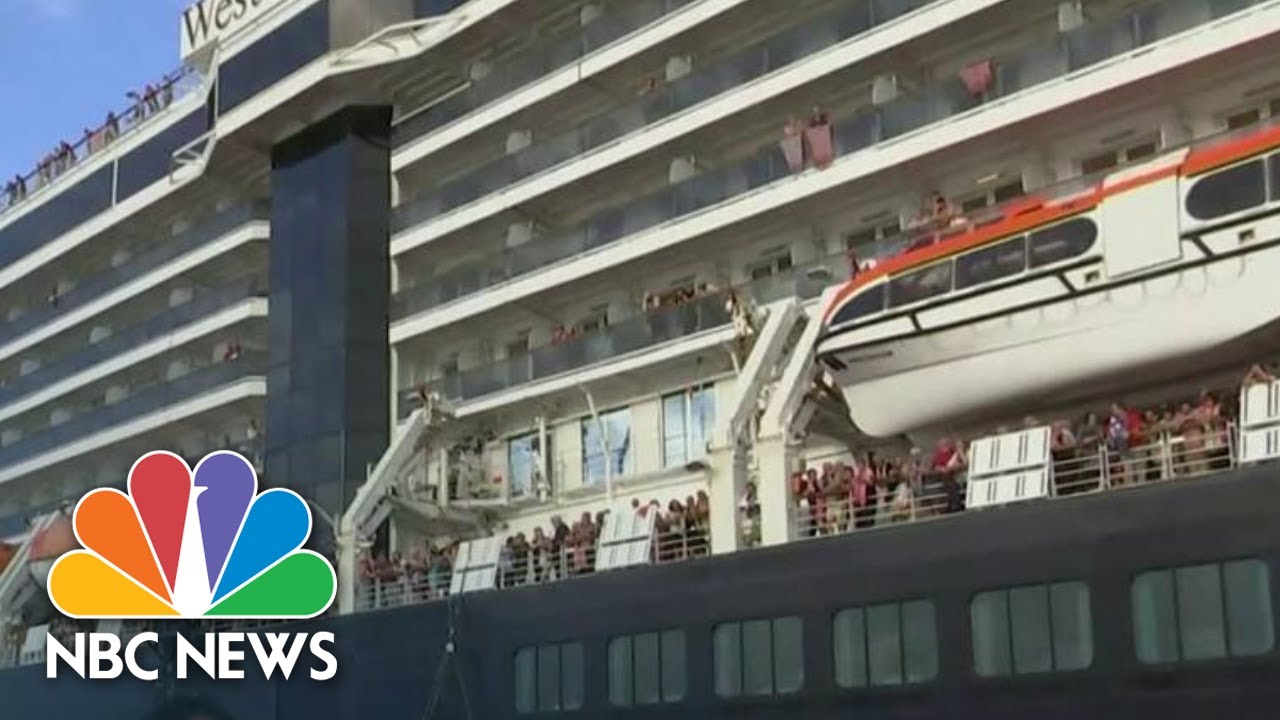
For nearly two weeks, the MS Westerdam sailed from port to port with nowhere to dock, turned away by Japan, Taiwan, the Philippines, Guam and Thailand on fears it was carrying the novel coronavirus. Cambodia finally let the Holland America liner tie up in Sihanoukville on February 13, and Prime Minister Hun Sen personally greeted disembarking passengers with flowers and handshakes. Six days later, an 83-year-old American woman who had been aboard tested positive — and health agencies from Phnom Penh to Kuala Lumpur to the CDC scrambled to find everyone she might have exposed.
- The Westerdam carried 1,455 passengers and 802 crew, including roughly 650 Americans, before it docked in Cambodia on February 13.
- The infected 83-year-old flew on a February 14 charter with 144 other travelers to Kuala Lumpur, where she tested positive twice while her 85-year-old husband tested negative.
- Malaysia and Thailand immediately barred remaining Westerdam passengers, and roughly 1,000 people — more than 230 passengers and 740-plus crew — remained stuck aboard the ship or in Cambodian hotels for retesting as of February 18-19.
Two Weeks Adrift Before Docking
The Westerdam’s ordeal began well before anyone tested positive. Regional governments, still rattled by the outbreak spreading through China, refused the ship port access one after another, leaving passengers stranded at sea with dwindling patience and mounting anxiety. When Cambodia finally granted entry on February 13, it looked like relief. Hun Sen’s welcome — flowers, handshakes, and public assurances that masks weren’t necessary after initial localized screenings turned up no infections — was meant to signal the country had nothing to fear.
The Diagnosis That Changed Everything
That confidence collapsed within 24 hours of the ship’s passengers scattering. The 83-year-old American had already boarded a February 14 charter flight to Kuala Lumpur with 144 other travelers by the time she developed respiratory symptoms. Malaysian health officials tested her twice; both came back positive. Her 85-year-old husband, who had been at her side the entire trip, tested negative — a detail that only deepened the uncertainty about how and when transmission had actually occurred.
An 83-year-old woman tested positive twice in Kuala Lumpur while her 85-year-old husband tested negative — and by then, hundreds of other Westerdam passengers were already airborne.
Borders Slam Shut, Flights Canceled
Malaysia and Thailand responded immediately, barring any remaining Westerdam passengers from entering or even transiting through their borders. Holland America canceled every subsequent charter flight bound for Kuala Lumpur. The problem was timing: hundreds of passengers had already disembarked in Cambodia and boarded commercial flights toward the United States, Europe and Australia before the diagnosis came back, meaning the exposure risk was no longer confined to one ship or one port — it was scattered across three continents.
The CDC’s Race to Find Everyone
That’s what turned a single case into a “desperate search.” International health agencies and the CDC had to work backward through passenger manifests and flight records to identify and contact travelers who had no idea they might have been exposed, echoing the kind of scramble seen with earlier reports of unusual animal behavior in China and a Beijing that had gone eerily quiet amid the outbreak. Roughly 1,000 people connected to the Westerdam — more than 230 passengers and over 740 crew members — remained either aboard the ship or in Cambodian hotels as of February 18-19, undergoing emergency retesting while officials tried to determine whether the 83-year-old was an isolated case or the first sign of wider spread. The episode landed just as new coronavirus models were already warning of a possible jump in the death toll, adding urgency to every retest result coming out of Sihanoukville.
Holland America’s next move was straightforward on paper and brutal in practice: keep the remaining passengers in Cambodia under observation until retesting cleared them, while the airlines and health ministries in Malaysia, Thailand, the U.S. and beyond tried to run down everyone who’d already flown home. Nobody yet knew how many of those roughly 1,455 original passengers carried the virus with them when they landed.








How Joe Biden Made His Millions
‘The Frontrunner’: Bernie Sanders Opens Up Big Delegate Lead After Nevada Blowout
Coronavirus: Russia now has second highest virus case total
Coronavirus: Inside Italy After Country Put On Nationwide Lockdown
Belarus PM replaces Lukashenko at ceremony, sparks speculation