

 InfoSearched
China’s health minister just delivered the piece of news every epidemiologist dreads: this virus can spread before anyone knows they’re sick.
Speaking at a Sunday press briefing, Chinese Health Minister Ma Xiaowei confirmed that the novel coronavirus, now known as 2019-nCoV, is infectious during its incubation period — meaning a person can pass it on before they ever cough, run a fever, or feel unwell. Ma put the incubation window at roughly one to 14 days and warned that the outbreak’s ability to spread appeared to be getting stronger, not weaker. The announcement landed as death tolls and case counts kept climbing out of Wuhan.
- Ma Xiaowei told reporters the virus is transmissible during an incubation period of roughly one to 14 days, before symptoms appear.
- At least 56 people have died and nearly 2,000 infections have been confirmed across China, with cases also confirmed in the United States, France and Canada.
- Multiple Chinese cities, including Wuhan in Hubei province, have imposed strict travel lockdowns affecting tens of millions of residents.
The Announcement That Changes the Math
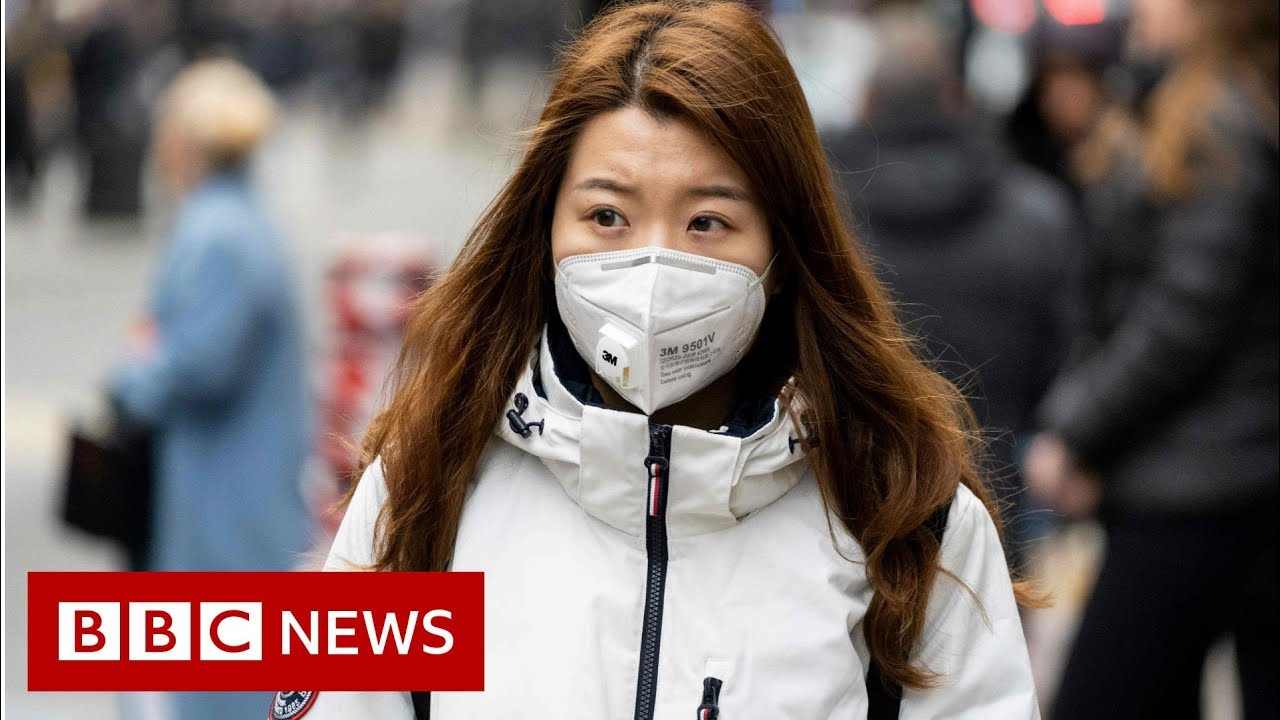
Ma’s statement wasn’t a minor technical footnote — it undercuts the basic assumption most containment plans were built on. Airport screening, temperature checks, and isolating people who look or feel sick all depend on symptoms being a reliable warning sign. If someone can carry and spread 2019-nCoV for up to two weeks before showing anything, thermal scanners at airports catch almost nobody who matters.
Dr. William Schaffner, a US infectious disease expert, called asymptomatic transmission a potential “game changer” that severely complicates contact tracing. Once a virus can move silently through a population, tracking down every person an infected traveler sat near on a plane or stood next to in a market becomes far harder than isolating a known cluster of symptomatic patients.
Skepticism From Washington and Geneva
Not everyone accepted Beijing’s claim at face value. International health authorities responded with cautious skepticism, largely because China had not released the underlying data behind Ma’s statement. Dr. Anthony Fauci, director of the National Institute of Allergy and Infectious Diseases, said US CDC epidemiologists urgently needed access to the primary research collected by Chinese scientists — and noted that China had not yet invited CDC specialists into the country to review it firsthand.
“The ability of the virus to spread appears to be getting stronger,” Health Minister Ma Xiaowei told reporters in Beijing.
Epidemiologist Michael Osterholm pointed out that asymptomatic spread of this kind would be unprecedented among the coronavirus family — SARS and MERS, the two closest relatives, didn’t behave this way. That history is part of why outside experts want to see China’s raw data rather than take the announcement on trust, a pattern of guarded skepticism toward Beijing’s official statements that has shown up repeatedly, including in accounts from people who’ve left China describing how information there gets filtered before it reaches the outside world.
The Numbers on the Ground
The outbreak’s toll had already climbed to at least 56 deaths and nearly 2,000 confirmed infections concentrated around Wuhan, Hubei province, by the time of Ma’s briefing. Chinese authorities responded by locking down Wuhan and several neighboring cities, cutting off travel for tens of millions of people in an attempt to seal the outbreak at its source — restrictions large enough that Beijing itself has taken on the feel of a ghost town in parts of the capital. Cases have already slipped past China’s borders, with confirmed infections reported in the United States, France and Canada, raising the question of how many more quiet carriers are already on the move.
The WHO Steps In
World Health Organization Director-General Tedros Adhanom Ghebreyesus announced he was heading straight to Beijing to consult with Chinese officials as the situation developed. His decision to travel personally, rather than send a delegation, signaled how seriously the WHO was treating Ma’s disclosure about pre-symptomatic spread — and how much the organization still needed from China in terms of hard data, transparency, and access for outside researchers.
For now, the question hanging over every health ministry watching this unfold is whether Beijing will actually let CDC and WHO scientists see the numbers behind Ma’s warning, or whether the world keeps reacting to statements it can’t independently verify. Fauci’s ask was simple and specific: get US epidemiologists into China to review the primary data. As of Sunday, that invitation still hadn’t come.



2 dead after ‘disgruntled employee’ opens fire at Walmart in Mississippi: Police
A Video Message of Appreciation on the 2019–20 U.S. News & World Report Best Hospital Rankings
Inside Connecticut’s Coronavirus-Only Facility For Nursing Home Residents
More schools are shutting down due to coronavirus
Doctor With COVID-19 Describes Symptoms As ‘Pain Everywhere’