

 InfoSearched
Europe stares down the risk of a second surge just as it starts to loosen the lockdown.
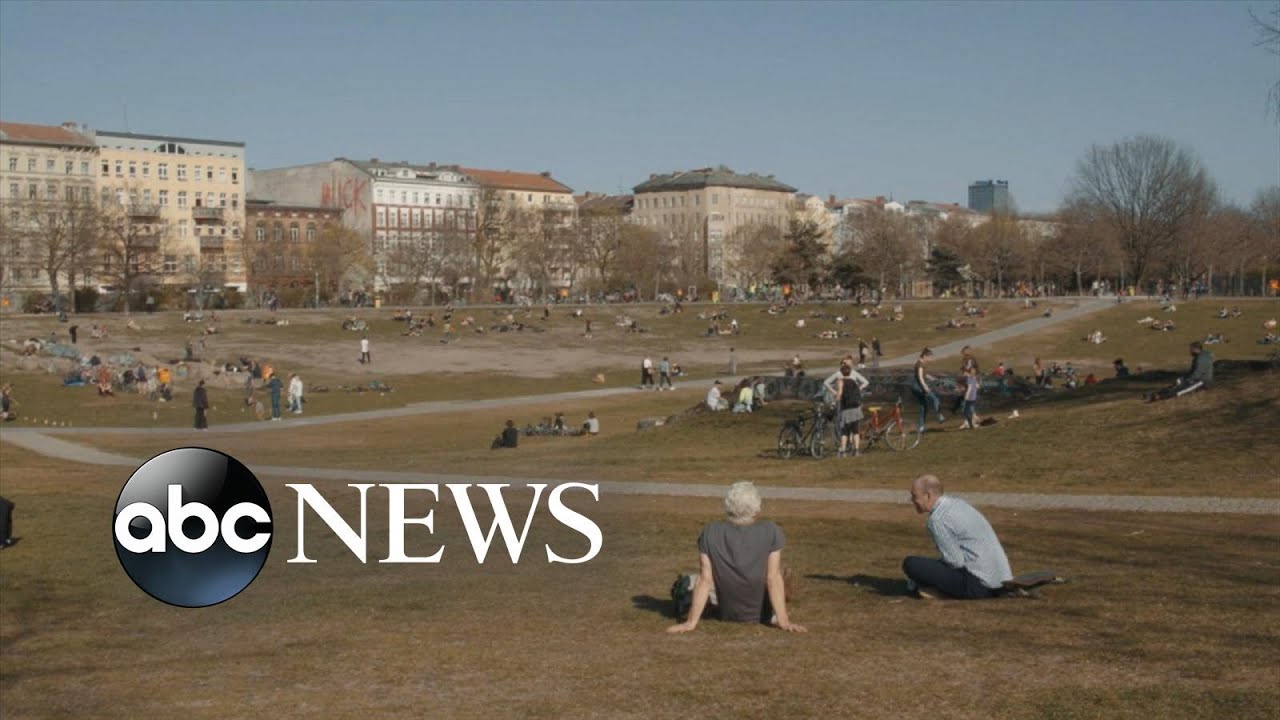
Six weeks into the strictest peacetime shutdown the continent has seen, European governments are facing a brutal trade-off: keep the lockdowns tight enough to avoid a rebound, or open up enough to keep the economy from cratering further. The video above captures that tension as case counts finally start bending downward in the hardest-hit countries, even as officials warn that a second wave is one bad decision away.
- Europe has recorded more than one million confirmed COVID-19 infections and surpassed 100,000 deaths since the outbreak began.
- Strict lockdowns in Italy, Spain and France have slowed daily hospitalizations and appear to have flattened the peak infection curve.
- Denmark started rolling back school closures in mid-April, while Germany announced plans to let smaller retail shops reopen alongside expanded antibody testing.
The Numbers Behind the Wave
The scale of the outbreak in Europe by mid-April is staggering: over a million confirmed cases and more than 100,000 deaths across the continent, concentrated heavily in Italy, Spain, France and the UK. Intensive care units in several of those countries have been operating under sustained pressure for weeks, with hospitals stretched thin on staff, beds and ventilators. That strain is exactly why officials are treating the current data — a slowdown in new hospitalizations — as encouraging but fragile, not a green light to fully reopen.
Early signs out of Italy and Spain suggest the toughest measures are working. Daily hospital admissions have started to plateau after weeks of exponential growth, and peak infection trajectories in both countries have flattened. France has reported similar early trends. But public health officials caution that the same lockdowns responsible for that progress are also the reason any premature easing could undo it almost immediately.
Phased Reopening Takes Shape
Rather than lifting restrictions all at once, governments are experimenting with narrow, staged reopenings. Denmark became one of the first to move, restarting school closures in mid-April for younger students. Germany followed with plans to allow smaller retail shops to resume operations, paired with a rollout of expanded antibody testing designed to give health authorities a clearer read on how much of the population may already have baseline immunity.
These are deliberately small steps. No government is talking about reopening bars, restaurants or large gatherings yet — the current playbook leans on continued mask guidance, social distancing and remote work as the default, with any loosening confined to specific, low-risk sectors that can be walked back quickly if case numbers tick back up.
Brussels Pushes for a Coordinated Exit
The European Union has been explicit that it wants member states moving in lockstep rather than racing each other out of lockdown. Officials have called for a “gradual approach” to lifting restrictions, worried that one country reopening faster than its neighbors could spark cross-border travel and reignite transmission in regions that had just gotten outbreaks under control.
Officials have warned that lifting restrictions too rapidly would spark a swift rebound in case counts.
That warning is at the center of every reopening conversation happening in Brussels, Berlin and Copenhagen right now. It’s also why the plans on the table are so incremental — a few grades going back to school here, a category of small shops reopening there — rather than anything resembling a full reset to pre-pandemic life.
The Economic Clock Is Running Too
Public health isn’t the only pressure governments are weighing. The International Monetary Fund has forecast severe economic contractions tied to the extended shutdowns, and that number is pushing finance ministries to look for any responsible opening they can find. It’s the same balancing act playing out on the other side of the Atlantic, where debates over how the US reopen compared with other countries were already underway even as Europe worked through its own timeline.
The stakes of getting that timeline wrong are what’s driving the caution. A premature reopening that triggers a second spike wouldn’t just cost lives — it would force governments back into the exact lockdowns they’re currently trying to unwind, at even greater economic cost. That’s the calculation behind Denmark’s careful, grade-by-grade school reopening and Germany’s decision to pair small shop openings with antibody testing rather than a blanket announcement.
For now, the plan across the hardest-hit countries is to keep watching the hospitalization curves week by week before taking the next step — and those curves, not political pressure, are what will determine whether Germany’s small shops and Denmark’s classrooms are followed by anything bigger before summer.




You Need To Listen To This Leading COVID-19 Expert From South Korea
Europe’s economy is slowing down
Breaking: Iraq Prime-Minister Adil Abdul Mahdi resigns
Sanders and Warren slammed over “fairy tale” proposals in 2020 debate