

 InfoSearched
The United States just logged its deadliest single day of the pandemic, and the worst may not be over in the places that haven’t hit their peak yet.
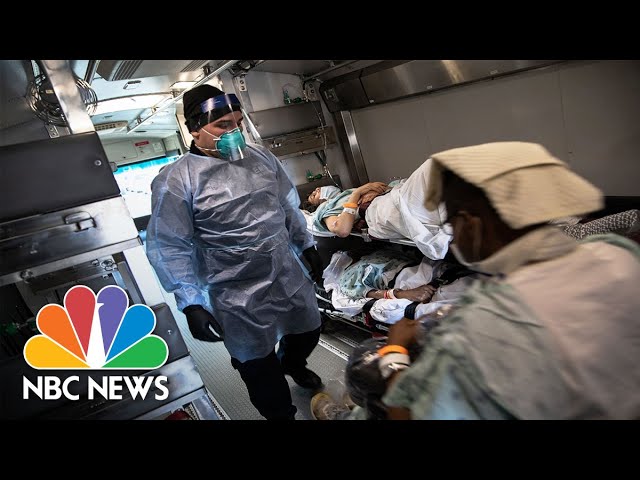
NBC Nightly News reported that the country recorded more than 2,900 deaths in a single 24-hour span during the final week of April, according to data compiled from global tracking sources and the World Health Organization. It was the deadliest day the U.S. had seen since the outbreak began. Even as New York, the original epicenter, showed signs of a plateau, former FDA Commissioner Dr. Scott Gottlieb warned that the virus was still spreading quietly through parts of the country that hadn’t yet felt the worst of it.
- The U.S. recorded more than 2,900 COVID-19 deaths in one 24-hour period during the last week of April 2020, its deadliest day of the pandemic to that point.
- Dr. Scott Gottlieb, former FDA Commissioner, warned that hot spots in the Midwest, South, and other regions were stuck on dangerous plateaus rather than showing the steep declines seen in the New York metro area.
- The report aired as state and federal leaders weighed phased reopening plans against warnings that lifting restrictions too soon could trigger secondary spikes.
A Grim Record Set in Late April
The more than 2,900 deaths logged in a single day marked the highest daily toll the country had recorded since the pandemic reached American shores. That figure came from data compiled by global tracking sources alongside the World Health Organization, and it landed at a moment when many Americans, and several governors, were already pushing to loosen stay-at-home orders. The number underscored just how much the virus was still killing even as public attention began shifting toward reopening.
New York, which had absorbed the earliest and heaviest wave of infections and deaths in the country, was finally showing signs of relief. Hospitalizations and daily death counts there had begun to level off and decline from their April peaks, giving state officials room to start discussing a phased return to normal life. But that improvement was happening in one region while the national death count was setting a record — a split screen that framed the entire report.
Gottlieb’s Warning Beyond New York
Dr. Scott Gottlieb, who led the FDA before returning to the private sector, told NBC that the plateau seen in New York wasn’t being replicated everywhere. He pointed to emerging hot spots across the Midwest and South, where case counts weren’t falling the way they had in the Northeast — they were holding steady at elevated levels, a sign the virus was still moving through communities without the dramatic spikes that would have grabbed headlines.
Other regions of the country were stuck on precarious plateaus, with community transmission continuing quietly rather than dying out.
That distinction mattered. A plateau isn’t a decline — it means new infections are still occurring at a steady clip, just without the sharp upward curve that triggers alarm. Gottlieb’s concern was that policymakers outside the initial epicenters might read a flat line as good news when it actually meant the virus had settled into sustained transmission, waiting for any loosening of restrictions to climb again.
Reopening Pressure Meets Public Health Warnings
The report landed squarely in the middle of a national debate over how fast states should reopen. Several governors had already begun easing restrictions on businesses and gatherings even as public health officials cautioned that doing so prematurely could spark a second wave of infections. That tension — between economic pressure to reopen and medical warnings to hold the line — was the backdrop against which Gottlieb’s comments were delivered.
NBC’s coverage arrived alongside a wave of related reporting on how different states were handling that balancing act, from mask mandates to school closures to business restrictions that varied wildly depending on local case trends. The stricter restrictions some states were imposing as infections continued to spike stood in contrast to other states moving toward reopening on faster timelines, a split that would define much of the pandemic’s next phase.
Federal guidance during this stretch also reflected the uncertainty. The White House’s own decision to direct staff to wear masks after officials there contracted the virus was a small but telling sign that even those closest to the reopening push weren’t immune to the risks Gottlieb was describing.
Gottlieb’s message wasn’t that New York’s progress was false — it was real, and it showed the virus could be pushed back with sustained restrictions. His warning was that the rest of the country hadn’t done the same work yet, and treating one region’s plateau as a national all-clear risked squandering whatever ground had been gained during the worst weeks of April.





Warning: Why Small Business Bailouts could Lead to Mass Bankruptcies
News correspondent speaks out after testing positive for COVID-19
Pres. Trump Cries ‘Bullsh*t’ As New Details Reported On Ukraine Aid Freeze – Day That Was | MSNBC
More schools are shutting down due to coronavirus