

 InfoSearched
Iran fires a message toward Tehran, and Washington is left reading the smoke.
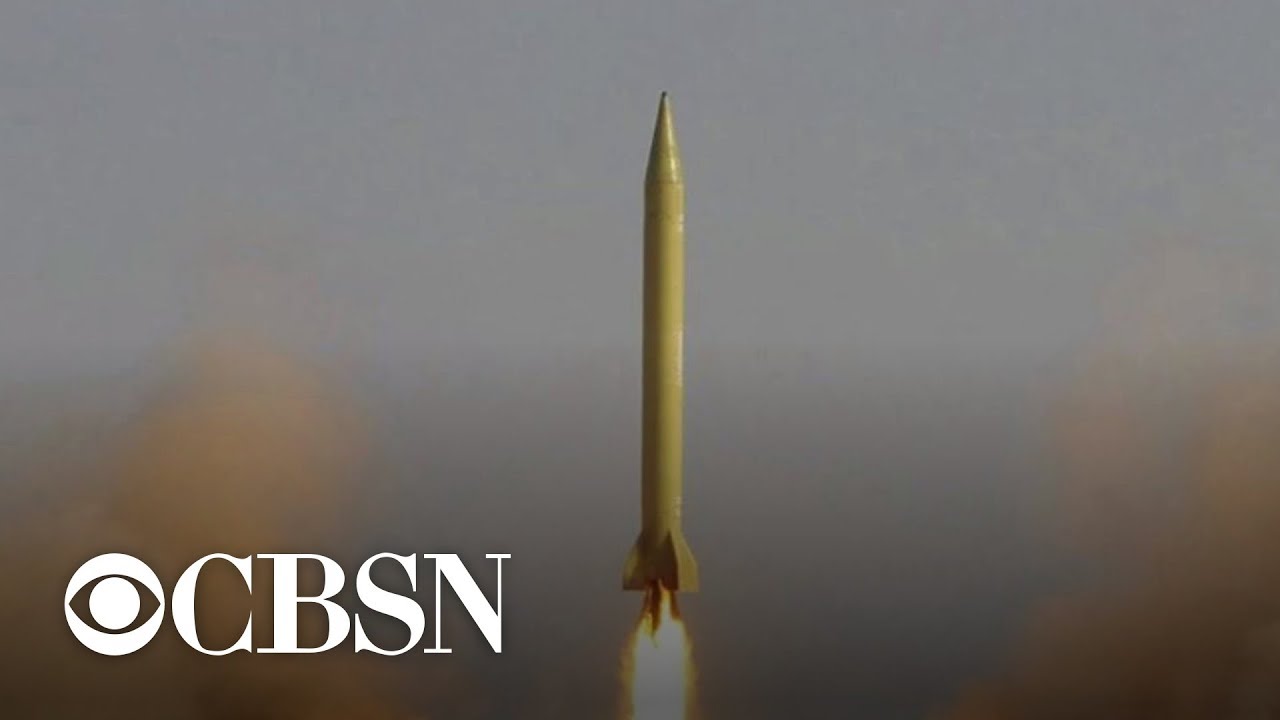
A U.S. military official confirmed Wednesday that Iran test-launched a medium-range ballistic missile from its southern coastline along the Gulf of Oman, sending the weapon roughly 1,000 kilometers north before it came down in a desert stretch near Tehran. The launch never left Iranian soil and threatened no shipping lanes or American bases, but the timing tells its own story: it landed just days before Iranian officials were set to sit down with the remaining JCPOA signatories in Vienna on July 28 to try to save what’s left of the 2015 nuclear deal.
- The missile, identified as a Shahab-3, traveled about 620 miles from a launch site near the Gulf of Oman coast and impacted in the desert near Tehran, staying entirely inside Iranian territory.
- The test came just days ahead of a July 28 Vienna meeting between Iran and Britain, France, Germany, China and Russia — the countries still trying to hold the JCPOA together after the U.S. withdrawal.
- It follows Iran’s downing of a U.S. surveillance drone and its seizure of the British-flagged tanker Stena Impero in the Strait of Hormuz in the preceding weeks.
Actual Test Results Explained
U.S. defense officials described the launch as a data point for Iran’s engineers as much as a message to Washington and its allies. The Shahab-3’s flight path never threatened U.S. military assets or commercial shipping in the Gulf region — instead, Western intelligence assessments framed it as an attempt to refine the missile’s range and accuracy. A senior Trump administration official told reporters only that the government was “aware of reports of a projectile launched from Iran,” a deliberately clipped response that avoided handing Tehran a bigger reaction than the test itself.
Iran’s mission to the United Nations pushed back on any suggestion the test was destabilizing, insisting its ballistic missile program is purely defensive in nature and not up for negotiation. That’s the same line Tehran has held for years, even as U.S. Security Council Resolution 2231 calls on Iran to avoid work on ballistic missiles specifically designed to carry nuclear warheads.
U.S. officials said the missile remained entirely within Iranian territory and posed no immediate threat to allied shipping or American bases in the region.
A Legal Gray Zone
Resolution 2231’s language targets missiles built to deliver nuclear weapons — not conventional ballistic systems like the Shahab-3. That distinction is exactly why analysts flagged the test as provocative without being a clear-cut violation of the 2015 agreement. Iran gets to keep testing its conventional missile inventory while technically staying inside the lines, even as the political message lands loudly in Washington, London and Vienna.
That gray area has become Tehran’s preferred lane since the U.S. pulled out of the JCPOA and reimposed its “maximum pressure” sanctions campaign. Iran has spent the past year testing the limits of the deal’s remaining backers, and this launch fits a pattern of moves — the drone shootdown, the tanker seizure — that pressure the West without technically tearing up the agreement’s text. That regional standoff has echoes in other flashpoints the administration has had to manage simultaneously, including the diplomatic sparring over the Palestinian question that played out at the United Nations.
The Stakes Heading Into Vienna
The Vienna meeting was always going to be tense given the drone and tanker incidents, but a missile test landing days beforehand raises the temperature further for Britain, France, Germany, China and Russia — the five powers trying to keep some version of the nuclear deal alive without American participation. None of them wanted a fresh missile headline heading into talks meant to find a path forward after Washington’s exit.
It’s a dynamic playing out against other regional military signaling happening at the same time, from Gulf tanker seizures to broader shows of force that regional powers have used to draw lines without triggering open conflict — not unlike the posture China has taken with its own drills near Taiwan, detailed in China Steps Up Taiwan Drills: Day Two. For Iran, the Shahab-3 launch accomplishes something similar: a show of capability calibrated to stay just inside the rules while making sure nobody in Vienna forgets what’s parked in the Gulf.
Nobody in Washington is treating this as a one-off. With the Stena Impero still in Iranian custody and the Vienna talks opening in two days, the next test of how far Tehran is willing to push won’t be a missile — it’ll be whether the remaining JCPOA partners can agree on anything concrete once they’re actually in the room.





Boris Johnson replaces Theresa May as UK prime minister
Legendary TV host Regis Philbin dies at 88
Body Found in Search of Lake Piru for ‘Glee’ Star Naya Rivera
Florida shatters national record for new coronavirus cases
Congresswoman Alexandria Ocasio-Cortez Demands Impeachment of Supreme Court Justice Clarence Thomas