

 InfoSearched
A last-ditch sit-down in Vienna tries to keep the Iran nuclear deal from unraveling completely.
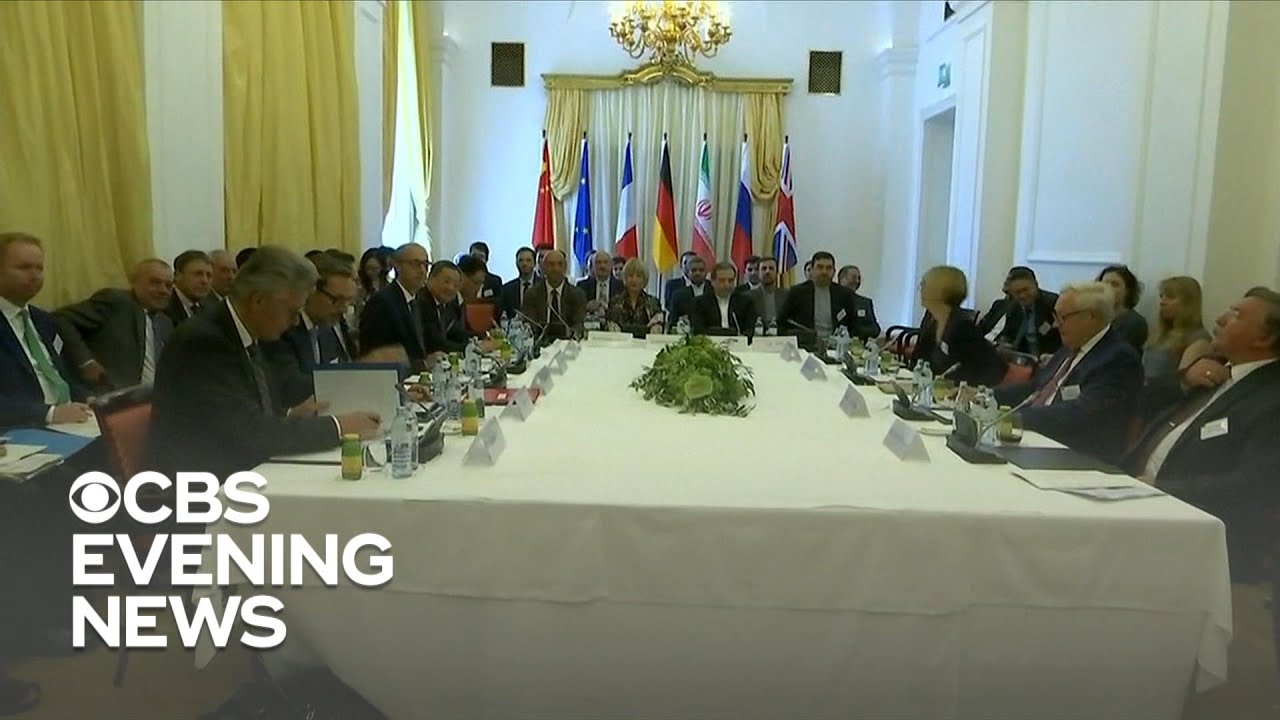
Diplomats from Iran, Britain, France, Germany, Russia, China and the European Union gathered in Vienna on Sunday, July 28, for an emergency session aimed at rescuing the 2015 nuclear accord. The meeting came as Tehran has already blown past the deal’s uranium stockpile and enrichment limits, and as a tanker standoff in the Strait of Hormuz pushes the region toward open confrontation. Both sides left the table calling the talks “constructive,” but the gap between what Iran wants and what Europe can actually deliver looks as wide as ever.
- Iran has surpassed the JCPOA’s caps on enriched uranium stockpiles and enrichment above 3.67%, retaliation for the US withdrawing from the deal in May 2018 and reimposing sanctions.
- The talks were overshadowed by Iran’s Revolutionary Guard seizing the British-flagged tanker Stena Impero, after Britain detained the Iranian supertanker Grace 1 off Gibraltar.
- Iranian Deputy Foreign Minister Abbas Araghchi demanded concrete mechanisms for Europe to keep buying Iranian oil, warning that the barter system INSTEX alone won’t cut it.
Vienna Talks Signal New Urgency
The Joint Comprehensive Plan of Action was never designed to survive one of its original signatories walking away and reimposing sanctions, and that’s effectively what’s been tested since Washington’s exit in May 2018. With Iranian oil exports strangled and its banking system cut off from most of the world, Tehran began openly exceeding the deal’s technical limits this year, betting that breaching the accord incrementally would pressure Europe into action rather than kill the deal outright. Sunday’s session in Vienna, bringing together Iran, Britain, France, Germany, Russia, China and the EU, was the remaining parties’ attempt to stop that slow-motion collapse before it becomes irreversible.
The Tanker War in the Background
No one at the table could ignore what was happening in the Strait of Hormuz. Iran’s Revolutionary Guard seized the British-flagged tanker Stena Impero, a direct response to Britain’s detention of the Iranian supertanker Grace 1 off Gibraltar weeks earlier. That naval standoff turned an already tense diplomatic exercise into something with real ships and real crews caught in the middle, and it gave the Vienna talks an urgency that pure paperwork over enrichment percentages never could.
Araghchi’s Ultimatum on Oil and Banking
Iran’s message in Vienna was blunt. Deputy Foreign Minister Abbas Araghchi told European counterparts that goodwill statements aren’t worth much without a working pathway for Iran to actually sell its crude and move money through the international banking system. The Europeans continued pushing to get INSTEX, the Instrument in Support of Trade Exchanges, fully operational — a barter-style special purpose vehicle meant to let humanitarian and non-dollar trade with Tehran move around US secondary sanctions.
Iranian officials made clear INSTEX remains insufficient on its own to offset American sanctions, and that Tehran will keep rolling back its JCPOA commitments every 60 days without a viable route for oil exports and banking access.
That 60-day clock is the real pressure point. Iran isn’t threatening to tear up the deal in one move — it’s already begun a metered withdrawal from its obligations, timed to force Europe’s hand before each new deadline arrives.
European Union Offers Strategic Support
The problem for Britain, France and Germany is that INSTEX, as constructed, was built for humanitarian goods and non-dollar trade, not for absorbing the volume of oil revenue Iran lost when US sanctions returned. European officials reiterated their commitment to the JCPOA in Vienna, but stopped short of promising anything close to the oil purchase guarantees Araghchi was asking for — a gap that mirrors the kind of unilateral US economic pressure campaigns that have complicated diplomacy elsewhere, from the sanctions fights over Hong Kong to standoffs playing out at the United Nations over other Middle East flashpoints.
Tehran’s position leaves little room for patience. Unless Europe produces something more concrete than INSTEX before the next 60-day marker, Iran has signaled it will keep stripping away pieces of the JCPOA one enrichment threshold at a time — and with a British tanker still in Iranian hands and a supertanker still held near Gibraltar, the next flashpoint in the Gulf could arrive well before the next round of talks does.

Fauci funded ‘bat-human interface’ research in China to avoid an outbreak in the US
Inside Pro-Trump Women’s Group ‘Trumpettes USA’
California May Start School Year in Summer, Governor Newsom Says
BLM Protesters SHOOT An 8-Year-Old Girl in Atlanta!
U.S. envoy talks Venezuela crisis ahead of international meeting