

 InfoSearched
Ohio’s working-class voters could decide 2020, and they’re not sold on anyone yet.
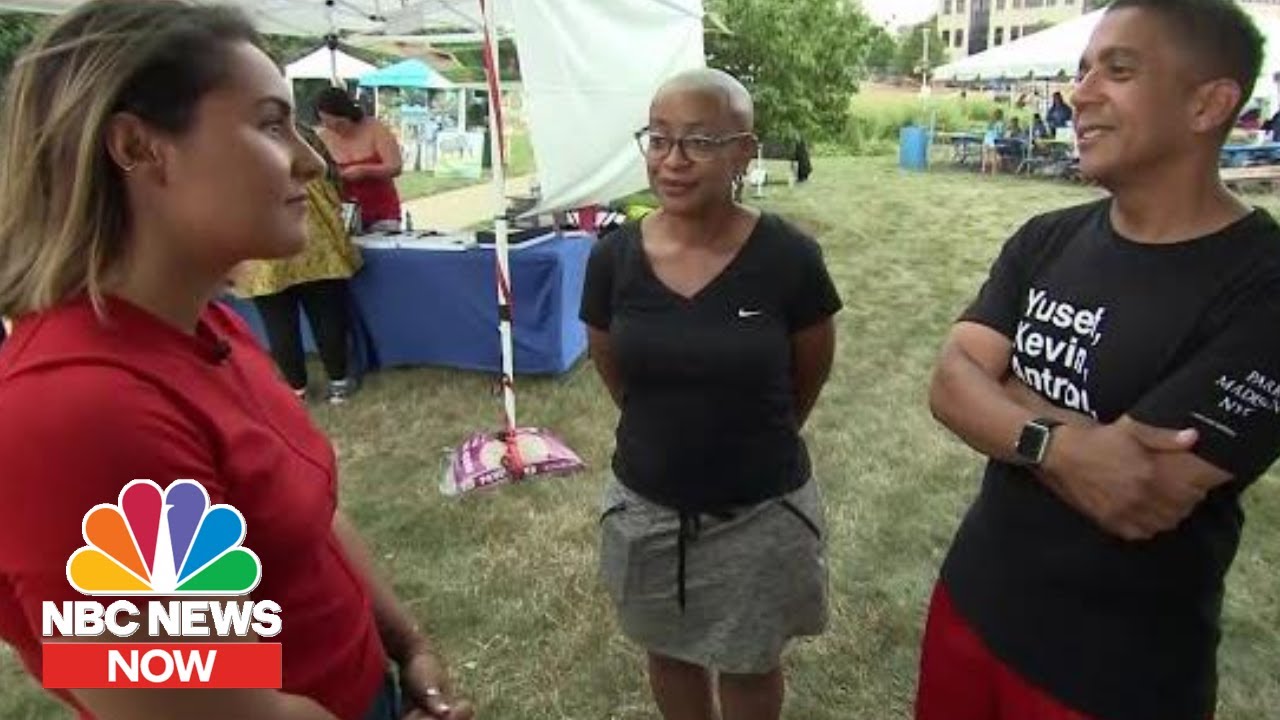
With the second Democratic primary debate set for Detroit on July 30-31, NBC News Now sent political reporter Ali Vitali across Ohio to find out what’s actually moving voters in a state Donald Trump carried by roughly eight points in 2016. Vitali talked to union members, manufacturing workers, and swing voters in a state that has become the textbook test of whether Democrats can win back the industrial Midwest.
- Ali Vitali traveled to Ohio ahead of the July 30-31 Detroit debates to gauge voter sentiment in a state Trump won by about eight points in 2016.
- Voters cited manufacturing stability, trade policy, job security, infrastructure, and healthcare costs as their top concerns — not ideological litmus tests.
- The segment weighed whether contenders like Joe Biden, Bernie Sanders, and Elizabeth Warren can build a practical economic message to compete with Trump’s populist appeal in battleground states like Ohio.
Ohio Determines the Political Terms
Ohio hasn’t just voted for the winner in nearly every recent presidential race — it’s voted for the winner by margins that map onto the exact demographic fight Democrats are having with themselves. Trump’s eight-point win there in 2016 was built on rural and exurban voters who once backed Barack Obama twice, then flipped. Vitali’s reporting treated the state less as a single bloc and more as a stress test: can a Democratic message built around trade, factory jobs, and healthcare costs actually land with people who already tried Trump once and haven’t ruled out trying him again.
The voters she spoke with weren’t debating primary-season purity fights over which health plan eliminates private insurance. They were talking about whether a plant stays open, whether a union job still pays what it used to, and whether the next contract on trade helps or hurts them. That’s a different conversation than the one playing out on debate stages, and it’s the gap Vitali’s segment was built to measure.
The Economic Message Democrats Need
Manufacturing stability and trade policy came up again and again in Vitali’s conversations — no surprise in a state where steel, auto parts, and heavy manufacturing still anchor entire counties. Job security and infrastructure ranked close behind, along with healthcare costs, a concern that cuts across party lines in a state with an aging industrial workforce and a real opioid crisis footprint in its former mill towns.
Ohio voters want a candidate who can speak to working-class economic anxiety directly — not just win an argument about ideology.
That’s the needle Biden, Sanders, and Warren were all trying to thread heading into Detroit. Biden’s pitch leaned on Obama-era nostalgia and blue-collar familiarity; Sanders and Warren were both selling structural economic overhauls, just from different directions. Vitali’s Ohio voters didn’t sound locked into any one of them — they sounded like they were waiting to be persuaded, which is exactly the posture that makes a state this competitive.
Detroit as the Proving Ground
The timing of the trip wasn’t incidental. With the Detroit debates landing right next door to Ohio, geographically and economically, the segment functioned as a preview of the argument the candidates would need to win on stage. A message that tests well with progressive debate audiences in a big city doesn’t automatically travel to a union hall in Youngstown or a diner in Canton, and Vitali’s reporting was built around that exact friction point.
It’s the same fight playing out across other flashpoints in the primary — a party trying to figure out whether to run on ideology or on kitchen-table economics, a debate that’s shown up in coverage of Team Biden’s plan for America as the frontrunner tried to hold together both wings of the coalition. Ohio voters, per Vitali’s reporting, mostly just want someone who sounds like they’ve been inside a plant recently.
Whoever comes out of Detroit with real traction is going to have to prove it in exactly the kind of towns Vitali visited — not in the debate hall, but back on the ground in Ohio, where the eight-point gap from 2016 is still the number every campaign is quietly trying to close.



Attorney speaks out after FBI arrests longtime Jeffrey Epstein associate
China Steps Up Taiwan Drills: Day Two
Coronavirus/Covid-19: What happens now, what comes next
Mayor Eric Garcetti says thousands of L.A. city workers to be furloughed
Did the US reopen faster than other countries?