

 InfoSearched
Japan shuts down every school in the country as the world scrambles to contain coronavirus.
With confirmed cases worldwide closing in on 82,000, governments from Tokyo to Riyadh moved on February 27 to lock down daily life in ways that would have seemed unthinkable weeks earlier. Prime Minister Shinzo Abe ordered every elementary, middle and high school in Japan closed from March 2 through the end of spring break, sidelining roughly 12.8 million students. The announcement was part of a broader wave of emergency measures rolling out across Asia, the Middle East and Europe as officials tried to get ahead of community spread.
- Japan’s nationwide school closure, ordered by PM Shinzo Abe, runs from March 2 through late March and affects about 12.8 million students.
- Saudi Arabia took the unprecedented step of barring foreign pilgrims from Mecca and Medina, Islam’s holiest sites.
- South Korea stiffened penalties for breaking self-isolation, sent in military medical teams, and postponed joint drills with the U.S., while northern Italian towns saw army-enforced lockdowns.
Abe’s Nationwide School Shutdown
Abe’s directive didn’t just cover a handful of hot-spot prefectures — it asked every school in Japan, public and private, to close its doors starting March 2 and stay shut through the scheduled end of spring break. He also pressed organizers to cancel or postpone major sporting and cultural events, a request that landed just months ahead of the Tokyo Olympics and put enormous pressure on venues and leagues already nervous about ticket sales and travel.
The scale of the closure — 12.8 million students affected in one announcement — made it one of the largest single containment actions taken anywhere in the world to that point, and it signaled that Japan was treating the outbreak as a threat serious enough to disrupt the entire academic calendar rather than issue localized guidance.
Saudi Arabia Locks Down Mecca and Medina
Saudi Arabia’s decision to bar foreign pilgrims from entering Mecca and Medina broke with religious tradition in a way that underscored how seriously the kingdom viewed the risk. Restricting access to Islam’s two holiest sites is not a step taken lightly, and the move came as authorities worried that pilgrims arriving from dozens of countries could turn the sites into a vector for transmission on a global scale.
Roughly 12.8 million students in Japan were kept home starting March 2 — the single largest school shutdown ordered anywhere in the world at that point in the outbreak.
South Korea and Italy Tighten Enforcement
South Korea, then wrestling with one of the largest case clusters outside China, toughened penalties for anyone caught violating self-isolation orders and dispatched military medical teams to help overwhelmed local health authorities. Seoul also postponed joint military exercises with the United States, a decision that carried its own strategic weight given the ongoing tension on the peninsula.
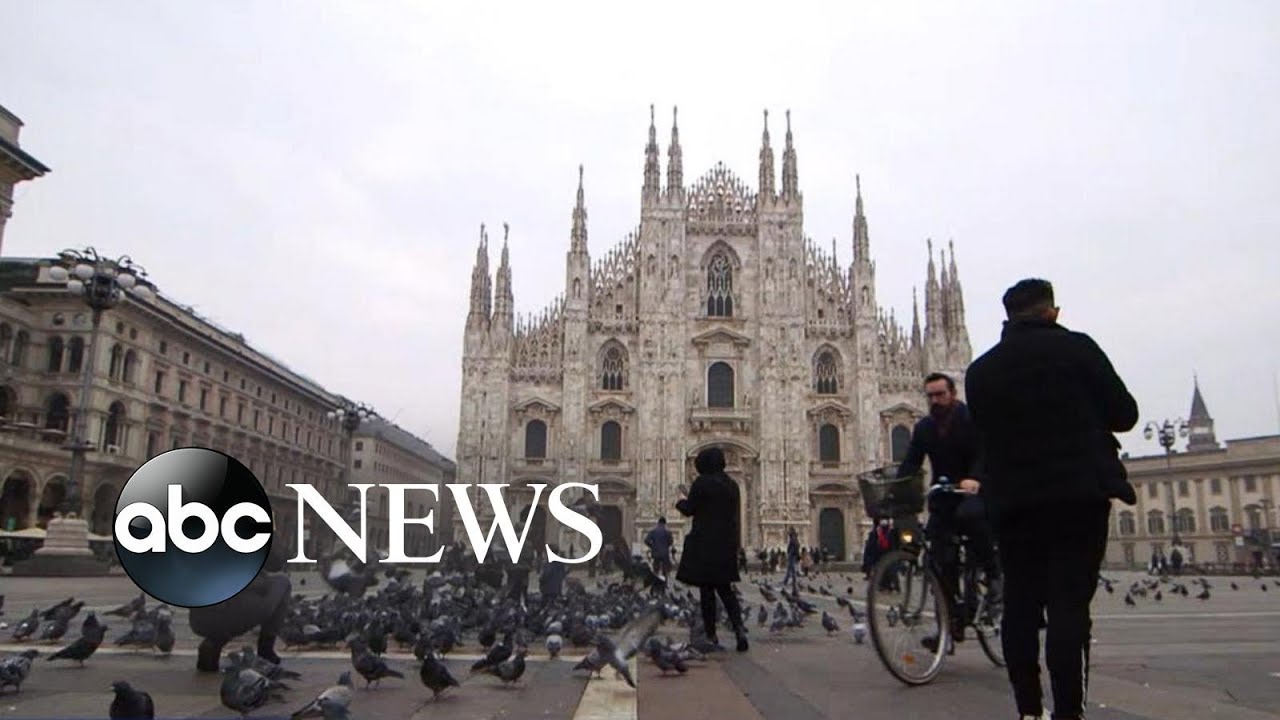
In northern Italy, the response looked different but just as severe: towns in the outbreak’s early cluster were placed under army-enforced lockdowns, with soldiers helping police enforce movement restrictions on residents. The ABC News report tied these scattered national responses together as evidence of a rapidly synchronizing global playbook — border controls, quarantines and closures — all rushed into place before the World Health Organization would formally call the outbreak a pandemic. For a fuller picture of how quickly conditions inside China itself had shifted by that point, see the earlier report on Beijing turning into a “ghost town” amid the outbreak.
A Patchwork Response Taking Shape
What stood out across the reporting was how differently each government chose to fight the same threat — school closures in Japan, religious-site restrictions in Saudi Arabia, military deployments in South Korea, army lockdowns in Italy. There was no shared template yet, just a shared sense of urgency, and questions about testing capacity and case counts were already becoming a recurring theme, a thread later reports would pick up as outbreaks grew, including coverage of how quickly case totals climbed in countries like Russia in the months that followed.
Abe’s government set March 2 as the start date for Japan’s shutdown, with no return to classrooms planned before spring break ended — meaning the next real test of the policy wouldn’t come until schools were due to reopen in April, by which point health officials expected to know whether the closure had actually slowed transmission or simply delayed it.




Sanders and Biden hold rallies ahead of 6 upcoming primaries
CNN reporter and crew hit by tear gas in Hong Kong
Coronavirus: White House Predicts Up To 200,000 U.S deaths, Millions Of Cases
Coronavirus: Should I wear a mask to stop the virus?
Grocery prices on the rise