

 InfoSearched
Senate Democrats just tanked a $2 trillion rescue package as markets keep sliding.
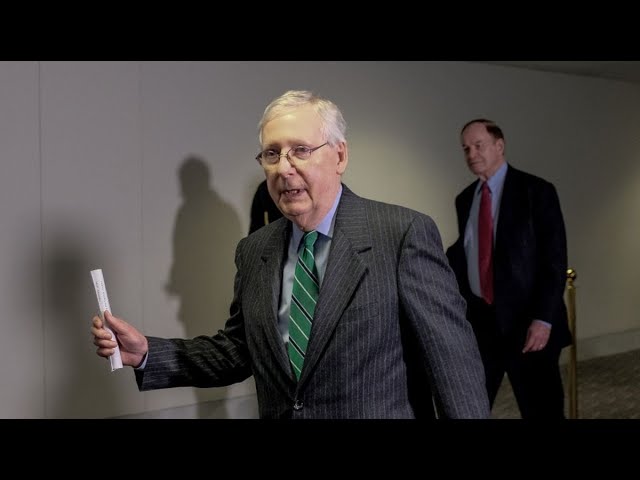
Late Sunday night, the emergency coronavirus stimulus effort that Washington had rushed to assemble in a matter of days hit a wall on the Senate floor. A procedural motion needed 60 votes to move the bill forward. It got 47-47. Every Democrat present voted no, and the nearly $2 trillion package Republicans had drafted was stopped cold, even as Senate Majority Leader Mitch McConnell warned that stock markets were in freefall and workers couldn’t wait.
- The cloture motion to advance the roughly $2 trillion emergency package failed 47-47 on Sunday, March 22, falling well short of the 60 votes required.
- Democrats objected to a $500 billion corporate liquidity fund they labeled a discretionary “slush fund,” pushing instead for restrictions on executive pay and a ban on stock buybacks.
- Schumer and Democratic leaders said talks with Treasury Secretary Steven Mnuchin would continue overnight to refocus the bill on unemployment insurance, hospital funding, and aid to state and local governments.
The Vote That Stopped the Package
The failed tally came after a weekend of marathon negotiations on Capitol Hill involving McConnell, Senate Minority Leader Chuck Schumer, House Speaker Nancy Pelosi, and Mnuchin. Republicans had hoped to move the bill through on a fast track given the scale of the economic shock already hitting airlines, restaurants, and small businesses as states shut down to slow the spread of the virus. Instead, Democrats held the line as a bloc, denying the 60 votes McConnell needed to cut off debate and bring the legislation to a final vote.
McConnell did not hide his frustration on the floor, accusing Democrats of holding up relief that the country needed immediately while Wall Street absorbed some of its worst sessions in years. Democrats countered that the version on the table was tilted too far toward corporations and not far enough toward the people losing paychecks.
Proposed Democratic Party Policy Changes
At the center of the dispute was a proposed $500 billion fund meant to give the Treasury Department broad discretion to backstop struggling industries. Democrats said the fund, as written, lacked the transparency and oversight needed to stop it from becoming a blank check for corporate bailouts. They demanded firm restrictions on executive compensation at any company receiving aid and an outright ban on stock buybacks for firms that took the money — conditions meant to prevent a repeat of criticism from the 2008 financial crisis bailouts.
Democrats want workers and hospitals funded first — not a $500 billion fund they say Republicans are treating as a corporate slush fund.
Beyond the corporate fund, Democrats pushed for a much larger expansion of unemployment insurance, arguing the version drafted by Republicans didn’t come close to covering the wave of layoffs already underway. They also wanted significantly more direct funding sent to hospitals and healthcare systems that were reporting critical shortages of ventilators, masks, and other protective equipment, plus additional aid for state and municipal governments bracing for a collapse in tax revenue. Similar warnings about hospital strain had already surfaced in reporting on projections of a rising death toll that were putting pressure on lawmakers to move faster, not slower.
Overnight Talks With Mnuchin
Schumer insisted the Sunday night vote wasn’t the end of the process. He and Democratic leaders said they intended to keep negotiating with Mnuchin through the night, with the goal of restructuring the bill so it leads with worker relief and public health funding before Democrats would agree to let it advance. McConnell, for his part, made clear he viewed the blocked vote as an unnecessary delay at a moment when the economic damage was compounding by the hour.
The standoff left the size and shape of the eventual package still unsettled going into Monday, with both sides publicly committed to getting something passed but sharply divided on where the money should go first.
Anticipated Future Legislative Developments
Another procedural vote was expected as soon as Monday, giving Mnuchin and Schumer roughly 24 hours to close the gap on unemployment insurance, hospital funding, and the strings attached to that $500 billion corporate fund. Whether McConnell can find the eight Democratic votes he needs will depend entirely on how much Republicans are willing to give up on the oversight language Democrats spent Sunday night fighting over — a fight that’s likely to shape how fast, and how big, the next stimulus check actually reaches anyone’s bank account.






Trump signs executive order on skills-based hiring
Michigan governor dismisses massive protest as a ‘political stunt’
‘We’ll starve to death if this continues’
Bernie Sanders Says Path to Democratic Nomination Is Just Not There
Health care workers say they’ve been told to keep silent on hazardous conditions