

 InfoSearched
A Norwegian novelist known for Viking history and bushcraft content turns his camera on quarantines, closed borders and asks the uncomfortable question everyone’s avoiding.
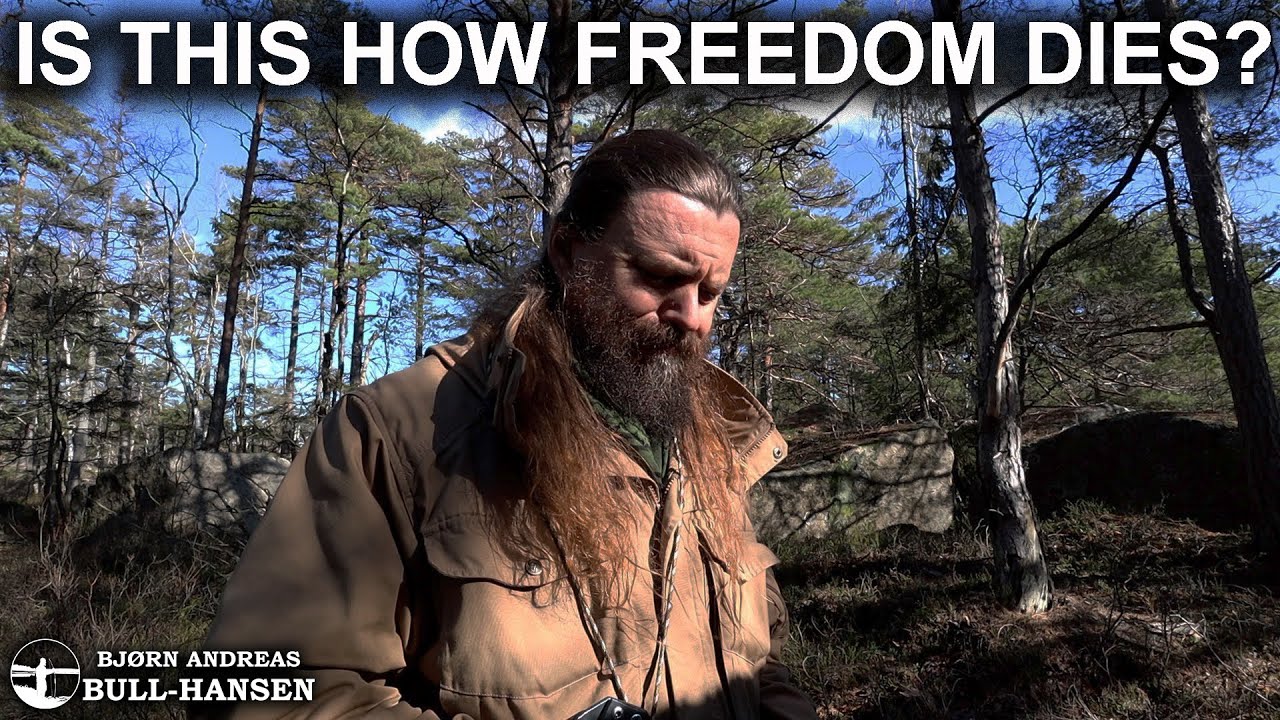
Bjørn Andreas Bull-Hansen has spent years building an audience around historical fiction and survival skills, not political commentary. But in mid-March 2020, as country after country shut its borders and ordered citizens indoors, he uploaded “Coronavirus & covid-19: Is this how freedom dies?” — a video that steps outside his usual territory to ask what happens to civil liberties once governments decide an emergency justifies suspending them.
- Bull-Hansen, a Norwegian historical novelist and YouTube creator best known for Viking-themed content, released the commentary video in mid-March 2020 as nationwide quarantines, border closures and emergency declarations spread across the globe.
- He frames his argument around a historical pattern: emergencies routinely give governments pretexts to curtail personal liberties under the banner of public safety, and those restrictions don’t always retreat once the danger passes.
- The video’s central question is whether temporary state powers invoked for covid-19 will permanently alter how citizens relate to their own freedom, rather than whether the immediate health measures are justified.
A Novelist Steps Outside His Lane
Bull-Hansen’s channel typically covers Norse history, wilderness skills and the kind of long-form storytelling that built his following. His decision to address the pandemic directly signals how disruptive the moment felt in mid-March 2020 — this wasn’t a niche political commentator weighing in, but a creator whose audience came for Viking sagas suddenly speaking to a live, unfolding crisis. That shift itself is part of the video’s argument: when something upends daily life this fast, even people outside politics feel compelled to ask what’s actually happening to their rights.
Emergencies as a Historical Pattern
The core of Bull-Hansen’s case rests on precedent. Governments facing wars, epidemics and other crises have repeatedly used the moment to expand their own authority, he argues, and those expanded powers have a habit of outlasting the emergency that produced them. He’s not disputing that quarantines, mandatory closures and border restrictions can slow a virus’s spread — he’s asking who checks whether those powers get surrendered once the immediate danger fades.
History’s emergencies rarely expire on schedule — the powers survive long after the crisis that created them.
That framing lands differently depending on where a viewer sits. Public health officials were, at the same time, urging exactly the kind of sweeping measures Bull-Hansen questions, arguing that half-measures against a fast-moving respiratory virus would cost lives. Bull-Hansen’s video doesn’t reject that math outright; it asks who’s watching the exit ramp once the curve flattens.
The Trade-Off Nobody Voted On
What makes the video resonate beyond its own audience is the speed of the shift it’s describing. Within weeks, cities that had never closed their borders were closing them; workplaces that had never mandated remote work were emptying out overnight. Reports of once-bustling cities in China turning into near-ghost towns amid the lockdowns had already given the world its first look at how total these restrictions could get. Bull-Hansen’s point is that none of this went through the normal democratic negotiation — legislatures didn’t debate it for months; it arrived as decree, justified by models predicting the death toll would keep climbing if nothing changed.
Economic Recovery After Curve Flattening
Bull-Hansen isn’t arguing the measures are wrong on their face — he’s arguing that the real test comes later, when the emergency justification expires and governments are asked to hand the powers back. His video treats that moment, not the lockdown itself, as the one that actually determines whether freedom took a temporary hit or a permanent one.
Bull-Hansen doesn’t offer a prediction so much as a checklist: watch what powers governments claim in March, and watch even harder whether they give them back once the curve flattens. That’s the question his video leaves sitting with viewers long after the runtime ends.



Tracing The Origin Of The Coronavirus
Invasion! Asian giant hornets have arrived
In November 2020 It All Comes Together: Riots, Coronavirus, Covid-19, Trump Biden, Social Unrest
Tank launched into air by chemical factory blast – BBC News
US to turn away asylum seekers, illegal immigrants due to coronavirus: Report