

 InfoSearched
The nation’s largest reservoir just fell to a level no one has ever recorded before.
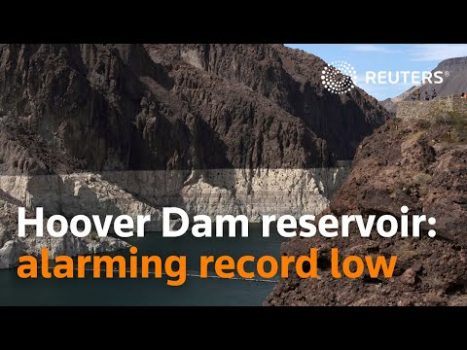
Lake Mead, the vast reservoir held back by Hoover Dam on the Colorado River, has dropped below 1,071.5 feet above sea level — the lowest mark since the lake was first filled in the 1930s. U.S. Bureau of Reclamation gauges show the reservoir eclipsing the previous record low set on July 1, 2016, with a chalky white “bathtub ring” of mineral deposits now towering above the shrinking waterline. The drop is the clearest visual evidence yet of a drought that has gripped the American West for more than two decades.
- Lake Mead has fallen below 1,071.5 feet, breaking the historical low set on July 1, 2016, and now holds only about 36% to 37% of its total storage capacity.
- The reservoir supplies drinking water and irrigation to roughly 25 million people across Arizona, Nevada, California and northern Mexico.
- Falling below the 1,075-foot threshold sets up a federal Tier 1 shortage declaration for 2022, forcing Arizona to lose about 8% of its water allocation and Nevada about 7%.
A Bathtub Ring Two Decades in the Making
The decline at Lake Mead isn’t the product of one dry winter. Bureau of Reclamation officials point to more than 20 years of a climate-driven megadrought across the Colorado River Basin, compounded by shrinking mountain snowpack and runoff that never comes close to replenishing what’s drawn out downstream. The mineral-stained rock now visible above the water’s edge marks where the lake’s surface used to sit, decades ago, when the reservoir was closer to full.
Lake Mead’s capacity has become the single clearest gauge of how strained the river system has become. At roughly 36% to 37% of total storage, the reservoir is holding barely a third of what it’s built to hold — a number that’s been sliding for years but only now has crossed into record territory.
The Coming Tier 1 Shortage
The 1,075-foot elevation line isn’t arbitrary — it’s the trigger written into the basin’s existing water-sharing agreements. With Lake Mead now sitting well below that mark, Reclamation projections point toward a first-ever Tier 1 shortage declaration on the Colorado River, set to take effect in 2022.
That declaration carries real consequences. Arizona is slated to lose about 8% of its total water supply, with the pain concentrated in agricultural districts across the central part of the state. Nevada faces a roughly 7% cut to its allocation. Those reductions are separate from the broader strain on drinking-water systems serving the wider region, a strain regulators in other drought-hit basins have grappled with in the Pacific Northwest as well.
The reservoir’s surface has fallen below 1,071.5 feet — lower than at any point since the lake was first filled in the 1930s.
Hoover Dam’s Power Problem
Lower water means less hydraulic head, and less head means less electricity. Hoover Dam’s generating capacity has already degraded by roughly 25% from its peak output, according to officials monitoring turbine performance at the plant. That’s prompted closer scrutiny of turbine efficiency and warnings about ripple effects across the Southwestern power grid, which leans on Hoover’s hydroelectric output during peak demand.
The dam’s engineers built the plant assuming a reservoir that would stay closer to full. As Lake Mead keeps receding, the turbines are operating in conditions well outside what the original design anticipated — and that gap only widens if the drought drags into another season.
Data Implications for 25 Million People
Lake Mead isn’t a scenic backdrop — it’s the water supply for Phoenix, Las Vegas, Los Angeles-area farms and cities across northern Mexico. Roughly 25 million people depend on the Colorado River system that Hoover Dam regulates, and the mandatory cuts triggered by a Tier 1 shortage will land hardest on the agricultural districts that draw the largest allocations. Farmers in central Arizona are the first in line for reduced deliveries once the 2022 declaration takes effect.
Reclamation’s own projections are what set that 2022 timeline in motion, and there’s no indication in current data that the underlying trend reverses on its own. The number to watch next is whether the lake keeps dropping toward the next set of shortage tiers built into the basin agreements — because every foot below 1,075 tightens the allocations further for Arizona, Nevada and the millions downstream who depend on the river.








How Joe Biden Made His Millions
Coronavirus Cases Hit 174,000 Worldwide, Deaths Exceed 7,000
Senate blocks two anti-abortion bills as reproductive rights battle heats up
Chaos in American airports
Arrests Made For School Shooting Threats In Oklahoma, California | NBC Nightly News