

I’m 16 and went to the hospital twice for COVID-19. This is what it’s like l GMA Digital
 InfoSearched
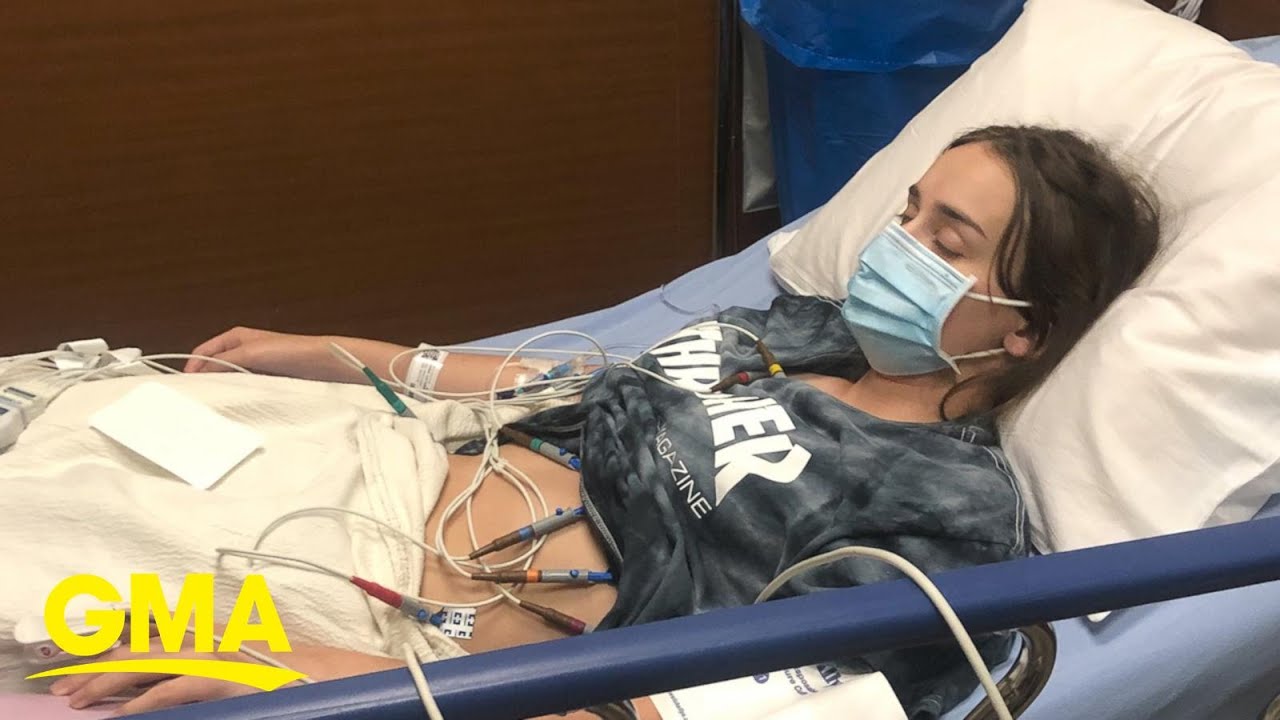
A 16-year-old thought a runny nose in the sun was nothing — three weeks later she was in a hospital bed with a sedative in her arm.
Kaydee Asher had gone roughly two years without so much as a cold before COVID-19 put her in the hospital twice in the span of a week. She filmed the whole ordeal and posted it online on June 30, 2020, not for sympathy, but as a warning to other teenagers who assumed the virus was something that only happened to older people. Her message was blunt: it happened to her, and it can happen to anyone.
- Asher’s symptoms started June 20, 2020, with a runny nose while she was outside in the sun, then progressed to a severe sore throat, muscle aches, fatigue, loss of smell, chills and a headache she described as feeling like her head was a “hot air balloon” about to explode.
- After waking up with severe respiratory distress and struggling to walk, she was hospitalized, sedated for acute anxiety, treated and discharged with medication once her test came back positive.
- Her condition worsened at home with chest pressure she said felt like “weights were sitting” on her chest, leading to a second hospitalization and a stay in the pediatric intensive care unit before she stabilized.
The Origins of the Project
Asher told GMA Digital that nothing about the onset felt alarming at first. A runny nose while she was outside in the sun seemed like nothing more than allergies or a mild bug. Within days, though, the symptom list kept growing — a severe sore throat, muscle aches, deep fatigue, a sudden loss of smell, chills, and a headache so intense she said it felt like her skull was a hot air balloon ready to pop.
She got tested, but the turnaround took several days, leaving her managing worsening symptoms without confirmation of what she was actually fighting. That gap between symptom onset and result is a detail she stressed in her account — by the time she knew for certain it was COVID-19, her body had already moved well past the early warning signs.
The First Hospital Trip
The turning point came when Asher woke up with severe respiratory distress. She said it felt like air was trapped inside her, and she struggled just to walk across a room. Her mother drove her to the hospital, where staff gave her a sedative for acute anxiety on top of other treatment before discharging her with medication once her test came back positive for the virus.
It felt like weights were sitting on her chest.
Being sent home with a positive result and a prescription felt, at the time, like the end of the ordeal. It wasn’t. Within a short stretch, the chest pressure set in — the sensation she compared to weights pressing down on her — and it didn’t ease up.
Back to the Hospital, This Time the PICU
After a telehealth consultation flagged how serious her symptoms had become, Asher was admitted to the hospital a second time. This trip landed her in the pediatric intensive care unit, where doctors adjusted her medications until her condition stabilized enough for her to be released. Two hospital admissions inside roughly a week and a half, for a 16-year-old who hadn’t been sick in about two years, is exactly the kind of case that undercuts the idea that COVID-19 only hits older or already-sick patients hard.
Her story landed in the middle of a summer when case counts were climbing across the country and hospitals in several states were already stretched — the same stretch that saw states like Florida shattering single-day case records and southern states straining under a surge past 3.1 million total U.S. infections. Asher’s video circulated as school districts nationwide were simultaneously wrestling with reopening decisions for the fall, adding a teenager’s firsthand hospital account to a debate that, until then, had leaned heavily on statistics rather than personal testimony.
Motivation for Her Public Disclosure
Asher didn’t frame her video as a plea for pity. She posted the footage and her account on social media specifically to push back on the assumption among her peers that young people were largely safe from severe COVID-19 outcomes. Two hospital admissions, a PICU stay, and weeks of symptoms that ranged from lost smell to chest pain that mimicked something far worse than a bad flu — that was her evidence.
Her case adds a specific, named data point to a summer full of anonymous statistics. Whatever changes schools and health officials make heading into the fall, Kaydee Asher’s video is now part of the record teenagers themselves are pointing to when they argue the virus isn’t something their age group can shrug off.








NYPD officers encouraged to call out sick on July 4th
Coronavirus: Brazil’s “chaotic” response as President denies any serious problem
Georgia reopens businesses despite Trump’s opposition
What’s going on with China’s economy? – BBC News
US News & World Report: 2018 Best Private Universities