

 InfoSearched
The CDC just told Americans to brace for disruption, and Washington doesn’t have the masks to back it up.
Dr. Nancy Messonnier stood in front of reporters on February 25 and said the thing nobody in Washington wanted to say out loud: it’s not a matter of whether the coronavirus spreads inside the United States, it’s when. Within 24 hours, HHS Secretary Alex Azar was on Capitol Hill admitting the federal stockpile of N95 respirator masks was nowhere near what hospitals would need if that happened. CBS Mornings pieced together just how thin the safety net actually is.
- CDC official Dr. Nancy Messonnier warned on February 25 that community transmission in the U.S. is “not so much a question of if this will happen anymore, but rather more a question of exactly when,” and told Americans to prepare for “significant disruptions to our lives.”
- HHS Secretary Alex Azar acknowledged before Congress a severe shortage of N95 respirator masks needed by front-line healthcare workers, as lawmakers reviewed the White House’s $2.5 billion emergency funding request.
- At the time of the broadcast, the U.S. had confirmed only dozens of cases — mostly tied to international travel and Diamond Princess evacuees — while remdesivir trials were just getting underway at the University of Nebraska Medical Center.
The CDC’s Blunt Warning
Messonnier’s briefing marked a tonal shift from the agency’s earlier, more measured public messaging. Rather than framing containment as achievable, she told Americans directly to start thinking about what happens when — not if — the virus begins spreading person-to-person on U.S. soil without a clear travel link. That meant urging schools, employers and families to start sketching out contingency plans, from remote work arrangements to the possibility of extended closures.
It was a notable departure for a federal health agency that, weeks earlier, had focused almost entirely on screening travelers and quarantining evacuees. Behind the warning sat a simple epidemiological reality: with outbreaks accelerating in South Korea, Italy and Iran, travel bans alone were no longer going to be enough to keep the virus at the border.
A Shortage of Protective Gear
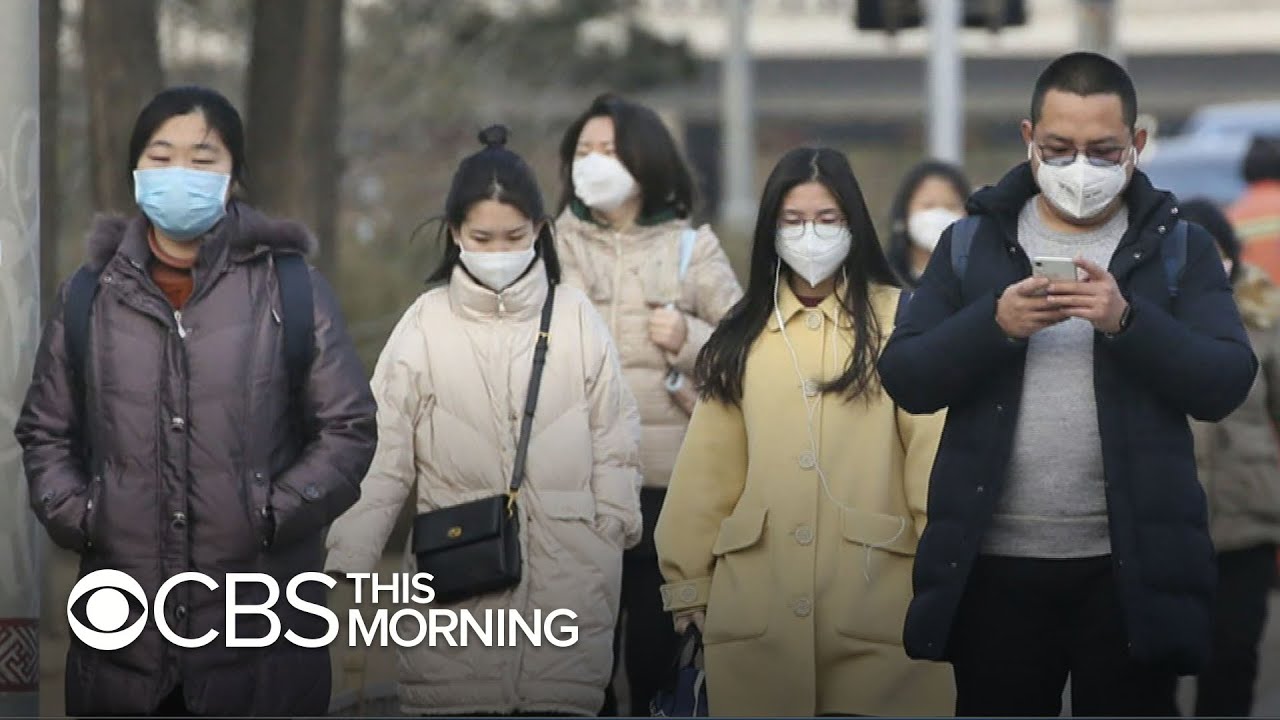
Azar’s testimony exposed the more immediate problem — the country’s front-line defense, literally the masks on nurses’ and doctors’ faces, was undersupplied. N95 respirators, the gold standard for filtering airborne particles, are manufactured overwhelmingly overseas, and China’s own outbreak had already choked global supply chains before the U.S. even had a domestic case count worth worrying about.
Public health researchers had been sounding this alarm for years. Studies of pandemic readiness — including work tied to research funded through NIH channels examining bat-to-human viral transmission — had flagged exactly this kind of supply chain vulnerability long before it became a Capitol Hill talking point. Hospital administrators told lawmakers that without a rapid resupply plan, a real surge in patients could force rationing of basic protective equipment for the people treating them.
“Disruption to everyday life may be severe,” Dr. Nancy Messonnier told reporters, warning Americans to prepare for “significant disruptions to our lives.”
Capitol Hill’s Emergency Funding Fight
The White House’s $2.5 billion request became the immediate political flashpoint. Lawmakers on both sides pushed back on the figure as insufficient given the scale of what Azar himself had just described — a mask shortage, an under-resourced public health infrastructure, and a virus already loose in multiple countries with major trade and travel ties to the U.S. The hearing turned into a broader referendum on whether years of public health funding cuts had left hospitals and state health departments unable to absorb a genuine surge.
That funding fight would play out over the following weeks as case counts climbed, but on February 26 it was still framed as a preventive measure — money meant to get ahead of a problem rather than respond to one already underway domestically.
Early Steps Toward Treatment
Even as officials debated funding and mask supplies, the University of Nebraska Medical Center had begun enrolling patients in a clinical trial for Gilead’s remdesivir, an antiviral drug originally developed for Ebola. It was one of the first organized U.S. attempts to find something that actually worked against the virus, running in parallel with the broader vaccine research pipeline that would later produce agreements like the one covered in the government’s Pfizer and BioNTech vaccine funding. At this stage, though, it was strictly experimental — a handful of patients, one hospital, and a lot of uncertainty about timelines.
By the morning of February 26, the confirmed U.S. case count was still small enough to count on two hands’ worth of states, but the tone out of Washington had already changed. Azar’s admission about the mask shortage and Messonnier’s warning about “significant disruptions” weren’t hedged the way federal health messaging usually is — and hospitals from Seattle to New York were about to find out just how thin that stockpile really was.






Inside Pro-Trump Women’s Group ‘Trumpettes USA’
Dubai: Expectation vs reality – BBC News
10 U.S. States Have Now Begun To Reopen
N. Korea fires at least three projectiles toward East Sea
Spain’s coronavirus death toll surpasses China’s