

 InfoSearched
Amy Klobuchar wants Mitch McConnell’s fingerprints on every headline about a hacked election.
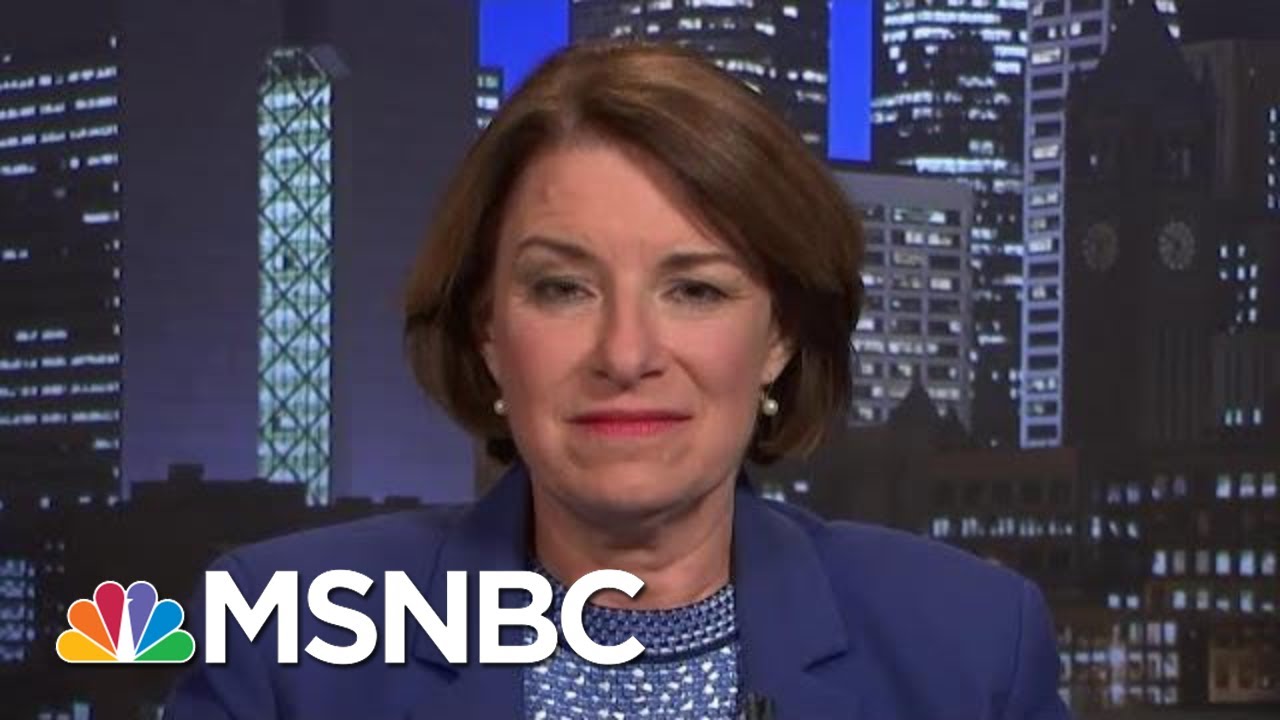
Fresh off the second round of Democratic primary debates in Detroit, Minnesota Senator Amy Klobuchar sat down with Lawrence O’Donnell on MSNBC’s “The Last Word” to make her case on two fronts at once — why Senate Majority Leader Mitch McConnell is standing in the way of election security, and why she’s choosing not to throw elbows at her fellow Democrats to get noticed.
- Klobuchar blasted McConnell for blocking votes on federal election protection bills, including her own Election Security Act, after his late-July 2019 refusal to bring the measures to the floor.
- Her legislation would mandate voter-verified paper ballot backups, require risk-limiting audits, and direct up to $1 billion in grants to states to harden local election cybersecurity.
- She defended skipping the intraparty crossfire in Detroit over Medicare for All and immigration, saying her strategy is to aim directly at Trump and Senate Republicans instead.
The Case Against McConnell
Klobuchar didn’t mince words about who she holds responsible for the stalled election security push. Her Election Security Act — built around paper ballot backups, risk-limiting audits, and roughly $1 billion in state grants for cybersecurity upgrades — has been sitting without a floor vote since McConnell moved to block it in late July 2019. She framed that obstruction as a national security failure, not a partisan dispute, pointing to intelligence findings and Robert Mueller’s own testimony warning that foreign interference in U.S. elections is ongoing, not hypothetical.
Securing the vote isn’t a Democratic priority or a Republican one — it’s the whole ballgame, and McConnell keeps burying it.
That argument echoes broader anxiety in Washington about foreign meddling that has surfaced repeatedly since 2016, a theme that’s touched everything from the Russia investigation to high-profile hacking incidents that raised questions about how vulnerable American institutions really are. Klobuchar’s pitch is that Congress has had ample warning and simply hasn’t acted.
Debate Strategy: Fire at Trump, Not the Field
Turning to Detroit, Klobuchar acknowledged that plenty of her rivals spent their debate nights sparring with each other over Medicare for All and immigration policy. She said that’s not her lane. Her strategy, laid out plainly for O’Donnell, is to keep her attacks pointed at President Trump and at Republican Senate leadership rather than get pulled into intraparty fights that she argues do little to move undecided or moderate voters.
She leaned on her identity as a Midwestern pragmatist who can win back voters in states Trump flipped in 2016, arguing that beating Trump requires coalition-building across the party rather than the kind of scorched-earth debate exchanges that dominated cable news coverage after the Detroit stage. For Klobuchar, that means staying anchored to governance issues — voter protection chief among them — instead of chasing viral debate moments.
Governance Over Grandstanding
The through-line in Klobuchar’s MSNBC appearance was consistency: whether she was talking about McConnell’s Senate blockade or her own debate conduct, she kept returning to the idea that pragmatic policy wins elections, not internal Democratic combat. That’s been her core argument since launching her presidential bid, and it’s one she repeated without much variation heading into the fall primary calendar.
Klobuchar’s next test is simple math — staying on the debate stage as qualification thresholds tighten heading into the fall, all while McConnell shows no sign of scheduling a vote on her election security bill anytime soon.





U.S. pays Pfizer, BioNTech $2 bln for vaccines
China Sends Warning Sign With Taiwan Travel Ban
Fauci funded ‘bat-human interface’ research in China to avoid an outbreak in the US
Cannabis boom: Why Oklahoma is a ‘wild wild west’
Coronavirus case on U.S. base in South Korea