

 InfoSearched
A woman in Solano County just became the first sign the coronavirus was already loose in America.
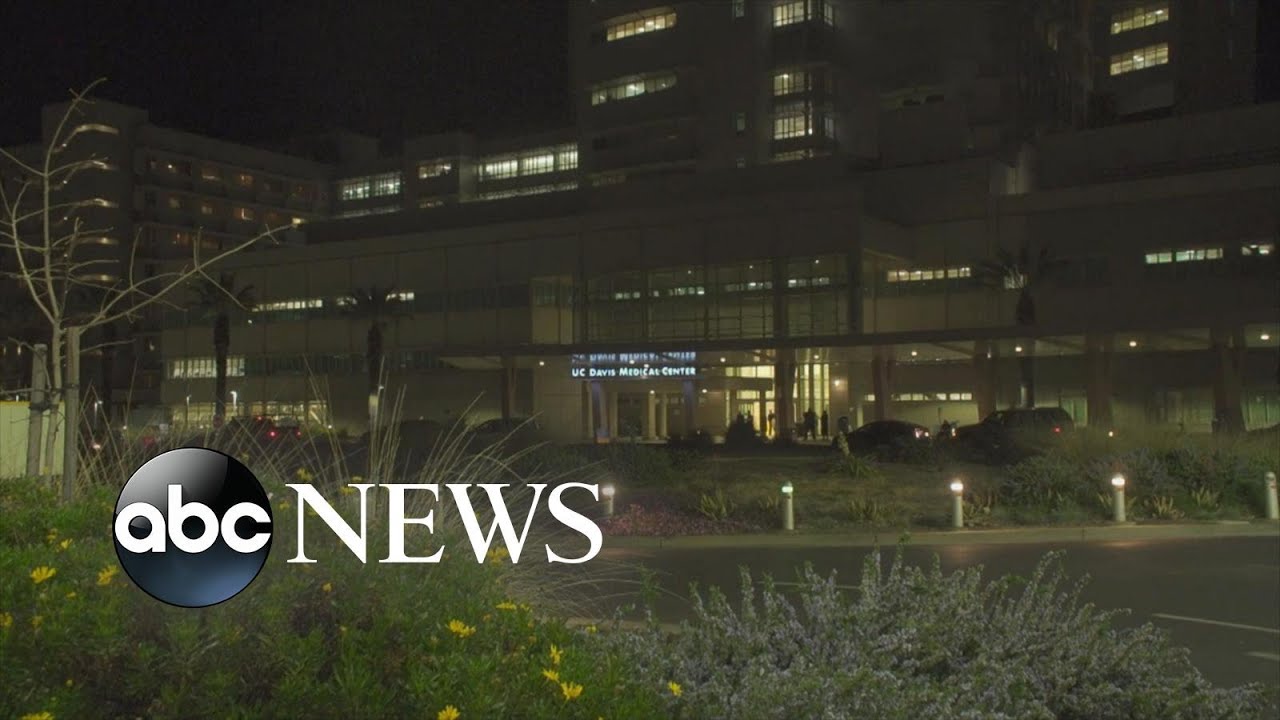
A critically ill patient at UC Davis Medical Center has become the center of a frantic federal investigation, and the reason why has alarmed public health officials nationwide: she never traveled to China, and she had no known contact with anyone who did. Her case, confirmed positive on February 26, marks the first instance of possible coronavirus community transmission in the United States — meaning the virus may already be spreading among people with no travel history and no clear point of exposure.
- The patient was transferred from NorthBay VacaValley Hospital in Vacaville to UC Davis Medical Center on February 19 while on a ventilator, under virus containment protocols.
- CDC testing was delayed four days because she didn’t meet existing criteria requiring travel to Wuhan or contact with a confirmed case — testing was only approved on February 23 and came back positive on February 26.
- The CDC dispatched 10 epidemiological investigators to retrace her movements, and at least 93 people with contact history have been asked to self-quarantine, along with dozens of healthcare workers at both hospitals.
A Diagnosis Delayed by Outdated Criteria
When the woman arrived at UC Davis Medical Center, physicians immediately requested coronavirus testing. They didn’t get it right away. Under the testing guidelines in place at the time, the CDC would only authorize a test for patients who had traveled to an outbreak epicenter like Wuhan or had documented contact with someone already confirmed infected — and she met neither box. That left doctors treating a critically ill patient on a ventilator for four days without confirmation of what they were dealing with, before the CDC relented and approved testing on February 23. The result came back positive three days later, on February 26.
That four-day gap is now drawing scrutiny from health officials who argue it exposed a blind spot in the country’s screening strategy — one built around travel history rather than the possibility that the virus was already circulating domestically. The delay meant hospital staff at both NorthBay VacaValley and UC Davis potentially worked around the patient without full containment precautions in place before her transfer.
Tracing 93 Contacts and Counting
Once the positive result came in, the CDC moved fast. A team of 10 epidemiological investigators was sent to reconstruct the patient’s recent movements and figure out who she’d been near. Authorities have since identified and asked at least 93 individuals who had contact with her to self-quarantine, while dozens of healthcare workers who treated her at NorthBay VacaValley and UC Davis Medical Center have been told to isolate and watch for symptoms.
She had no known contact with anyone quarantined at a nearby Air Force Base — and no international travel at all.
That detail matters because Solano County is home to Travis Air Force Base, which had been housing evacuees flown in from China and from the Diamond Princess cruise ship. Investigators checked for any link between the patient and the base’s quarantined population. They found none, which only deepened the mystery of how she was exposed — and fueled the exact fear health officials had been trying to get ahead of since the outbreak began, detailed in early reporting on unusual animal behavior in China as Beijing turned into a ghost town amid the initial lockdowns.
The Case That Changes the Containment Math
Every prior confirmed U.S. case had a traceable link — a trip to Wuhan, or direct contact with someone who’d been there. This one has neither, and that’s precisely why it landed as a turning point rather than just another number. It confirms what modelers had been warning about for weeks: that relying on travel-history screening alone would eventually miss cases, and that the virus could already be moving through communities undetected. Some of that modeling concern had already surfaced in projections referenced in coverage of a coronavirus model predicting a jump in the death toll, and this Solano County case gives that warning a face and a hospital bed.
For now, the patient remains critically ill on a ventilator at UC Davis Medical Center, and the CDC’s contact-tracing effort is still running. The real test comes over the next incubation period — roughly two weeks — as investigators watch whether any of the 93 identified contacts, or the healthcare workers now self-monitoring at NorthBay VacaValley and UC Davis, turn up symptomatic.







Multiple White House staff members test positive for coronavirus
2 US soldiers killed in Iraq
Coronavirus Cases Hit 174,000 Worldwide, Deaths Exceed 7,000
Grocery prices on the rise
Coronavirus: Hate crimes against Chinese people in the UK on the rise