

 InfoSearched
Rapid Progression of Respiratory Failure
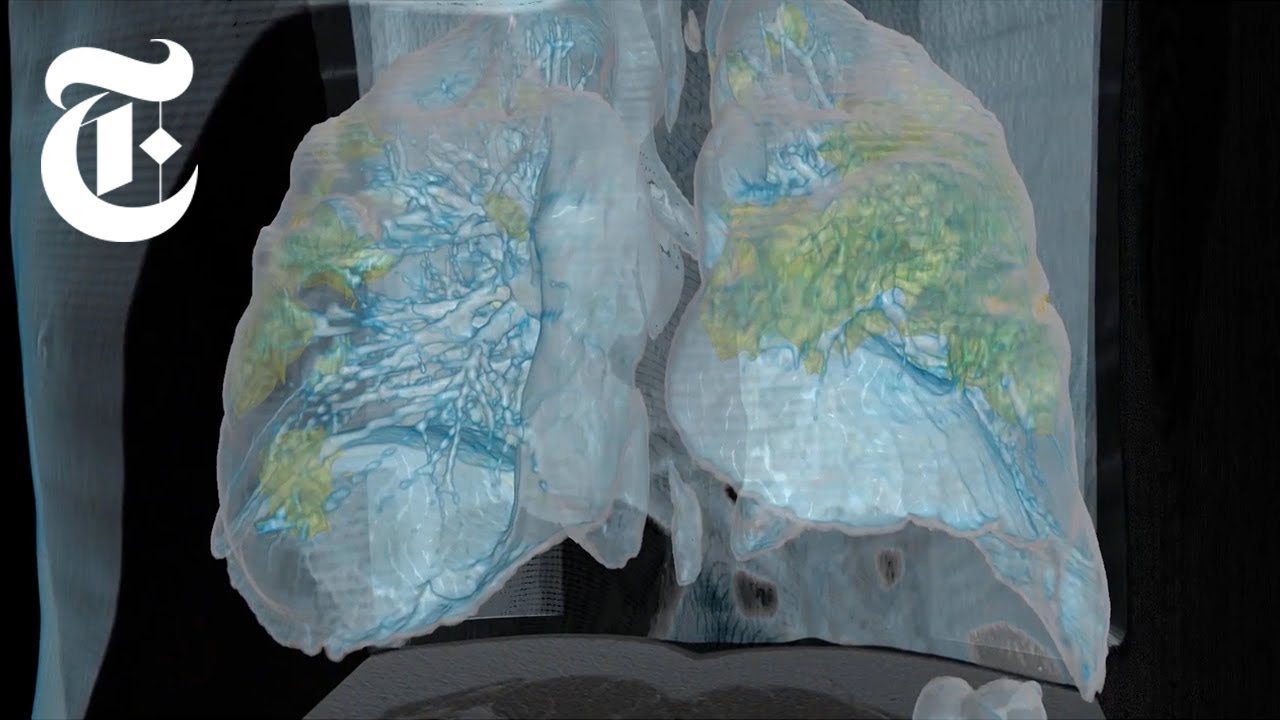
A visual breakdown from The New York Times, “How Coronavirus Attacks the Body,” uses 3D medical animation and virtual reality lung scans to trace exactly what SARS-CoV-2 does once it gets inside a person. The footage doesn’t dwell on statistics — it shows the mechanics, cell by cell, from the moment airborne droplets land on the eyes, nose, or mouth to the point where a patient’s lungs fill with fluid and pus. It’s a stark explanation for why mild symptoms can flip into critical illness in a matter of days.
- The virus’s spike proteins latch onto ACE2 receptors on human cells, hijacking cellular machinery to replicate.
- Inflammation of the alveoli and mucous membranes blocks oxygen transfer, leading to viral pneumonia and acute respiratory distress syndrome (ARDS) that often requires mechanical ventilation.
- A “cytokine storm” — the immune system’s own overreaction — can damage blood vessels and trigger multi-organ dysfunction beyond the lungs.
The Entry Point
Infection begins the instant a droplet carrying the virus reaches the eyes, nose, or mouth. From there, the virus’s spike proteins bind to ACE2 receptors sitting on the surface of host cells — the same receptors found throughout the respiratory tract — and use them as a key to get inside. Once in, the virus commandeers the cell’s own replication machinery to churn out copies of itself, which then spread down the bronchial tubes toward the lungs.
This is the same mechanism doctors and researchers were racing to understand as case counts climbed nationally; outlets tracking the outbreak reported the U.S. was seeing tens of thousands of new cases in a single day, a surge chronicled in US sees 40,000 new COVID-19 cases in 1 day. The virology explains why containment measures — masks, distancing, hand-washing — mattered so much: they were aimed directly at blocking that first droplet-to-receptor contact.
The Lungs Under Siege
Once the virus reaches the alveoli — the tiny air sacs responsible for pushing oxygen into the bloodstream — the body’s immune system floods the area with inflammatory cells trying to fight it off. That response is exactly what causes the damage: the alveoli and surrounding mucous membranes swell, fluid and cellular debris pool inside them, and oxygen transfer starts to fail. The result is viral pneumonia, and in the worst cases, full-blown ARDS, where a patient can no longer breathe unassisted and needs a ventilator to survive.
Radiologists reviewing chest CT scans during this period kept flagging the same two visual signatures: “ground-glass opacities” — hazy, cloud-like patches where the lung tissue has thickened — and a denser pattern nicknamed “crazy paving,” which marks more advanced lung involvement. Those images became one of the fastest ways clinicians could tell how far the disease had progressed before lab test results even came back.
The virus’s spike proteins lock onto ACE2 receptors and hijack the cell’s own machinery to multiply — turning a person’s own lungs into the factory that spreads the infection deeper.
Autoimmune Response Mechanisms Explained
The most dangerous complications documented in the NYT breakdown don’t come from the virus alone — they come from the immune system’s overreaction to it. In a cytokine storm, the body pumps out inflammatory signaling proteins in overwhelming volume, and that flood doesn’t stay contained to the lungs. It damages blood vessel walls throughout the body, and that vascular damage is what drives the multi-organ failure clinicians were reporting in the sickest patients: kidneys, liver, gastrointestinal tract, and heart all showing strain as a downstream effect of a fight the immune system started but couldn’t shut off.
That systemic angle matters because it reframes COVID-19 as something bigger than a respiratory illness. It’s why hospitals treating severe cases needed teams beyond pulmonologists — nephrologists, cardiologists, and critical care specialists were all being pulled in as the same patient’s organs failed on multiple fronts at once, often within the same week doctors first suspected a hospital admission was necessary, a pattern echoed in coverage like I’m 16 and went to the hospital twice for COVID-19.
Critical Importance of Treatment Timing
What makes this visual explainer stick is the speed it shows: a dry cough and a low fever can look unremarkable for days, right up until the alveoli give out and a patient needs intubation. There’s no dramatic warning sign built into the progression — just a slow accumulation of fluid and inflammation until the lungs simply can’t keep up. That’s the exact reason public health officials kept pushing early testing and early hospital contact instead of a wait-and-see approach, a tension playing out at the state level as documented in Several states imposing stricter coronavirus restrictions as infections continue to spike.
The animation ends where the disease’s worst outcomes begin — a ventilator, a cytokine storm, organs failing in sequence — without a tidy resolution, because in early April 2020 there wasn’t one yet. No approved treatment target existed for the cytokine storm itself, and doctors were still mapping which patients would tip from “manageable pneumonia” into ARDS versus which would recover at home. That uncertainty was the whole story.








The Reason You Shouldn’t Go To The Grocery Store For 2 Weeks
Senior U.S. official says missiles fired on Saudi oil plant were launched from Iran
News Wrap: Commerce Department says economic growth slowed in 2nd quarter
Jesse on new Hunter Biden scandal: Laptop ‘from hell’ could bring down Biden
China Steps Up Taiwan Drills: Day Two