


 InfoSearched
The White House just told America to brace for six figures of dead.
For weeks, officials had dodged hard numbers. On March 29 and 30, that changed. Dr. Anthony Fauci and Dr. Deborah Birx, the two most visible faces of the White House Coronavirus Task Force, put a figure on the table that stopped the country cold: 100,000 to 200,000 American deaths, even with the nation doing nearly everything right.
- Dr. Fauci told CNN on March 29 the U.S. could see 100,000 to 200,000 deaths and millions of infections before the outbreak runs its course.
- Dr. Birx told NBC’s Savannah Guthrie on March 30 that hitting the 100,000-to-200,000 range would require the country to follow mitigation guidelines “almost perfectly” — calling that outcome the “best-case scenario.”
- As of March 30, the U.S. had topped 160,000 confirmed cases and more than 3,000 deaths, with hospitals in New York already overwhelmed and field clinics going up in Central Park.
The Numbers Behind the Warning
The projections came directly from the task force’s own modeling, not outside estimates. Fauci’s range — 100,000 to 200,000 dead, millions infected — was delivered on CNN with the kind of bluntness that hadn’t come from the podium before. Birx backed him up the next morning, telling Guthrie that getting anywhere near the low end of that range meant the entire country adopting social distancing “together, well, almost perfectly.”
That single word — perfectly — was the catch. Birx flagged that several major metro areas had been slow to adopt the task force’s 15-day mitigation guidance, and that hospitalizations and case counts were accelerating nationally, not just in New York. The death toll modeling driving these numbers assumed aggressive compliance across every state — an assumption Birx made clear was far from guaranteed.
“If we do things together, well, almost perfectly, we can get in the range of 100,000 to 200,000 fatalities.” — Dr. Deborah Birx
Easter Reopening Scrapped
The grim math forced President Trump to abandon his push to reopen the economy by Easter. Federal social distancing guidelines were officially extended through April 30, a reversal from the timeline the president had floated just days earlier. It was the clearest sign yet that the administration’s own scientists had convinced the White House the outbreak’s trajectory left no room for an early reopening.
That decision followed weeks of internal debate over how to balance economic damage against the epidemic curve, and it landed as governors from New York to California were already tightening restrictions on their own. The task force’s messaging shifted almost overnight from cautious optimism to blunt warnings that the worst was still ahead.
Beyond New York’s Front Line
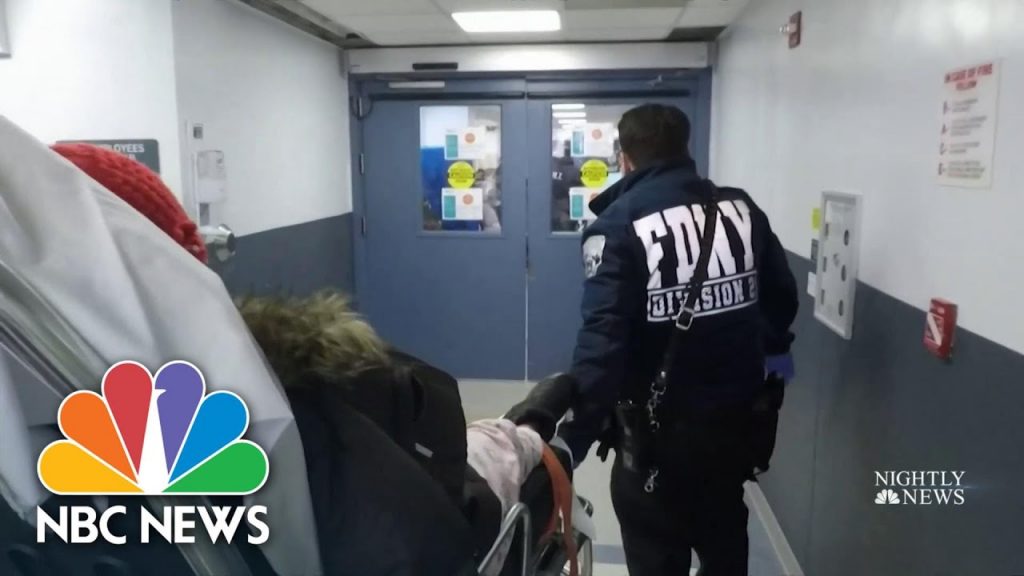
New York remained the epicenter — hospitals stretched thin, the USNS Comfort arriving to add capacity, and Central Park hosting an emergency field hospital. But NBC Nightly News’ reporting made clear the next wave of pressure points were lining up elsewhere. Officials and emergency personnel in Detroit, New Orleans, Dallas, Atlanta and San Francisco were bracing for the same kind of ICU surge New York was already living through.
That geographic spread mattered because it undercut any assumption that the crisis could be contained to one metro area. States were already tightening rules in response, a pattern that would continue as precautions inside the White House itself tightened in the weeks that followed.
Birx’s own words set the bar the administration would be measured against for the rest of the spring: 100,000 to 200,000 deaths as the outcome if the country got mitigation “almost perfect.” With cases already past 160,000 and climbing fast heading into April, whether Americans could actually hit that best-case scenario was about to become the only number that mattered.





Georgia governor plans to reopen the state’s economy despite controversy
Tucker: What holiday should be canceled next?
Has Congress Lost its Mind? $2,000 Stimulus vs War with Korea
Watch Live: Former Trump adviser testifies in impeachment hearings Day 5
Warning: Why Small Business Bailouts could Lead to Mass Bankruptcies