

 InfoSearched
North Korea sends three projectiles into the East Sea before dawn breaks over Seoul.
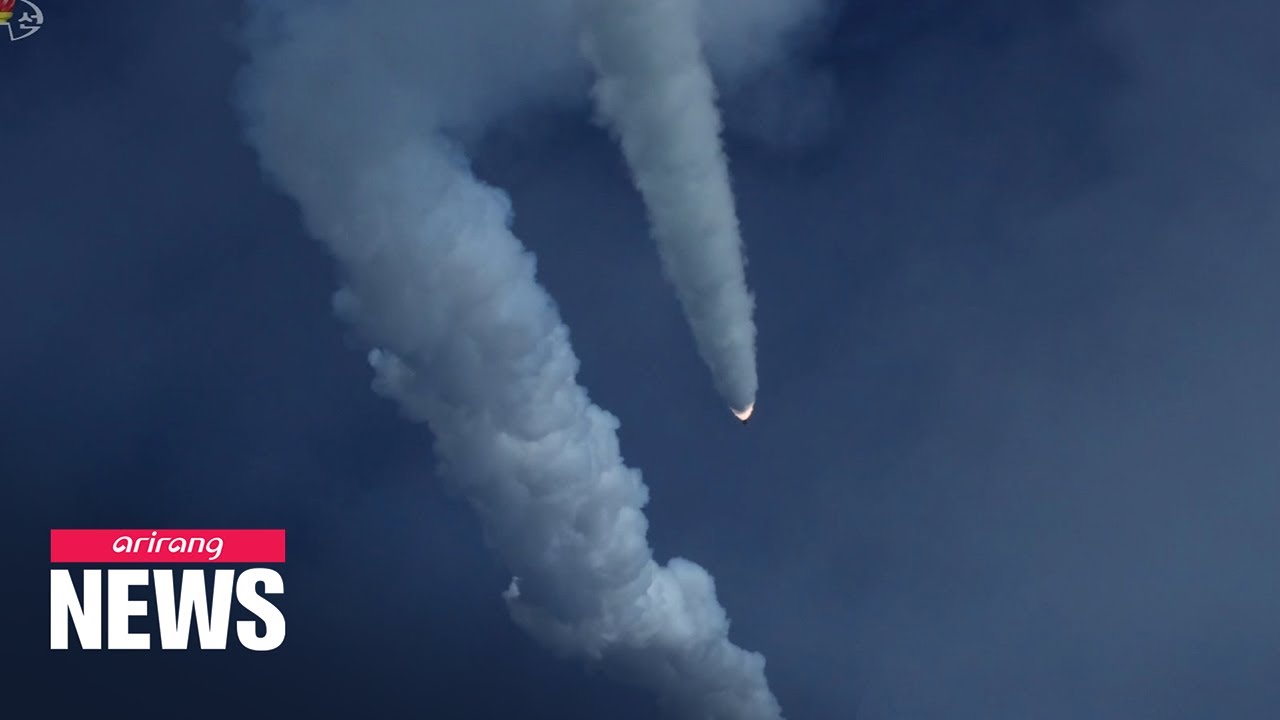
Pyongyang test-fired at least three short-range projectiles from the eastern town of Sondok early Monday morning, marking Kim Jong-un’s second weapons demonstration in a week and reviving the wintertime artillery drills that began in late February. South Korea’s Joint Chiefs of Staff tracked the launches at roughly 7:36 a.m. local time, confirming the projectiles flew about 200 kilometers and climbed to an altitude near 50 kilometers before splashing into the sea off North Korea’s east coast.
- The projectiles launched from Sondok, South Hamgyong Province, traveled approximately 200 kilometers and reached an altitude of roughly 50 kilometers, per the JCS.
- Officials detected a roughly 20-second gap between the first two launches and a gap of more than a minute before the third, a pattern believed aimed at perfecting rapid-fire capability against missile defenses.
- The test follows the March 2 firing of two short-range projectiles from Wonsan, making this Pyongyang’s second launch in a week and part of drills that began in late February, reportedly overseen by Kim Jong-un himself.
South Korea Detects Military Activity
According to the JCS, Monday’s launches involved multiple types of rocket launchers, including what officials believe is North Korea’s super-large multiple rocket launcher system — a platform Pyongyang has been refining across its recent drills. Military analysts zeroed in on the firing sequence itself: the tight 20-second interval between the first two shots, followed by the longer pause before the third, suggests engineers are working to compress the time between successive launches, making it harder for interceptor systems to lock onto each round in turn.
Seoul’s presidential office wasted no time responding. National Security Director Chung Eui-yong convened an emergency video conference of national security ministers to assess the launch and review the broader security picture on the peninsula, while the JCS issued a familiar rebuke, calling on Pyongyang to halt actions that raise military tensions.
A Pattern Building Since Late February
Monday’s launch was not an isolated event. It came exactly one week after North Korea fired two short-range projectiles from Wonsan on March 2, and both tests fall under the umbrella of wintertime artillery drills that kicked off in late February. Taken together, the two launches point to a sustained exercise cycle rather than a single provocation, with Kim Jong-un believed to have personally overseen the drills.
Officials assessed the timing gaps between shots were designed to refine rapid, successive firing to make interception by missile defense systems more difficult.
The recurring drills echo the kind of muscle-flexing seen elsewhere in the region when governments use live-fire exercises to signal resolve without crossing into open conflict — a dynamic similar to what unfolded during China’s escalating drills near Taiwan, where each successive show of force was calibrated to test a rival’s response without triggering all-out escalation.
Mixed Signals From Pyongyang
What makes this launch notable is the diplomatic contrast surrounding it. Just five days before the projectiles flew, Kim Jong-un sent President Moon Jae-in a personal letter wishing him and the South Korean public good health amid the COVID-19 outbreak — a rare gesture of warmth. Yet only a day before that letter, Kim’s sister, Kim Yo-jong, had blasted Cheong Wa Dae as “foolish” and “gangster-like” for objecting to the March 2 launches.
That whiplash — a health-and-well-wishes letter sandwiched between insults and a live-fire drill — fits a broader habit of North Korean statecraft: applying pressure and warmth almost simultaneously, keeping Seoul and Washington guessing about which signal to take seriously. It’s the same kind of unpredictable posturing that has defined stalled denuclearization talks since diplomacy between Kim and the Trump administration lost momentum, a dynamic not unlike the brinkmanship tracked in other flashpoints where diplomatic overtures and military signaling run on parallel tracks.
South Korea Monitors Future Developments
For now, Seoul’s national security team is treating Monday’s launch as confirmation that the wintertime drills are ongoing rather than winding down. With two tests in seven days — Wonsan on March 2, Sondok on March 9 — and a demonstrated focus on shortening the interval between shots, the JCS will be watching closely for whether the super-large multiple rocket launcher system makes another appearance, and whether Kim Yo-jong’s rhetoric softens or hardens once Seoul’s formal response lands.



Joe Biden’s Bloopers, Blunders, and Gaffes: The TOP 30 Countdown!
Europe dealing with 2nd wave of coronavirus cases
Trump says Democrats would lead U.S. into “economic sinkhole”
Black woman crushed BLM mural at Trump Tower
Biden’s accuser says he should drop out of White House race