

 InfoSearched
The world’s most advanced exo-atmospheric interceptor just proved it can kill a warhead in the vacuum of space, thousands of miles from where it was built.
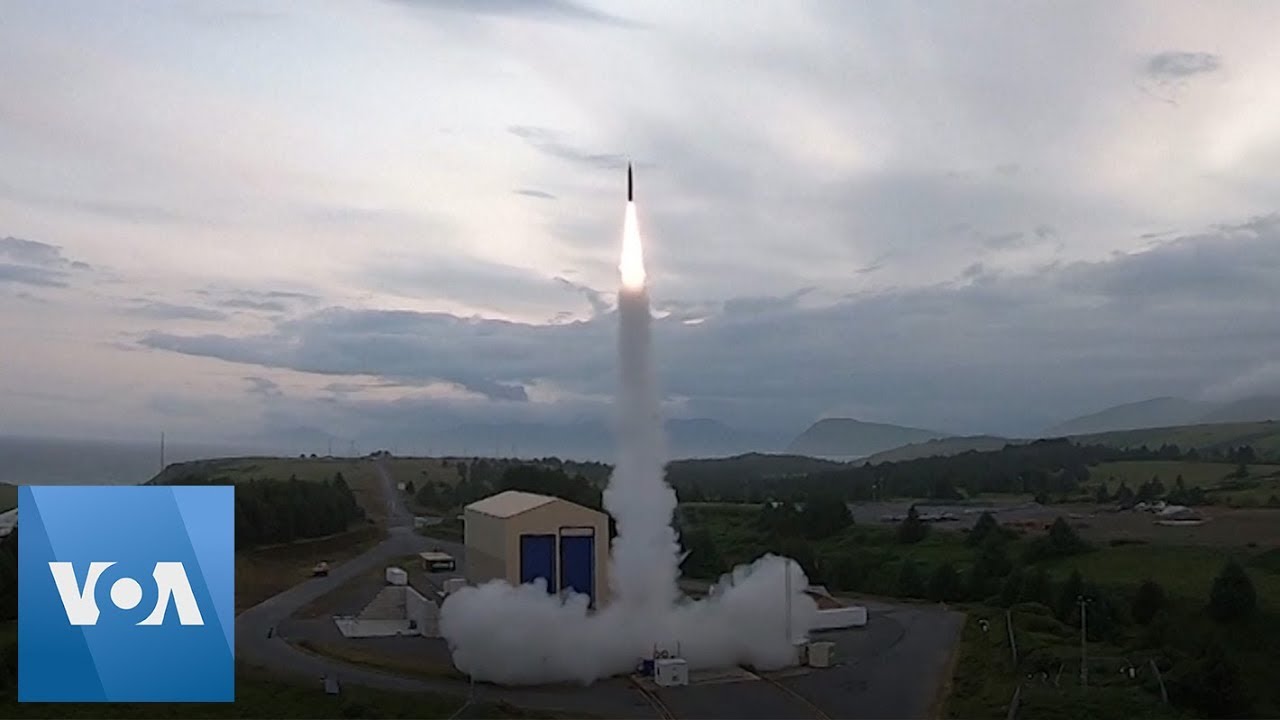
Israel and the United States announced Sunday that they had wrapped up a secret flight-test campaign for the Arrow 3 missile defense system at the Pacific Spaceport Complex-Alaska in Kodiak. Over the preceding weeks, the Arrow 3 interceptor executed a series of high-altitude, hit-to-kill engagements against target ballistic missiles, destroying them outside Earth’s atmosphere at speeds and altitudes the two governments had never before attempted together on American soil. Prime Minister and Defense Minister Benjamin Netanyahu revealed the results at a Cabinet meeting, calling the campaign a breakthrough for Israel’s ability to counter a ballistic missile launched “from Iran and from any other location.”
- Three secret Arrow 3 tests were conducted at Kodiak’s Pacific Spaceport Complex-Alaska over recent weeks, culminating in a live-fire interception announced July 28.
- A Raytheon-built AN/TPY-2 radar was integrated into the trials to track the targets during the exo-atmospheric intercepts.
- IMDO Director Moshe Patel said the tests capped ten years of development and proved Arrow 3 can deploy tens of thousands of kilometers from Israel; MDA Director Vice Adm. Jon Hill called the interception a “major milestone.”
Inside the Kodiak Test Campaign
The trials were run jointly by the U.S. Missile Defense Agency and the Israel Missile Defense Organization, part of Israel’s Directorate of Defense Research and Development, at Kodiak’s Pacific Spaceport Complex-Alaska. The location matters: Alaska’s range gives engineers room to push targets to altitudes and closing speeds that can’t be replicated safely over the Mediterranean, where Arrow 3 has previously been tested. To track the incoming targets during the exo-atmospheric intercepts, the teams integrated a Raytheon-manufactured AN/TPY-2 radar — the same forward-based radar family used elsewhere in the U.S. ballistic missile defense architecture — into the Arrow 3 fire-control loop.
Netanyahu, briefing his Cabinet on the results, didn’t hedge. He said the tests succeeded “beyond any imagination” and gave Israel the confirmed ability to act against ballistic missiles fired at it “from Iran and from any other location.” Coming from the country’s prime minister and sitting defense minister, the framing was deliberate — a public signal to Tehran and to Israel’s own public that the top tier of its missile shield has now been proven against threats well beyond the ranges Arrow 2 or David’s Sling were built to handle.
“From Iran and from any other location” — Netanyahu’s words, describing what the Arrow 3 tests now let Israel do.
Ten Years to This Moment
IMDO Director Moshe Patel framed the Kodiak results as the payoff of a decade of development work on Arrow 3, noting the system had now demonstrated it can be fielded tens of thousands of kilometers from Israeli territory — a capability that matters as much for allied cooperation as for Israel’s own defense. MDA Director Vice Adm. Jon Hill echoed that, calling the successful interception a “major milestone” that confirms future capabilities to defeat regional ballistic missile threats. Neither official downplayed the stakes: exo-atmospheric, hit-to-kill intercepts against long-range targets are among the hardest engineering problems in missile defense, and a failed test would have been just as public as this success.
The timing lands against a backdrop where Israel’s leadership has repeatedly pointed to Iran’s ballistic missile program as the driving threat behind the shield’s top tier, a theme that has also surfaced in Israeli and American diplomacy at venues like the United Nations, where Israel’s security posture is regularly litigated alongside broader Middle East disputes.
Arrow 3 Defensive System Integration
Arrow 3 is co-developed by Israel Aerospace Industries and Boeing and sits at the top of Israel’s layered missile defense architecture. Iron Dome handles short-range rockets and mortars, David’s Sling covers medium-range threats, and Arrow 2 handles longer-range ballistic missiles inside the atmosphere. Arrow 3 is the exo-atmospheric layer above all of them, built to intercept warheads in space before they re-enter — the earliest and highest-altitude shot Israel has in its arsenal against a long-range missile.
That layering is why the Kodiak result carries weight beyond a single successful test. Each tier is designed to catch what the layer below it misses, and a proven exo-atmospheric kill against a target flown at genuinely long range gives Israeli and American planners a data point they didn’t have from testing exclusively over the Mediterranean.
Netanyahu’s Cabinet remarks made clear he sees the Alaska results as usable now, not theoretical — the next real test of that claim will be whatever Iran does with its own ballistic missile program, since that’s the specific threat he named when he announced the outcome.









Cuomo announces mobile coronavirus testing facility in New Rochelle, New York
Mike Bloomberg drops out of 2020 race
Harvey Weinstein guilty on 2 of 5 counts
Coronavirus: Italy extends emergency measures nationwide
Legendary TV host Regis Philbin dies at 88