

 InfoSearched
A fifth-generation Colorado rancher says the “Product of USA” label on your steak might be lying to you.
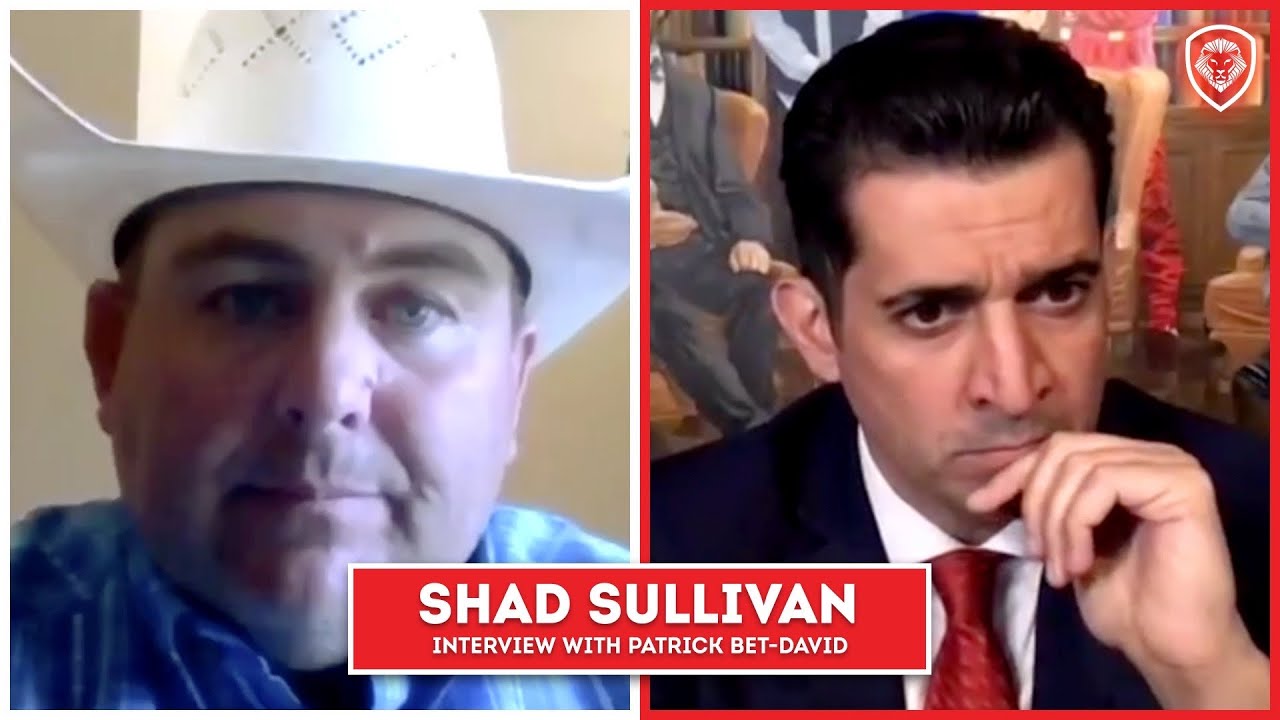
While supermarket meat cases went half-empty this spring and beef prices spiked at the register, cattle prices paid to ranchers cratered below the cost of production. Shad Sullivan, a fifth-generation cattleman from southeast Colorado and the Property Rights Committee Chair for R-CALF USA, sat down with Valuetainment to explain why — and it isn’t just COVID-19 plant closures. It’s a supply chain that four multinational companies have quietly cornered for decades.
- Four packers — Tyson, JBS, Cargill and National Beef — control more than 80% of U.S. fed cattle processing, according to Sullivan.
- Since the mandatory Country of Origin Labeling (COOL) repeal for beef in late 2015, imported beef that’s merely reprocessed or repackaged at a federally inspected U.S. plant can legally carry a “Product of USA” label.
- Sullivan is pushing for restored mandatory COOL and stronger antitrust enforcement under the Packers and Stockyards Act, while urging consumers to buy direct from independent producers.
Raised on Antelope Mesa
Sullivan grew up on his family’s stocker operation on Antelope Mesa in northwestern Crowley County, Colorado, the kind of upbringing where a herd’s welfare comes before your own schedule. He graduated from Crowley County High School, earned a Bachelor of Science in Agriculture/Animal Science from West Texas A&M University in 1996, then briefly taught equine evaluation at Clarendon College before heading back to the family ranch to carry on land stewardship and beef production that predates him by four generations.
That background is why his warning lands differently than a policy paper. He’s not describing an abstract “supply chain” — he’s describing the operation his family has run for five generations, now squeezed between packers on one side and grocery shelves on the other.
Four Companies, 80% of the Cattle
Sullivan lays out the consolidation bluntly: Tyson, JBS, Cargill and National Beef process more than 80% of the fed cattle slaughtered in the United States. That concentration means a handful of corporate boardrooms effectively set the price independent ranchers get paid, regardless of what’s happening on grocery shelves. When COVID-19 outbreaks forced several major processing plants to slow or shut down in spring 2020, the bottleneck exposed just how little redundancy exists in a system built around so few chokepoints.
The result, Sullivan says, is a market that no longer reflects supply and demand for the people actually raising the cattle. Consumers saw grocery prices on the rise for beef even as live cattle prices paid to ranchers fell below what it costs to raise them — a gap Sullivan argues flows straight into packer margins rather than back to the ranch.
Consumers paying premium prices believe they’re buying domestic beef raised to strict American standards — when in reality they’re frequently getting imported meat blended or repackaged by multinational conglomerates.
The COOL Repeal and the Label Loophole
Central to Sullivan’s case is what happened in late 2015, when mandatory Country of Origin Labeling for beef was repealed. Under the USDA regulations that followed, beef imported from another country can be minimally processed or simply repackaged at a federally inspected U.S. plant and still qualify for a “Product of USA” stamp. There’s no requirement that the animal was born, raised, and slaughtered domestically — just that it passed through an American facility at some point before hitting the shelf.
Sullivan argues that loophole lets multinational packers blend foreign and domestic cattle without consumers ever knowing the difference, undercutting family operations that actually raise their animals start-to-finish on American land. His fix is straightforward: bring back mandatory COOL so the label means what shoppers assume it already means.
Fighting Under the Packers and Stockyards Act
Beyond labeling, Sullivan points to the Packers and Stockyards Act — a century-old law meant to police unfair, discriminatory or monopolistic practices in livestock markets — as a tool regulators should be enforcing more aggressively against the four dominant packers. He frames this as an antitrust fight, not just a labeling fight, arguing that concentrated market power is what let live cattle prices collapse even as consumer beef prices climbed during the same stretch that reports of meat shortages spread nationwide.
His practical advice to shoppers is to route around the bottleneck entirely: buy direct from independent producers and local ranches selling beef straight to consumers, which keeps the dollars with the family operations actually raising the cattle instead of the four companies processing most of the nation’s supply.
Sullivan’s ask is simple and hasn’t gone anywhere in Washington yet: restore mandatory COOL, enforce the Packers and Stockyards Act against the big four, and let ranchers like his own family sell beef under a label that actually tells the truth about where it came from.


WATCH: Trump holds news conference on the coronavirus
California Town Pushes Back Against Planned Coronavirus Quarantine Center
Brexit: What happened on Tuesday? – BBC News
News poll shows Elizabeth Warren is Democratic voters’ top pick for vice president
Boris Johnson admitted to U.K. hospital with ‘persistent’ COVID-19 symptoms