

 InfoSearched
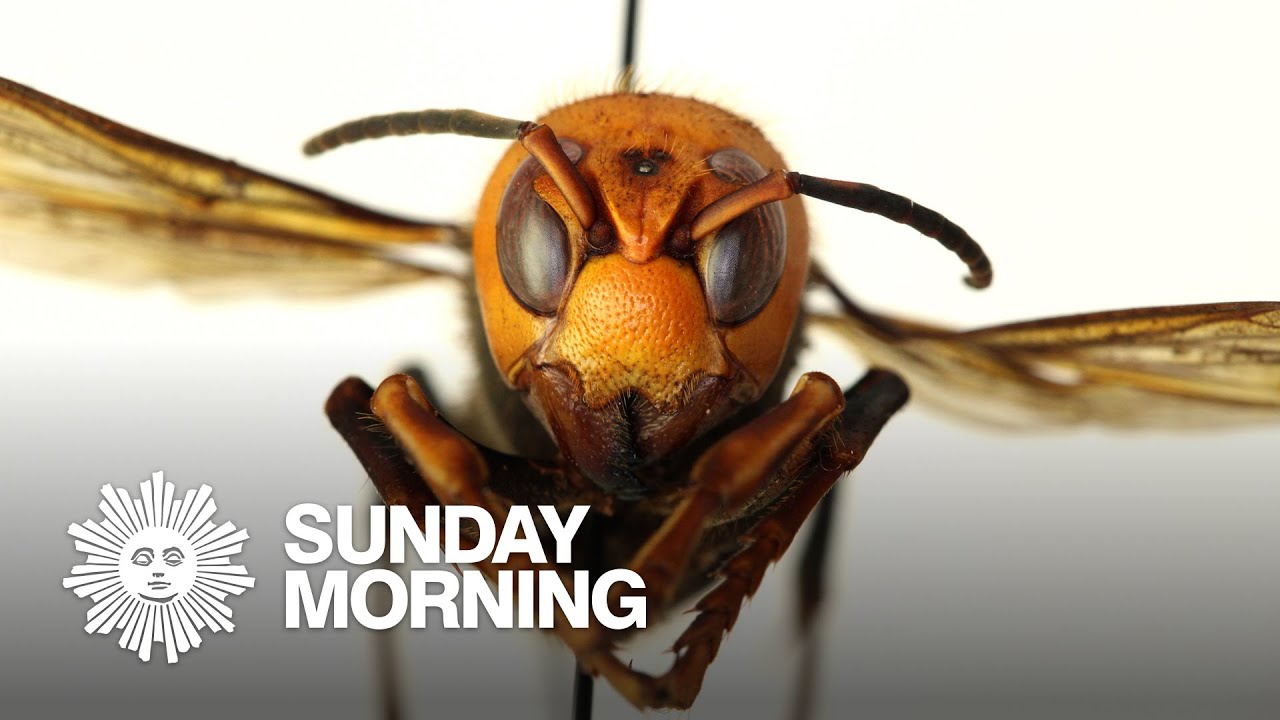
A two-and-a-half-inch hornet with a sting that can punch through a beekeeper’s suit has just been confirmed in the Pacific Northwest.
CBS Sunday Morning correspondent Luke Burbank spent the July 26 broadcast tracking down the insect the internet has already nicknamed the “murder hornet” — officially Vespa mandarinia, the world’s largest hornet species. Native to East and South Asia, it turned up in British Columbia and Whatcom County, Washington, in late 2019, and by the summer of 2020 entomologists were racing to find and destroy its nests before new queens could disperse in the fall. Burbank talked to the scientists doing that work and the beekeepers watching their hives for signs of an attack.
- Vespa mandarinia grows up to 2 to 2.5 inches long and delivers a sting strong enough to pierce standard beekeeping gear, forcing handlers into heavy-duty specialized suits.
- A small group of hornets can trigger a “slaughter phase,” decapitating thousands of honeybees and wiping out an entire hive in a matter of hours to steal the brood for their own larvae.
- Chris Looney of the Washington State Department of Agriculture is leading efforts built around citizen trapping and pheromone lures, with the goal of live-capturing hornets to radio-tag them back to their ground nests.
The Sighting That Started the Hunt
The first North American detections came in late 2019, north of the border in British Columbia and just across the line in Whatcom County, Washington. That geography matters: it’s rural, forested terrain where a ground-nesting hornet colony can go unnoticed for months, and it sits close enough to commercial apiaries that a single undetected nest could do real damage to local beekeeping operations before anyone knew it existed.
Vespa mandarinia is not a subtle insect once you see it. Burbank’s report walked through the basics that make it stand out from anything beekeepers in the region have dealt with before — a body up to 2.5 inches long, a sting that requires suits built beyond the standard mesh-and-canvas gear, and a hunting behavior that has no real analog among native wasps or hornets in the Pacific Northwest.
Inside the Slaughter Phase
The detail that made the report land with beekeepers wasn’t the sting — it was what a handful of hornets can do to a hive in a single afternoon. Entomologists describe a “slaughter phase” in which the hornets systematically decapitate the European honeybees defending a colony, then occupy the hive to harvest the brood and feed it to their own larvae. A colony that took a season to build can be gone in hours.
A handful of Asian giant hornets can decapitate an entire hive of thousands of honeybees in a matter of hours.
That predation is the reason the story isn’t just a curiosity segment — it’s an agricultural one. European honeybees, already stressed by years of colony losses tied to disease, pesticides, and habitat loss, have no evolved defense against this particular predator, unlike some Asian honeybee species that have developed ways to smother invading hornets. The Pacific Northwest’s commercial pollination industry, which leans heavily on healthy hives, has a direct stake in how fast the hornet gets contained.
The Trapping and Tagging Operation
Chris Looney and his colleagues at the Washington State Department of Agriculture built their 2020 response around three tools: citizen-deployed traps, pheromone lures to draw hornets in, and — the trickiest part — live capture. The plan is to fit a captured hornet with a tiny radio tag, release it, and follow the signal back to its underground nest before crews move in to destroy the colony.
The clock that matters here is the calendar. Nests need to be located and eliminated before new queens emerge in late autumn and disperse to found colonies of their own next spring — the same kind of race-against-the-season logic that has driven other invasive-species fights documented elsewhere, where getting ahead of a breeding cycle is the whole game. Miss that window in Whatcom County, and next year’s search starts over with more nests to find, not fewer.
Regional Tensions Continue to Mount
The Pacific Northwest has had a rough run of unwelcome headlines even before the hornets showed up, from wildfire seasons that have battered the region to now an invasive predator nobody asked for. Local beekeepers interviewed by Burbank described watching for the telltale sign of an attack — a hive floor littered with headless bee bodies — the same way orchardists watch for frost.
WSDA’s ask to the public is simple: report anything that looks like it, dead or alive, rather than trying to handle it. Every sighting narrows the search radius for Looney’s team, and with only one confirmed cross-border cluster so far, containment still looks possible if the traps do their job before the queens fly this fall.









NYPD precinct commander quits in protest over lack of support from officials
Coronavirus deaths rising fast in Europe and US
McEnany: White House reporters are making pandemic about themselves
Quarantined for coronavirus on the Diamond Princess: Part 2
Invasion! Asian giant hornets have arrived