

 InfoSearched
A virus shutting down factories overseas is quietly rewriting who makes the world’s stuff.
China spent four decades building itself into the planet’s default factory floor, and it’s not losing that title overnight. But between pandemic-era shutdowns, a trade war that never fully ended, and a decade of rising wages, the calculus that made China the automatic choice for manufacturing is breaking down. Financial creator Jack Chapple lays out why Fortune 500 companies are now hedging their bets with a “China Plus One” approach — and which countries are positioned to cash in.
- China’s average manufacturing wage climbed from roughly $150 a year in 1990 to about $13,500 today, an increase of more than 8,500 percent that erased the cheap-labor advantage that built the country’s factory economy.
- China’s manufacturing output actually shrank 2 percent in 2016 — the first modern decline — and U.S. tariffs then cut Chinese imports to America by 7 percent in 2019.
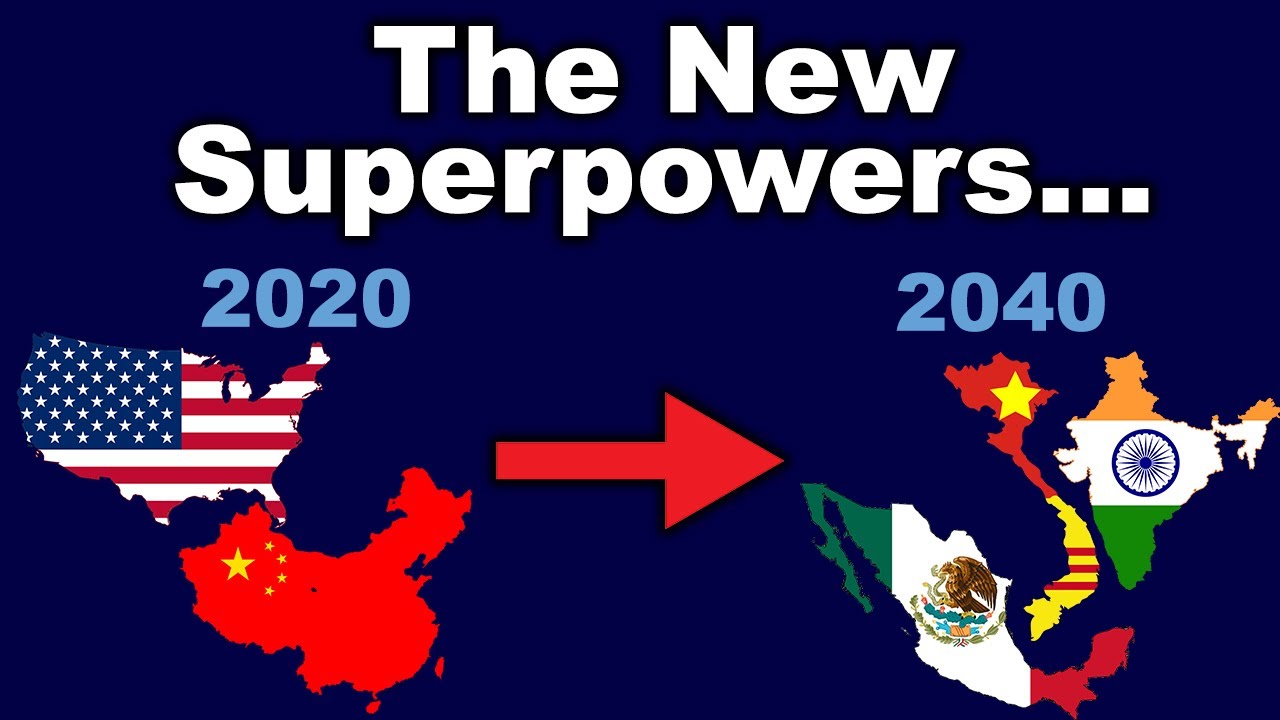
- Vietnam, Mexico and India are the three markets absorbing the diverted production: Vietnam in consumer electronics, Mexico through near-shoring to the U.S., and India via electronics and smartphone manufacturing pushes.
China Emerges as Global Factory
The shift traces back to the late 1970s, when China began pivoting away from strict communism and toward market reforms. The government carved out Special Economic Zones and poured money into ports and factory infrastructure designed to maximize throughput. By the 1980s, Fortune 500 companies were already relocating production there, because Chinese manufacturers could match Western quality at a fraction of the price — a gap driven by rock-bottom wages, favorable tax treatment and efficient import-export logistics.
Once that cost advantage took hold, competitors who kept manufacturing elsewhere simply couldn’t price-match, and many were pushed out of business. By 2018, China accounted for nearly 30 percent of all global manufacturing output, a staggering rise for a country that, fifty years earlier, was still a largely agrarian, impoverished economy. It now sits behind only the United States as the world’s second-largest economy.
The Wage Math Stops Working
Success bred its own problem. As China industrialized, its workers stopped being cheap. That $150 average yearly wage in 1990 grew to $2,800 by 2005, $8,900 by 2015, and roughly $13,500 today. Companies that once got an 80 percent discount manufacturing in China simply can’t anymore — and the numbers show it. Chinese manufacturing output fell 2 percent in 2016, the first such decline in the country’s modern industrial history, before recovering modestly in subsequent years.
China’s average factory wage has risen more than 8,500 percent since 1990 — the cheap-labor math that built the country’s manufacturing base simply doesn’t work anymore.
Tariffs, Telecom and Tech Tensions
Rising wages were only the first crack. Washington’s tariffs on Chinese goods, layered on through the ongoing trade dispute, drove a 7 percent drop in Chinese imports to the United States in 2019 alone, forcing companies to actively hunt for alternative sourcing. Add to that a broader wave of distrust over Chinese technology — the same climate that led to Trump signing an executive order ending preferential treatment for Hong Kong — and governments have been pushing to keep Chinese tech out while incentivizing domestic manufacturing instead. Just before this analysis, the Justice Department asked the FCC to terminate China Telecom’s U.S. operating authorization, citing national security concerns.
The China Plus One Shift
Layer a pandemic that shuttered Chinese factories on top of rising costs and tariff friction, and multinational corporations no longer see single-country sourcing as safe. That’s the logic behind “China Plus One” — keeping a foothold in China while building parallel supply lines elsewhere. Some companies have already made that calculation personally rather than just corporately, as detailed in one account of leaving China for good. Vietnam has become the biggest early winner, absorbing a significant share of consumer electronics production that once ran through Chinese plants. Mexico is benefiting from near-shoring, offering proximity to the U.S. market without the shipping lag of trans-Pacific freight. India, meanwhile, is chasing electronics and smartphone manufacturing specifically, trying to turn itself into the next assembly hub for devices that used to say “Made in China” on the box.
Chapple’s read isn’t that China’s factory base is collapsing — it still manufactures more than any other country on the planet. It’s that Vietnam’s electronics lines, Mexico’s near-shoring corridor into the U.S., and India’s push into smartphone assembly are exactly where the next order lands when a Fortune 500 buyer decides it can’t afford to wait out one more lockdown.









Barack Obama offers stark warning to Democrats during joint fundraiser with Joe Biden
Italy coronavirus deaths rise by record 475 in a day
Why is this a ‘critical moment’ for the US and Russia over Ukraine? – BBC News
Pelosi Unveils $2.5 Trillion Virus Stimulus Plan
IMF Sees `Heavy Cloud of Uncertainty’ Hanging Over Global Economy