

 InfoSearched
The Fed just cut rates for the first time since the depths of the financial crisis — and Jerome Powell insists it’s not the start of a trend.
The Federal Open Market Committee wrapped up its two-day meeting on July 31, 2019, by trimming the benchmark federal funds rate a quarter point to a target range of 2.00% to 2.25%. It’s the first cut the Fed has made since December 2008, and it came while unemployment sits near record lows and the economy just posted 2.1% GDP growth in the second quarter. AIER President Edward Stringham was among the economists dissecting why the central bank chose to ease policy now, of all times, when the headline numbers look fine.
- The FOMC cut the federal funds rate by 25 basis points to a range of 2.00%-2.25%, the first reduction since the 2008 financial crisis.
- Fed Chair Jerome Powell called it a “mid-cycle adjustment” meant to insure the expansion against risks, not the opening move of a sustained easing cycle.
- The cut came despite second-quarter GDP growth of 2.1% and record-low unemployment, raising questions about why the Fed moved pre-emptively.
Powell’s Case for an “Insurance” Cut
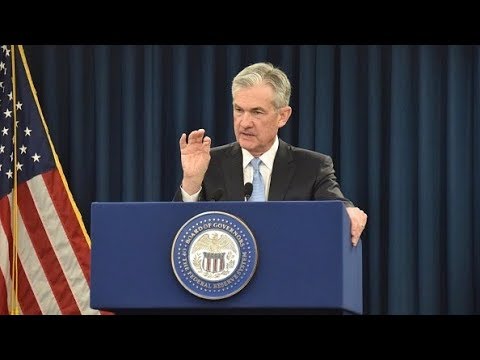
In his post-decision press conference, Powell framed the quarter-point reduction as a hedge, not a rescue. He pointed to slowing global growth, ongoing trade tensions, and inflation that has stayed stubbornly below the Fed’s 2% target as the main risks pushing the committee toward action. The language mattered: by calling it a “mid-cycle adjustment,” Powell was trying to draw a clear line between this move and the kind of aggressive, back-to-back cuts the Fed deployed during the 2008 crisis.
That distinction is why markets and reporters pressed him so hard on what comes next. A mid-cycle adjustment implies one or two tweaks, not a multi-year descent toward zero. Whether the Fed can actually hold that line depends on how the trade fight and global slowdown play out over the following months.
A Cut Nobody Was Forced Into
What made this decision unusual is the backdrop it happened against. The domestic economy wasn’t showing textbook signs of needing stimulus — no spike in layoffs, no credit freeze, no recession already underway. Instead, the Fed was acting on risks it saw building abroad and in trade policy, essentially trying to get ahead of a slowdown before it showed up in the jobs numbers.
Powell described the move as insurance for the expansion, not the start of an extended cutting cycle.
That pre-emptive posture is exactly what fueled the debate Stringham and other analysts weighed in on. Was the Fed reading tea leaves the public couldn’t see yet, or was it simply responding to pressure from stock markets and from President Trump, who had been publicly pushing for lower rates for months?
The Debate Over Motive
Critics raised three distinct concerns. First, that a cut made during a strong labor market and solid GDP print could signal the Fed was seeing something worse under the hood than official data showed. Second, that cheaper borrowing costs risk inflating corporate debt loads and asset prices even further after a decade-long bull run. Third, and most politically charged, that the Fed was bending to market expectations and to the White House rather than acting purely on its dual mandate of stable prices and maximum employment.
Stringham’s commentary fit into that broader argument playing out among economists: a rate cut during good times is either smart insurance against a genuine external shock, or it’s a central bank getting ahead of itself and setting up bigger problems for later. The Washington Post’s reporting ahead of the meeting described it as the Fed’s “biggest gamble in years” precisely because the data didn’t obviously demand it.
Unresolved Issues in Powell Strategy
The Fed chair didn’t rule out further cuts, but he also didn’t commit to them. That ambiguity is deliberate — the FOMC wants flexibility to respond to how trade negotiations and global growth data develop without locking itself into a preset path. Investors, who had largely priced in the quarter-point move beforehand, were left parsing Powell’s press conference for hints about September’s meeting rather than reacting to the cut itself.
The next real test comes at the Fed’s September meeting, where officials will have two more months of trade headlines and global data to weigh before deciding whether “mid-cycle adjustment” was the whole story or just the first chapter.




Team Biden releases its plan for America
Swarm Of Locusts Threaten Livelihood Of Millions In African, Asian And Middle Eastern Countries
Hasan Minhaj Calls Out Congress Over Student Loans: ‘You Paid Far Less For Your Degrees’ | NBC News
Legendary TV host Regis Philbin dies at 88
‘The Frontrunner’: Bernie Sanders Opens Up Big Delegate Lead After Nevada Blowout